THE 200th running of the Derby Stakes was celebrated throughout the media, and the crowd at Epsom was enormous.
Appropriately the winner, Troy, illuminated the occasion with a stunning victory after being in a seemingly hopeless position.
A handsome, powerful, good-moving bay, Troy was by Petingo out of La Milo, by Hornbeam. Unfortunately the year Troy was born both his sire and dam died.
Owned by Sir Michael Sobell and his son-in-law Sir Arnold Weinstock, Troy was bred at their Ballymacoll Stud in Co. Meath and sent into training with Dick Hern at West Ilsley in Berkshire.
In four starts as a juvenile Troy won the Plantation Maiden Stakes at Newmarket and the Lanson Champagne Stakes at Goodwood, before finishing second to Ela-Mana-Mou in the Royal Lodge Stakes on his finale.
Reappearing in Sandown’s Classic Trial Stakes,Troy was hard ridden to beat Two of Diamonds by a neck, but he followed up by winning the Predominate Stakes at Goodwood by seven lengths.
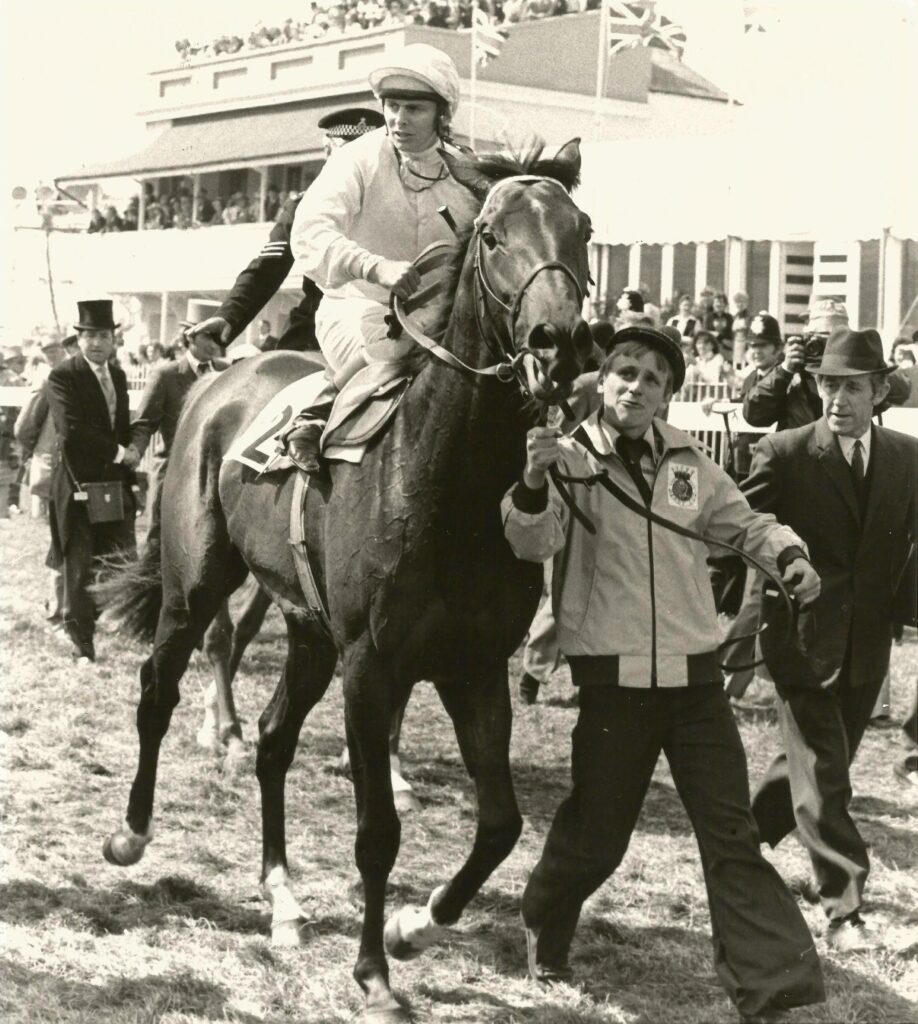
Ridden by Willie Carson, Troy started 6-1 second favourite for the Derby, behind Ela-Mana-Mou at 9-2, the recent winner of the nine-furlong Heath Stakes by four lengths. Other fancies were Tap On Wood, winner of the Two Thousand Guineas, and the Queen’s Lingfield Derby Trial winner Milford, who was also trained by Hern.
The field of 23 went to post on good ground on a warm, sunny day. Lyphard’s Wish set a strong pace from the start, with Accomplice and Laska Floko in close attendance. Turning into the straight Lyphard’s Wish continued to lead from Milford, Accomplice, Noelino and Man of Vision.
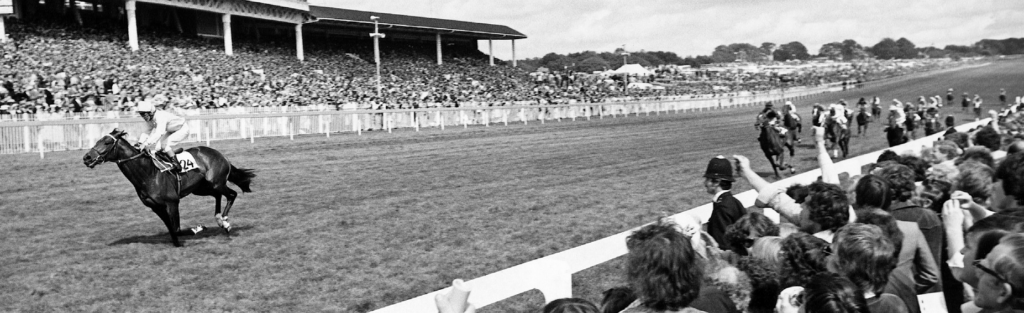
At this stage Troy was not in the first dozen, but moving from the rails to the outside, he began his run. Two furlongs out he was still only ninth, but like the release of a coiled spring, he accelerated at such a rate that by the furlong marker he led by a length and a half, and the race was effectively over.
The winning distance was seven lengths, with Dickens Hill second and Northern Baby third, a further three lengths away.
Troy went on to beat Dickens Hill by four lengths in the Irish Sweeps Derby and followed up by winning the King George VI and Queen Elizabeth Diamond Stakes and the Benson & Hedges Gold Cup.
However, by the time the Prix de l’Arc de Triomphe arrived, Troy was past his best and could finish only third of 22 behind Three Troikas and Le Marmot.
Retired to Highclere Stud at Newbury,Troy was valued at £7.2 million. Sadly, after a moderate start he died of acute peritonitis from a ruptured caecum on 12 May, 1983. Two years later his daughter Helen Street won the Irish Oaks.
When asked for the best Derby winner on the day, Troy’s performance certainly elevates him to one of the best post-war winners.
The subsequent form of his rivals confirms his outstanding merit: Dickens Hill won the Eclipse Stakes, Northern Baby the Champion Stakes, Ela-Mana-Mou the Eclipse Stakes and the King George VI and Queen Elizabeth Diamond Stakes, Niniski the Irish St Leger and Prix Royal-Oak, and Son of Love the St Leger.
Conquering Heroes
For more Racing History see Michael’s Books for Sale.