Archive for February, 2026

Sceptre – Racing’s Sweetheart
Posted on:

Sceptre – Racing’s Sweetheart

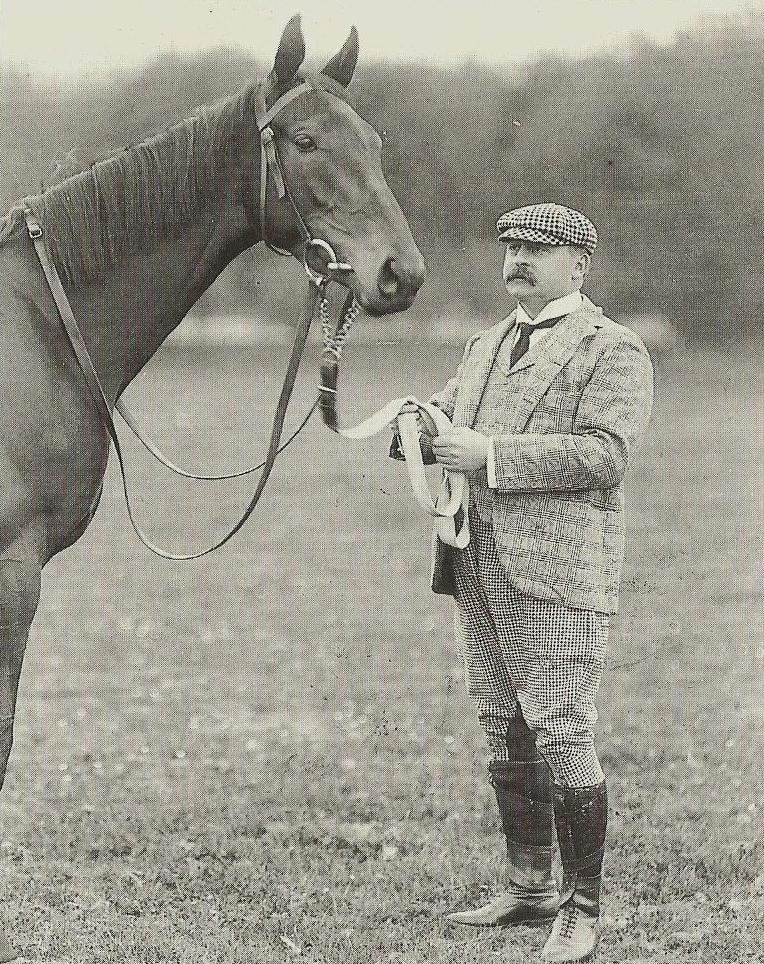
Sceptre with her owner/trainer Bob Sievier

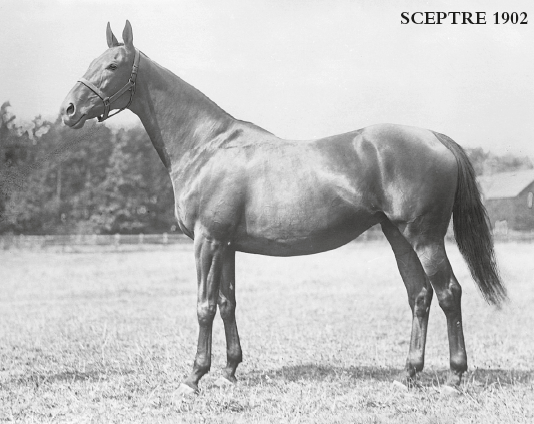
Sceptre is the only outright winner of four British Classics, so becoming Racing’s Sweetheart.

Bred by the 1st Duke of Westminster at Eaton in 1899, Sceptre was a bay filly by the Derby and St Leger winner Persimmon, out of  Ornament, a sister to the great Triple Crown winner, Ormonde.

Later that year, on the death of the Duke, his bloodstock were sold by public auction, with Sceptre going to Robert Sievier, an infamous gambler, for 10,000 guineas, then a record for a yearling at auction.

Sceptre was initially trained by Charles Morton at Wantage, winning the Woodcote Stakes at Epsom and the July Stakes at Newmarket as a juvenile. However, when Morton became a private trainer to Jack Joel, Sievier decided to train the filly himself, at his recently acquired stables at Shrewton, in Wiltshire.

The following year, in an unorthodox preparation for the Classics, Sceptre was entered in the Lincolnshire Handicap purely for gambling purposes, and allotted only 6 st 7 lb was backed by Sievier to win £30,000. Dramatically, she was beaten a head, carrying 1 lb overweight.

Sievier, remarkably, then trained her to win both the Two Thousand and One Thousand Guineas.

In the lead up to the Derby, Sceptre bruised a foot, so disrupting her preparation. Then on the day after long spells of torrential rain, thought to improve her chance, she went off the even money favourite. Following Sievier’s instructions, her jockey, Bert Randall, took her the reverse way to the start, walking the last mile and so creating tension amongst the awaiting 17 runners and, the starter.

Randall’s nervousness seemed to peak at the off causing her to get away badly. Rushed through the field she was in contention two furlongs out, but could give no more and finished fourth behind Ard Patrick.

Two days later as the 1-2 favourite, she beat 14 rivals to win the Oaks.
Racing’s Sweetheart

Sceptre’s busy schedule continued with a further four races before the St Leger, where she appeared as “all skin and bone,” on arrival at Doncaster. Nevertheless, her class saw her through, when winning by three lengths from Rising Glass.

The following year, after another failed gamble on Sceptre to win the Lincoln, Sievier, short of money, sold Sceptre to William Bass of the 10th Hussars for £25,000.

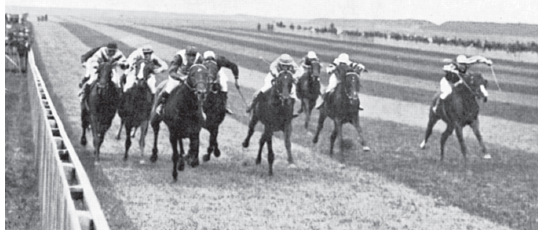
Sent to Alec Taylor’s yard at Manton, she recovered her strength to win Ascot’s Hardwicke Stakes, then in the Eclipse Stakes, billed as “The Race of the Century”, she was beaten a neck by her old advisory Ard Patrick,  with the previous year’s Triple Crown winner, Rock Sand, a distant third.
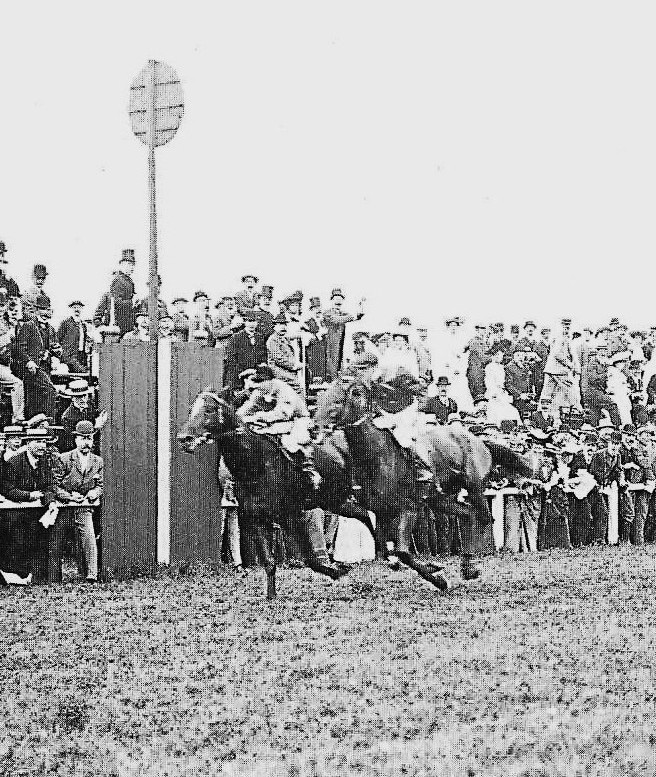
Ard Patrick (Near side) wins by a neck

Sceptre continued her busy programme winning another four races including the Jockey Club Stakes, beating Rock Sand by four lengths and finally, winning the Champion Stakes by 10 lengths.

As a five-year old Sceptre ran three times without success; second in the Coronation Cup, third to Rock Sand in the Hardwick Stakes, then third of four in the Ascot Gold Cup.

At stud, she produced seven fillies, including four winners and one colt. Her first foal, Maid of the Mist, bred two Classic winners – Sunny Jane (1917 Oaks) and Craig an Eran (1921 Two Thousand Guineas), both by Sunstar (1911 Derby).

Sceptre continued to change hands until finally in 1923, Lord Glanely, after promising she would remain in his care for the rest of her life, sold her to a Brazilian breeder. However, following a great public outcry he was forced to cancel the sale, allowing Sceptre to stay in England until her death in February, 1926.

Bob Sievier died after a checkered life on the Turf in relative poverty on October 8th 1939.


For more Racing History see Michael’s Books for Sale.
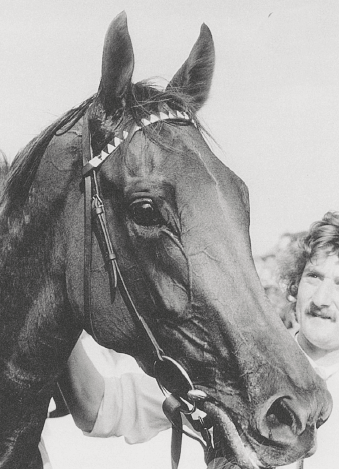
Oh So Sharp – Fillies Triple Crown winner 1985

Posted on:


OH SO SHARP, is the most recent winner of the Fillies Triple Crown, comprising  the 1985 One Thousand Guineas, the Oaks and the St Leger.

Born on 1st January, 1982, Oh So Sharp was from the first crop of Kris, a top miler and winner of 14 of his 16 races, including the St James’s Palace Stakes, the Sussex Stakes and the Queen Elizabeth II Stakes. Her dam, Oh So Fair was by Graustark.

An attractive chestnut filly, with powerful shoulders and a long raking stride, she was bred by Dalham Stud Farms Ltd, owned by Sheikh Mohammed and trained by Henry (later Sir) Cecil at Newmarket.

Oh So Sharp won her three races as a juvenile over six, seven and eight furlongs, culminating in the Hoover Fillies’ Mile, with Lester Piggott aboard, beating Helen Street and Morning Devotion.

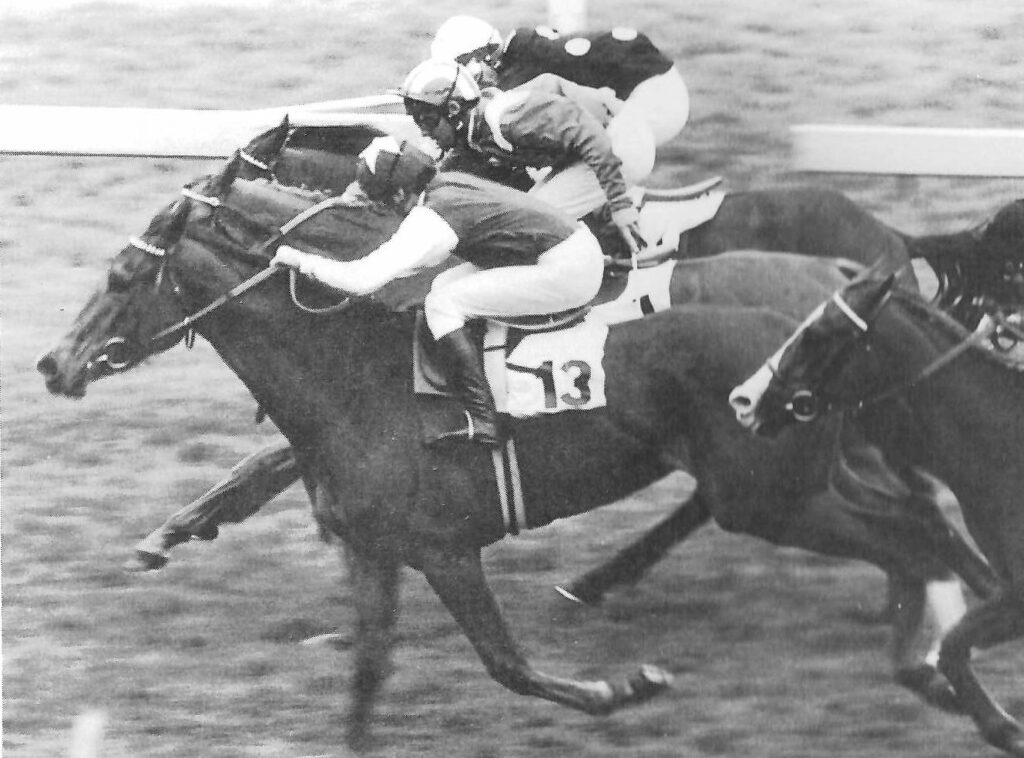
The following year, after taking the Nell Gwyn and now ridden by Steve Cauthen (13), she got up in the last stride to win the One Thousand Guineas in a battle of short-heads, with Albahathri (2nd middle) and Bella Colora (3rd rails).

However, her progress on the home gallops led Cecil to consider running her in the Derby (she had been entered in all five Classics), until finally deciding to run in the Oaks, which she won by six lengths, clearing away from two furlongs out.

She then continued with two seconds – firstly in the ‘King George,’ when beaten a neck by Petoski, and then in the Benson & Hedges Gold Cup, as the 2-5 favourite, when succumbing to Lester Piggott on Commanche Run, by three-quarters of a length.

In her final run, the St Leger, she put things right, running on to beat Phardante and Lanfranco, to complete the Fillies’ Triple Crown, the first to do so since Meld in 1955.

At stud, she bred seven winners, including, Shaima (b.f. 1988), whose first foal, Shantou won the 1996 St Leger.

Oh So Sharp was put down in late October 2001, aged 19, due to complications from laminitis.


For more Racing History see Michael’s Books for Sale.
Fifinella – winner of both the Derby and Oaks in 1916

Posted on:

FIFINELLA, was one of the best fillies in the 20th century and with her Derby victory in 1916, is the most recent filly to do so.  She also joins her three predecessors,

Eleanor (1801), Blink Bonny (1857) and Signorinetta (1908), as winners of both the Derby and Oaks.


Fifinella was bred and owned by Sir Edward Hulton, 1st Baronet (1869-1925), who in his early years assisted his father in publishing the Sporting Chronicle. Later he founded the Manchester Evening Chronicle, launched the Daily Sketch and acquired the Evening Standard.

His sporting interests were twofold. In coursing he won the Waterloo Cup in 1908 with Hallow Eve and again in 1916 (the year of Fifinella’s Derby) with Harmonicon, while on the racing front, in late-autumn 1906 he purchased the Curragh National Produce Stakes winner Silver Fowl, who, after an accident, was put to stud and in 1913 produced Fifinella (by Polymelus).

Sir Edward’s other Classic winners were Roseway (1919 One Thousand Guineas) and Straitlace (1924 Oaks).

Fifinella ran her three races as a juvenile at Newmarket, winning the Fulbourne Stakes, finishing second to Jack Joel’s Telephone Girl in the Bibury Club Stakes and then running away with the Cheveley Park Stakes by eight lengths; Champion Jockey, Steve Donoghue being aboard each time.

The following year, Fifinella, who by now, had a reputation for being, “catty, peevish and unreliable,” reappeared in the One Thousand Guineas ridden by Joe Childs. Playing up at the start, she received a no-nonsense reminder from Childs, but got her own back by sulking throughout the race and losing to Canyon by three-quarters of a length.

Due to the First World War, the Derby and Oaks were run at Newmarket. And as the colts entered in the Derby appeared to be below standard, she was allowed to take her chance.

Although agitated and waspish in the paddock, she started 11-2 joint-second favourite with Nassovian (third in the Guineas), while Kwang-Su, (second in the Guineas), went off the 3-1 favourite.
After a lengthy delay at the start, Fifinella was slowly away, then badly bumped, and appeared to take no interest until, taking hold of the bit close home, she sped through a narrow gap and with Child’s assistance won by a neck from Kwang-Su, with Nassovian, a head away, third.

Joe Childs takes up the story, “In the Derby she was inclined to be fretful and nervous, but two days later when the Oaks was run, she was almost a different animal. No nervousness, no fretfulness and she appeared as though she was looking forward to the event.” And so, starting at odds of 8-13, Fifinella won in a canter by five lengths from Salamandra.

Her final race came in September 1917, and proved a dismal display, as she finished last of three behind Phalaris in the Bury St Edmunds Plate at Newmarket.
Dick Dawson, her trainer, was said to be glad to see her go – “a bite or a kick being her usual greeting.”

At stud Fifinella bred 12 foals, eight of which were winners, including Press Gang (ch.c. 1927), winner of the Middle Park Stakes and Princess of Wales’s Stakes.

Fifinella died in 1931


For more Racing History see Michael’s Books for Sale.