Archive for January, 2025

The Racing Post’s Q & A on The Champion Sires Chart 1722-2021

Posted on:

‘I bought at auction a hoof of Galopin – it caused consternation in the family’

Three years ago to mark 300 years of champion sires in Britain and Ireland, Michael Church, the racing author and historian,  published a signed and illustrated limited edition lineage chart, showing the male descent of the 125 champion sires to the founding fathers.

Racing Post caught up with their former employee – he was hired as the newspaper’s accountant when launched in 1986 – for a quickfire Q&A.


Above an extract from Michael Church’s lineage chart, showing the 300 years of Champion Sires 1722-2021

 Tell us about the lineage chart – when did you come up with the idea and how long did it take?

As part of the original Racing Post team, my chart was first published in 1987, with a slim volume giving the sire’s four-generation pedigrees. This autumn I became aware that if I updated the chart it would cover 300 years. So I set about redesigning it, adding 14 photographs with a brief history of each to accompany it.

In compiling it, what points of interest stood out to you?

When putting the champion sires in a different colour I immediately saw innumerable chains of champion sires, indicating their prepotency. For example, Cyllene (1909) to Mill Reef (1978), eight consecutive generations, then Cyllene to Pitcairn (1980), also eight generations. More recently we have Northern Dancer (1970) to Frankel (2021), four generations.

Do you see any problems of diversity in thoroughbred breeding in the future?

Not really. At present, the Northern Dancer lines are being tempered by Dubawi, who goes back to Native Dancer. Importantly, the stayers’ programme will in time strengthen the breed.

What was the spark that ignited your interest in racing and bloodstock?

Aged nine, when returning from a war-time evacuation in Llandrindod Wells to my home in Woking, the Sunday before the 1945 Derby, I was plunged into a family reunion where the sole topic of conversation was the forthcoming Epsom Classic. And from that day, which I now think of as my annunciation, I took to racing and betting like a duck to water.

While Racing Post bloodstock readers of a certain vintage may be familiar with your work, some might not, so can you outline your other breeding and pedigree publications?

Three Centuries of Leading Sires; The Classic Pedigree; Dams of Classic Winners; Eclipse – The Horse, The Race, The Awards; Champion Sires; Classic Pedigrees; together with various editions of The Derby Chart, three definitive histories of the Derby and the only history of the Oaks.

You are arguably better known for racing works, especially on the Epsom Classics – would you agree or disagree with anyone who calls for the distance of the Derby to be reduced?

I can understand the call for the Derby to be run over ten furlongs, but while the King George and the Prix de l’Arc de Triomphe are also run over a mile and a half, there seems little point and since many of the great studs stand stallions to win these races, it could undermine the future range of the thoroughbred.

  Past or present, do you have any favourite sires or lines?

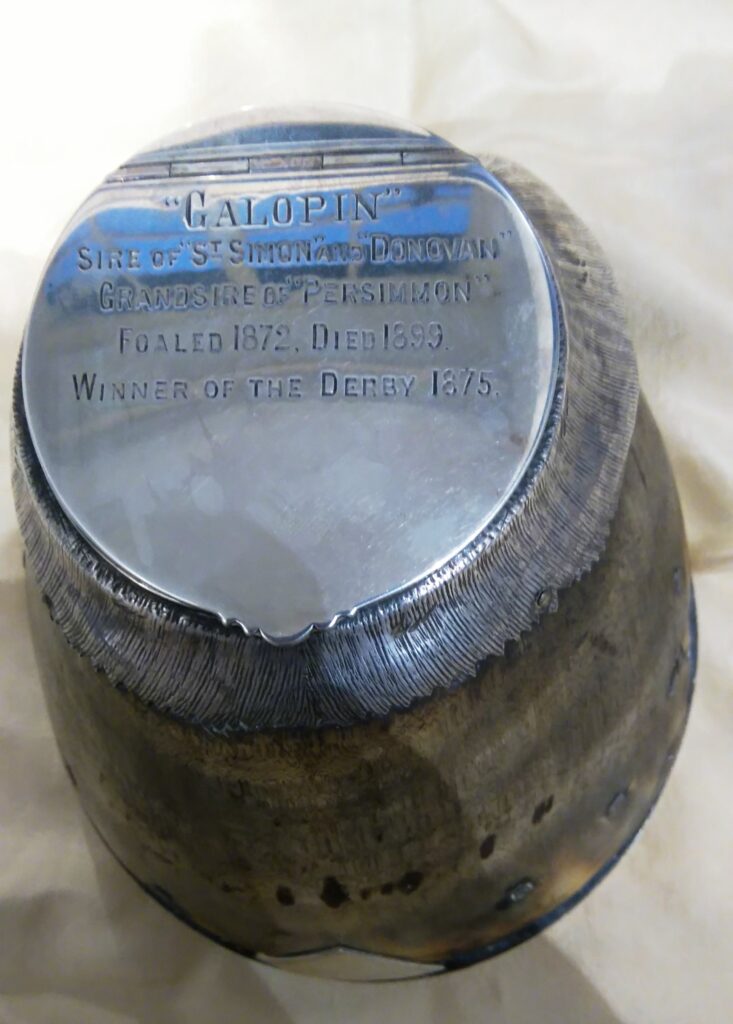
While at the Racing Post I bought at auction a hoof of Galopin (the 1875 Derby winner, sire of St Simon and a descendant of Hambletonian), encased in silver as an inkwell. This caused consternation in the family as the money came out of the holiday fund!
__________________________________________________________________________________________________________

To see more on Michael’s books & charts click on Michael’s Books for Sale. 


The Thoroughbred’s Founding Fathers – A brief summary

Posted on:

The Founding Fathers of all Thoroughbreds racing today.

           A brief guide

(set to view on Mobiles)

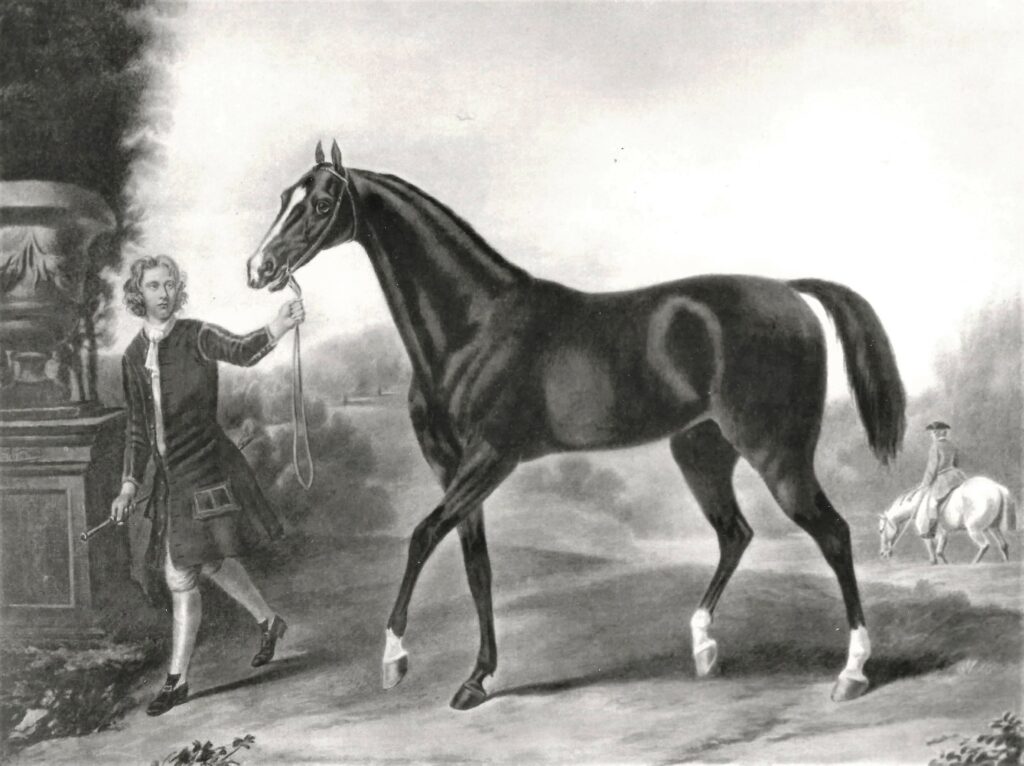
 DARLEY ARABIAN. b.c. 1700.

Champion Sire 1722.  15 hands, bought by Thomas Darley, a Merchant Agent in Aleppo, Syria. Stood near York.

Sire of Flying Childers b,c 1714, the first truly great racehorse, and his older brother Bartlet’s Childers b.c. 1716, ex Betty Leeds and both Champion Sires.


BYERLEY TURK  br.c 1684.

Thought to be an Arabian taken from the Turkish Army at Buda in 1687.

Ridden by Captain Robert Byerley  in the Battle of the Boyne 1690 and later stood near York 1697. His most notable offspring was Jigg  (-. c. c 1701) ex daughter of Spanker, the sire of Partner (ch. 1718), won 4 races and four-times Champion Sire between 1737-1743).


ALCOCK ARABIAN  gr.c. 1704.

Champion Sire 1728.

Purchased in 1722 by the 2nd Duke of Ancaster.

Except for a tiny minority every grey thoroughbred we see today inherits their greyness, generation by generation from the Alcock Arabian.

His most notable offspring was Crab gr.c. 1722, Champion Sire in 1748, 1749, 1750.


GODOLPHIN ARABIAN  b.c. 1724.  Champion Sire 1738, 1745 and 1747.

Foaled in Yemen. 14.3 hands. One of four horses presented to the King of France by the Bey of Tunis.

Fifty years from his death in 1753, every one of the first 76 British Classic winners had at least one strain of him in their pedigree.

Godolphin Arabian (b.c. 1724)


For more racing history see Michael’s Books for Sale. 

To see Michael’s TV interviews go to the foot of About Michael

Priceless Border – The World’s Fastest Greyhound

Posted on:

The World’s Fastest Greyhound


Little did I know as I queued in front of the new Woolworth’s weighing machine in the summer of 1949, that I would remember the next minute for the rest of my life?

The eager queue of school children waiting to weigh themselves en route to Saturday morning pictures, were not there to monitor their progress against under-nourishment, nor to measure obesity, but simply in order to obtain a weight-card in the highly collectable series, ‘Speed’.

Among the cards I had seen at school were ‘The Flying Scotsman’, the racing driver Malcolm Campbell, and the Olympic athlete Fanny Blankers-Koen.

To this 13-year-old they looked exciting, up-to-date and a change from the previous cigarette cards.


I put my penny in the slot and waited. My weight on the card – 8st 6lb, was of little interest, but the picture was – a brindled greyhound in a red jacket at full stretch.

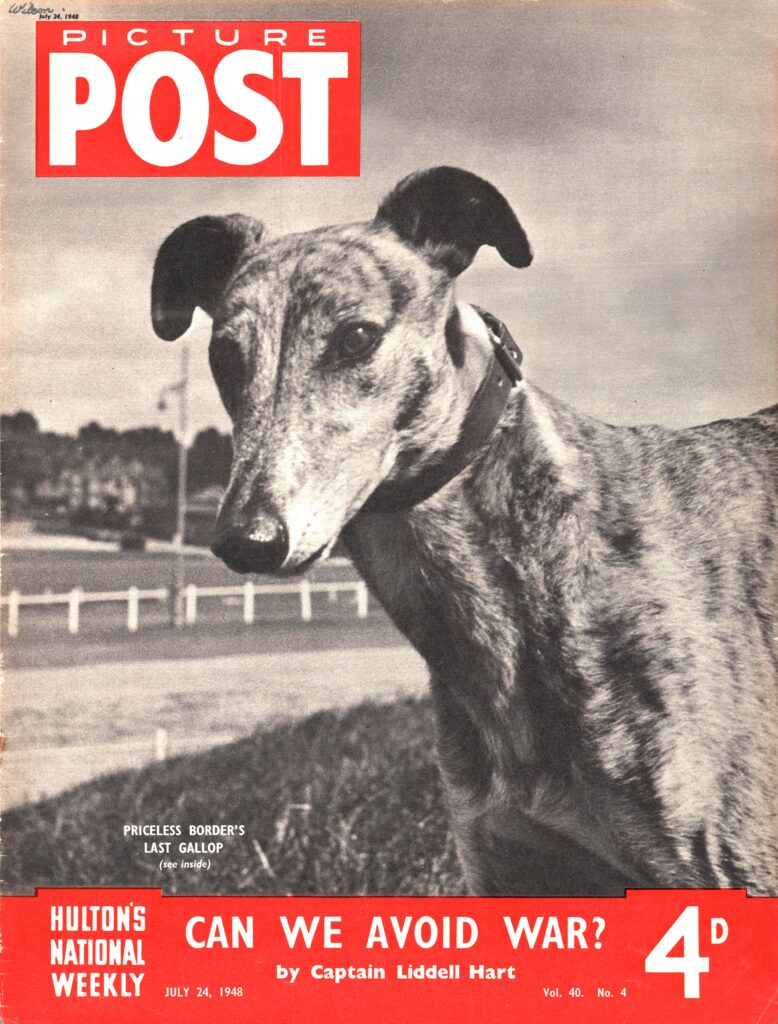
It read, ‘Priceless Border – Greyhound Derby Winner 1948 – approx 37.3 mph.’

I had another penny left, but with the kids behind me shouting ‘hurry up Churchy, jump off’, I complied – only to jump smartly back on to weigh again. ‘Hallelujah! Another Priceless Border! What are the odds of that?’ I said to the next in line?


Priceless Border was well known by my school mates, some having backed him. And I could remember, reading in the Greyhound Express, about him winning a heat of the 1948 Greyhound Derby in 28.64 sec – a world record for 525 yards – before he went on to win the 1948 Final.

On a day dream level, I learned he was owned by a 10-year-old boy, Desmond O’Kane, his father having bought the dog for £110 as a present for him.

From that moment on, I saved a weekly amount towards my first greyhound.


The strange thing was that no-one else at school, no matter how many times they weighed themselves, ever got a Priceless Border. And it got to the point that a few doubting Thomases’s, including Bobby Reigate, who only needed that card for the set, continually heckled me into bringing one of the ‘Priceless’cards to school.


During the next day’s dinner break, I enjoyed the notoriety and the bargaining power of being the sole owner of these rare cards. The gathering crowd of enthusiasts inevitably broke up into scuffles, attracting the attention of the duty dinner teacher Ma Frost.

Fearing the card could be confiscated; I quickly switched it for the less valuable cigarette card of Don Bradman and, under duress handed it over.

Later that day, I stoutly refused all overtures from Reigate for the precious card, until he hinted darkly that he would, in future, make me an offer I couldn’t refuse.


Reigate continued to harras me until two months later, when there was a knock on our front door. It was Bobby Reigate and his father.

My Dad, unaware of the significance, invited them in and Mum made them tea. It ensued that Mr Reigate was taking Bobby to see Chelsea at Stamford Bridge and asked if I would like to share Billy’s birthday treat?

‘We could stay after the match for the greyhound racing’, he added.


I had to hand it to Bobby; this was an offer I couldn’t refuse. But, wishing to look cool, I sat very still and pinched my leg, until eventually, politely thanking Mr Reigate. Strangely, nothing was said about the Priceless Border card, but with schoolboy honour I knew my duty as one obsessive to another.

Going into the front room I took one of Mum’s ‘get well soon’ cards, wrote Happy Birthday Bobby and dropped in the ‘Priceless.’


More than 60 years later, and by now my prized weight-card long gone, a strange coincidence took place. One evening, on entering ‘greyhound’ into eBay, up popped an original Priceless Border weight-card. Joyfully, I bought it, but that’s not all, for when the card duly arrived I turned it over to see the date – July 49 and, the weight 8st. 6 lb – what are the odds of that?


To back-up my story of the popularity of this greyhound see below the cover of Picture Post, the top selling magazine at the time.


For more racing history see Michael’s Books for Sale

Highflyer, the unbeatable racehorse and Champion Sire

Posted on:

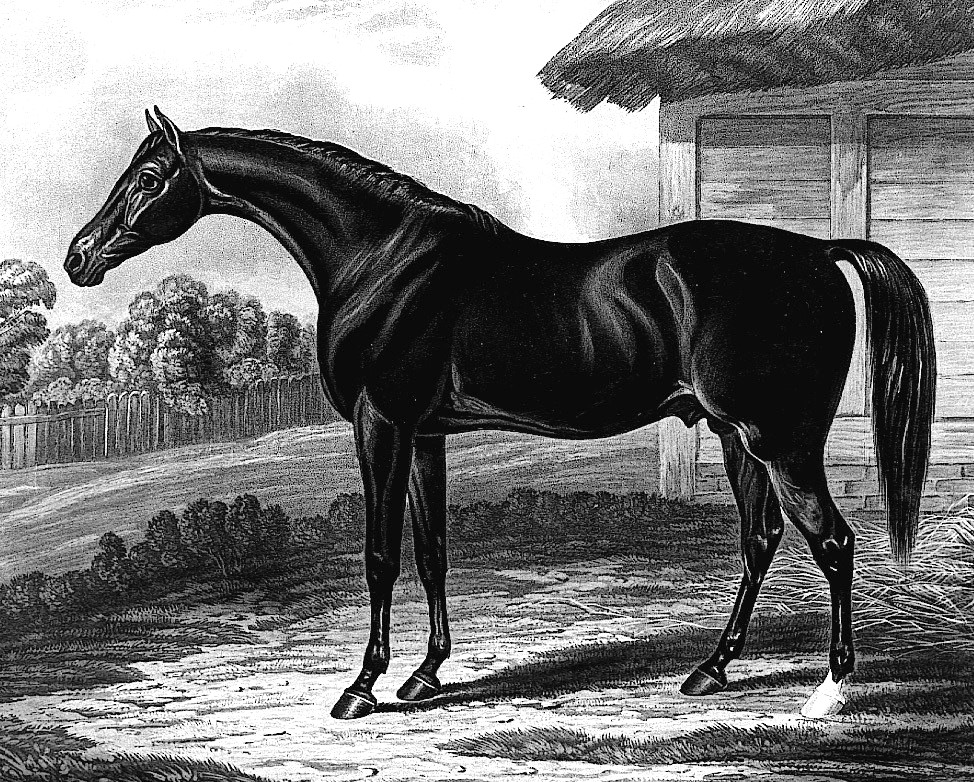
HIGHFLYER   (b.c. 1774)

CHAMPION SIRE (13 times): 1785–1796 and 1798.

BRED BY Sir Charles Bunbury

WON 12 races incl. Grosvenor Stakes, Newmarket, Great Subscription Race, York, (never beaten).

Highflyer was an unbeatable racehorse who became a great stallion.

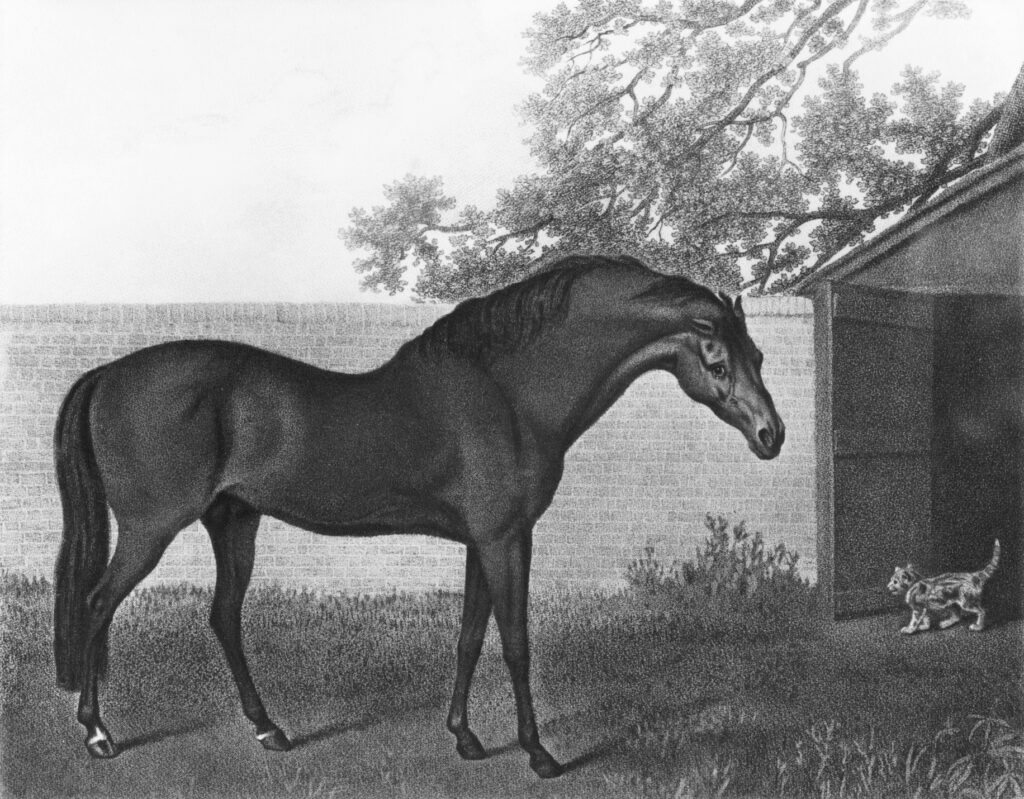
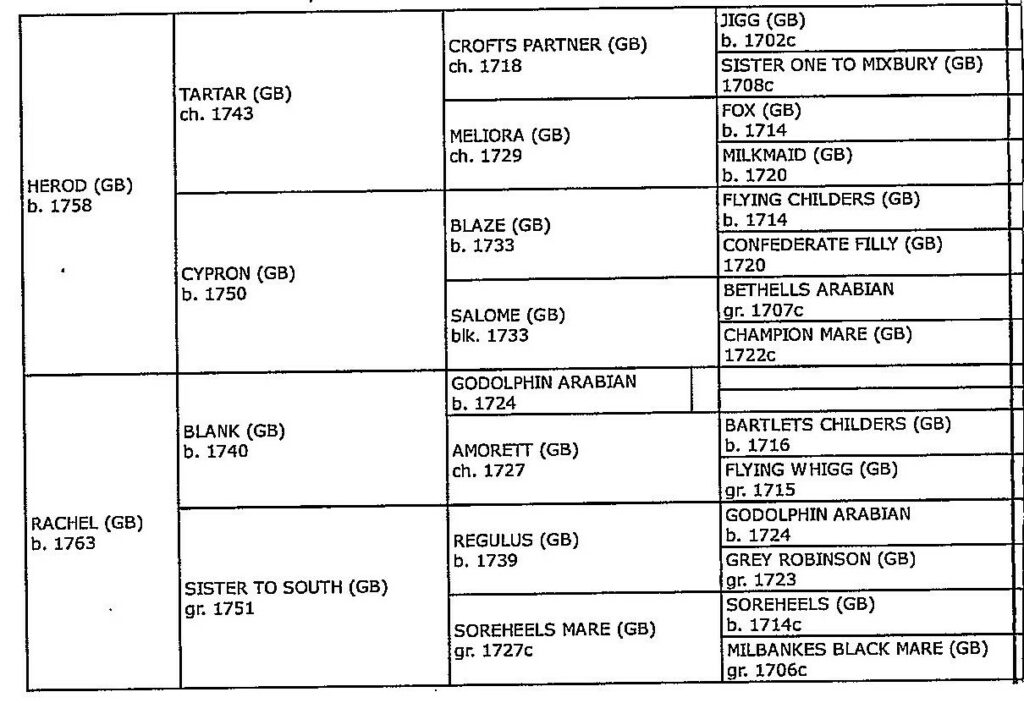
Bred by Sir Charles Bunbury, he was a pure-breeding bay, by Herod out of Rachel by the three times Champion Sire, Blank.

Initially, he was sold to the 2nd Viscount Bolingbroke, who named him after the highflyer walnut trees that grew in the paddock at Great Barton, where he was foaled. However, Bolingbroke resold the colt for £800 to Richard Tattersall the famous auctioneer.

Never beaten and on no occasion paying forfeit, Highflyer raced for three years, winning 12 races, including the Grosvenor Stakes at Newmarket, when four,  over 4m 1f 138 y, and the Great Subscription race at York, when five, over 4 miles.

At Tattersalls’ stud near Ely, Cambridgeshire, Highflyer sired eight Classic winners long before the advent of the Guineas Classics at Newmarket. These included three Derby winners: Noble in 1786; Sir Peter Teazle in 1787 – who later succeeded him as the ten times Champion Sire – and Skyscraper in 1789. He also sired the dams of 11 Classic winners.

The Champion Sire 13 times between 1785 and 1798, Highflyer made a major contribution to the development of the Thoroughbred. He died on 18 October 1793, at his owners’ residence, which had been renamed Highflyer Hall in his honour.


NOTABLE PROGENY:

DELPINI gr.c. 1781 ex COUNTESS by BLANK. Won 9 races. Sire of 3 Classic winners incl. SYMMETRY gr.c. 1795, won St Leger Stakes

OMPHALE b.f. 1781 ex CALLIOPE by SLOUCH. Won St Leger Stakes.

ROCKINGHAM b.c. 1781 ex PURITY by MATCHEM. Won 32 races incl. Jockey Club Plate and 5 King’s Plates. Sire of BELLINA ch.f. 1796, won Oaks Stakes.

COWSLIP b.f. 1782 ex daughter (1771) of SYPHON. Won St Leger Stakes.

NOBLE b.c. 1783 ex BRIM by SQUIRREL. Won 2 races incl. Derby Stakes.

SIR PETER TEAZLE br.c. 1784 ex PAPILLON by SNAP

Won 13 races incl. Derby Stakes, Jockey Club Stakes, Claret Stakes. Champion Sire 10 times between 1799 and 1809, he sired 10 Classic winners incl. 4 Derby winners: SIR HARRY (1798), ARCHDUKE (1799), DITTO (1803) and PARIS (1806).

SPADILLE b.c. 1784 ex FLORA by SQUIRREL Won St Leger Stakes.

HIGHFLYER MARE b.f. 1785 ex daughter (1770) of ENGINEER. Dam of SPREAD EAGLE b.c. 1792 by VOLUNTEER, won Derby Stakes; DIDELOT b.c. 1793 by TRUMPATOR, won Derby Stakes.

YOUNG FLORA b.f. 1785 ex FLORA by SQUIRREL. Won St Leger Stakes.

SKYSCRAPER b.c. 1786 ex EVERLASTING by ECLIPSE.

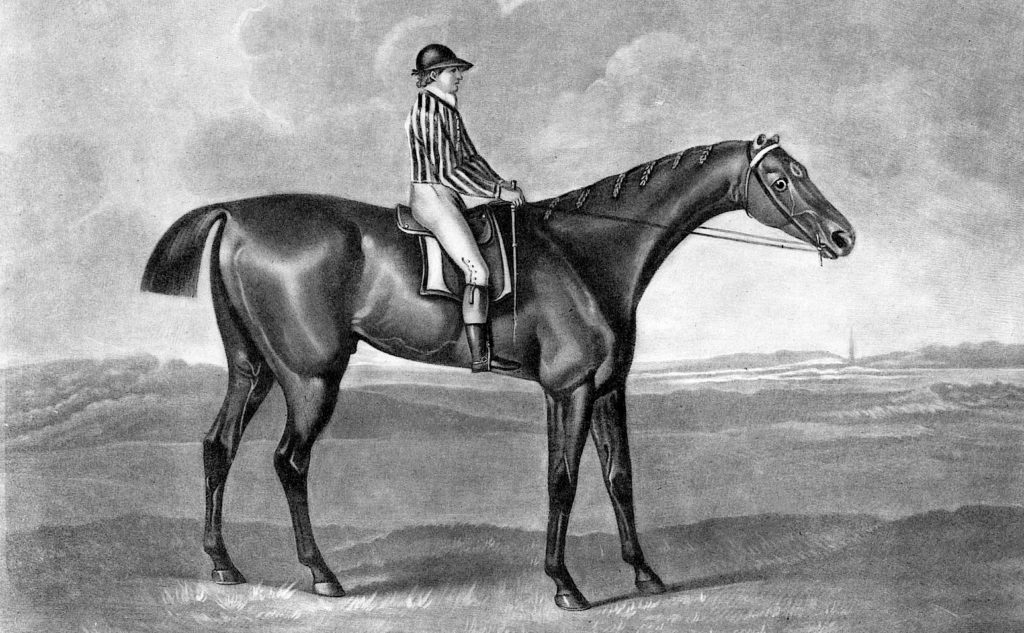
Skyscraper with the then fashionable clipped ears. Sam Chifney Snr, aboard.

Won 15 races incl. Princes Stakes, Newmarket, Derby Stakes, Claret Stakes (walk-over) and 3 King’s Plates.

HUNCAMUNCA br.f. 1787 ex CYPHER by SQUIRREL. Dam of CHAMPION b.c. 1797 by POT-8-O’s won Derby Stakes, St Leger Stakes.

PRUNELLA b.f. 1788 ex PROMISE by SNAP. Dam of PELISSE br.f. 1801 by WHISKEY, won Oaks Stakes; POPE b.c. 1806 by WAXY, won Derby Stakes.

ST GEORGE b.c. 1789 ex daughter (1775) of ECLIPSE. Won 14 races incl. King’s Plate, York, Jockey Club Plate. Sire of PAN ch.c. 1805, won Derby Stakes.

VOLANTE b.f. 1789 ex FANNY by ECLIPSE. Won Oaks Stakes.

DIAMOND br.c. 1792 ex daughter (1774) of MATCHEM. Won 21 races incl. Jockey Club Stakes, Jockey Club Cup, Oxford Cup.

____________________________________________________

For more racing history see Michael’s Books for Sale. 

To see Michael’s TV interviews go to the foot of About Michael