Archive for 2023

The Ghostly Lieutenant

Posted on:

The Ghostly Lieutenant

Father Perry Green and his housekeeper, Emily, having spent the morning taking down the Christmas decorations, were carefully wrapping the crib figures in tissue paper and boxing them up for next year.

The tree had been a bit of a problem – an artificial, three-part, screw together, measuring eight feet high. Not Father Perry’s idea, but Emily had insisted, “I haven’t time to hoover up pine needles for the twelve days of Christmas.”

So now, having forcefully crammed the tree back into its original box, it joined the other packages on the landing, waiting for Father Perry to put them in the loft.


A few days later, not having visited the loft since moving into his new residence, Perry was keen to tell Emily what he had found up there.

  “It’s terribly dusty, nothing has been disturbed for years – rolls of carpet, tatty curtains, old picture frames; no lights of course, but there is a skylight window and under it, there’s a card table, a wicker chair and a pile of old newspapers. It looks as if many years ago someone went up there to study. Oh, and I think we might have mice too. I will have to ask the council to send around the pest controller.”


The following Saturday, there was jump racing at Ascot on TV.

Father Green had come back with the Racing Post and was looking forward to studying the form. However, no sooner than he had summed up the first race, Emily’s brother, Donald, arrived to tidy the garden, rake up the leaves and burn them.

Perry became restless and felt guilty reading the racing pages while Donald was working, so to ease his conscience, he went out to make himself useful.

An hour or so later, with Donald gone and the leaves gently smouldering at the bottom of the garden, Perry thought he just had time to find a winner.

  “Have you seen my Racing Post, Emily?”

But no, she hadn’t, and after he had made a thorough search, his frustration became evident when, on turning on the TV, he learned that the only horse

he had picked out – Mark Pitman’s Hitman – had won at 20-1.


That night, while lying in bed, Father Green was disturbed by a scampering in the loft, not much and not often, but just enough to add to his irritating day.


Monday morning, after mass, Father Perry went out to buy four mouse-traps and on returning, climbed up into the loft to prime them with Sainsbury’s mature cheddar.

The manoeuvre to set the first three entailed Perry crawling around on his knees with a torch for ten minutes. But then, with a touch of flair, he planned to set the final trap on the table under the skylight.


Approaching the dusty card table his eyes fell upon a half-opened Racing Post. He checked the date – it was Saturday’s.

“That’s impossible,” he uttered, then, instinctively, he turned the pages to the Ascot form, and instantly recognised the circle he had drawn around Hitman.

Trembling slightly and feeling angry, he tried to reason how the newspaper he couldn’t find on Saturday had now appeared in the loft.


After priming the fourth trap, Father Perry descended the ladder still in a state of bewilderment. Then, sitting down heavily on a kitchen chair he told Emily of the mystery.

Whilst making the tea she shot him an old fashioned look, before posing, “Are you sure you didn’t go up there before Donald came; you’ve been going on about those mice for days?”

 Still a little confused, Father Perry knew he hadn’t and didn’t bother to answer.


The next day, as soon as Emily went shopping, Perry decided to take another look in the loft. He had told himself it was to see if the traps had bagged a mouse or two, but in truth he was still mystified by the reappearance of his Racing Post.  

Taking a torch, he checked the first two traps – one tiny mouse.

“Looks like they’ve started breeding up here,” he thought. Then, glancing across to where the light partially covered the table, he thought he could dimly make out a figure hunched in the wicker chair. He took a half step and leaned forward, to be sure. Suddenly, the chair creaked and a figure in a military uniform half turned his head to gaze in his direction. Perry recoiled in horror. Half of the man’s face had been shot away, there was no blood, but the face had a grey ghoulish look. Father Green, now transfixed four yards from the vision, spoke out – his faltering voice sounding distant and hollow.

“Who are you, and, and w-why are you here?”

The man then got to his feet and slowly raised his arms above his head, as in an act of surrender. Perry, mesmerised, focussed all his attention on the image in an attempt to remember every detail, but then, after six or seven seconds, the man whose uniform Perry now recognised as an army Lieutenant, slowly faded away.


“Father, are you in the loft, Father?”

Emily had returned laden from the shops and called up for some help to put the groceries away.

When Perry came down, he said nothing, putting away the shopping as if in a trance. Meanwhile, Emily, sensing that he was preoccupied waited, until eventually asking, “How are the mice up there – still running around?”

Perry remained pale and preoccupied.

Then putting his hand on her shoulder said, “Sit down a minute Emily.”

They both sat down.


 “Look, I don’t want you to think I’m going mad, but, I have just seen what I think was a ghost in the loft – a military man, badly wounded.”

  Perry held the corner of the kitchen table for support while he continued, “I believe he might have been a Lieutenant in the First World War.”

  Emily listened, reserving her credence and watching poor Perry’s face while he tried to make sense of what he had just seen. And although they both made an effort to normalise the rest of the day, the thought of the ghostly Lieutenant returned in every quiet moment.


The next morning, soon after Perry had gone out for his Racing Post, Emily, courageously pulled down the loft ladder, “To see for myself,” she mused.

“Father Perry was right about one thing,” she thought, “it was terribly dusty.”

Then, flashing a torch about her, she saw the dead body of a mouse caught in a trap.

“Yuk!” she recoiled.

Seconds later, she heard a rustle of paper and instinctively thought it was another mouse, or worse still, a rat. But slowly, almost unwillingly, her eyes went to the far end of the loft. And there, under the murky skylight, she saw him. Dignified in appearance and in his mid-thirties, he took no notice of her and carried on reading his newspaper.

“It was true, he was wearing a military uniform,” but then, after remaining motionless for what seemed like a full minute, she nervously called out, “Can I help you, Sir?”

He neither moved, nor spoke.

Then, as he slowly faded before her eyes, she had the strangest feeling that he belonged there.

Carefully, she made her way back and down the ladder. Where feeling numb from the experience she flopped into a chair and gazed blankly out of the kitchen window.

  “So it really was true,” she told herself, “Just as Father Perry had said.”

Slowly, her validation of the vision led her on, and Emily, being Emily she soon became troubled with the responsibility of it.


While waiting patiently in the kitchen her mind darted to and fro over her experience, honing it in order to add to Father Green’s first encounter. But where had he got to?


When eventually Father Green came through the door, he sensed from Emily’s expression she had been waiting for him. Apologising and explaining that he had dropped in on a sick parishioner, he put the kettle on, while Emily, anxiously at first, told him her story.

After a while, when she had run out of things to say and Father Green had nothing more to add, they agreed that a drive and a walk around Victoria Park would help them put things into perspective.

  “Blow the cobwebs away,” said Emily, taking charge of the situation, “You’ve been too long worrying about St Joseph’s and that silly diocesan survey, and now this. A good long walk in the fresh air is what’s needed. I’ll put together a picnic.”


Vicky Park, as it is known locally, was bathed in a watery sunlight and sitting on one of the benches by the lake, Father Green and Emily ate their sandwiches and fed the ducks. Oddly, they took on the appearance of a married couple after a disagreement, however, there had been no disagreement, only disbelief.

They spoke very little, each in their minds revisiting the appearance of their ghostly lodger.

There were very few people in the park that day, but Father Perry commented on the two soldiers taking a stroll.

  “You know, there can be very little peace in an active soldier’s life and those who fight in close combat must remember those violent images for the rest of their lives.”

Then as an afterthought, “And what of the loved ones left behind?”

Suddenly, he recalled the childhood memory of the framed blood stained photograph on the mantelpiece of his great aunt Maud. Once she had told him that her husband, Walter, when fatally wounded in the trenches at Mons, had held it up in front of him, before he died.

  Father Perry, a very gentle and fearful man, told Emily, “I would surely have suffered nightmares if I had witnessed those bloody battles at close hand.”

Emily, touched by his sentiments, supported and sympathised with him, until finally, she diverted the topic to her idea that perhaps, the ghostly Lieutenant had lived in the house some years before.

  “We could check on that, I suppose,” said Perry, thoughtfully, “I’ll go to the Council Offices tomorrow, and ask if they have a record of past occupants.”

“While you are there,” lightened Emily, “would you ask them to send a pest exterminator – who knows how many mice we’ve got up there now?”


Father Green’s enquiries were absorbing. In fact, he was soon spending more time at the Council Offices than at St Joseph’s. Nevertheless, with time put to good effect, he had made steady progress.

Apparently, a Mr and Mrs Henderson-Bell had lived there with their son, Roland, until 1913. They then went to live in Canada, leaving Roland behind, until he joined the Army a year later. Further records showed the house as purchased by the Army in 1919.

Then, suddenly remembering the ever-growing patter of tiny feet in the loft, Perry made an appointment for the pest exterminator to call.


A week later, a ring at the front door brought in Mr Horatio Smallwood, the tall, thin, weasel-like, pest exterminator from the Council. His ID checked, Father Perry welcomed him in, introduced him to Emily, then took him upstairs to the loft ladder. Neither Father Perry nor Emily made any mention of their ghostly lodger, and once Mr Smallwood was in the loft, Perry, rather than accompanying him, nervously hovered at the foot of the ladder, praying that the Lieutenant would not put in an appearance.

After what had seemed the slowest 20 minutes in Father Perry’s life, Smallwood, having replaced the traps with rat poison, descended. Whereupon, Perry, after scrutinising the weasel’s face for signs of a sighting, gave grateful thanks. In the meantime, Mr Smallwood washed his hands, asked for a ‘job done’ signature and, before Perry’s heartbeat had returned to normal, was gone.


Having as he thought, his obsession with the spectre under control, Father Green returned to the loft the following week. Sure enough, there was no sign of mice. Mr Smallwood had told Perry that when the mice ate the poison they would scuttle back to their holes to die.

However, the question that had troubled Perry’s mind was silently answered when, under the skylight all that was visible was an empty table and chair. Still requiring proof, he again looked hard, looked away and refocused – nothing.

For a moment, he stood there bathing in the relief. Then, torch in hand, he walked across to where the spectre had been. His old Racing Post was still there, but with it, he found a pile of very old newspapers, some racing. He looked at the dates – all were between August and November 1917. The front pages gave reports of the Battle of Passchendaele in Belgium, one newspaper, however, was folded to the racing news. Perry scanned the page – it gave the result of that year’s St Leger and on seeing the name Gay Crusader, he was reminded of that great horse’s Triple Crown victories.

When later, he tossed the paper back onto the table, he caught sight at the foot of the wicker chair, what looked like a ladies prayer book.

It was, and inside the front cover, he read the inscription – “To Rosemary, with fondest love, Roland.”


“Strange,” he thought, “Perhaps he never gave it to her? Unless, that is, she sent it back!”

Finally, carefully folded into the back of the prayer book, he found a cutting from the local paper, telling of the bravery at Passchendaele of Lieutenant Roland Henderson-Bell.  


When Father Green and Emily did their big loft clear-out, they vacuumed up all the cobwebs and dead insects and took down the tatty curtains and rolls of carpet. Lastly, it came to throwing out the Lieutenant’s card table and wicker chair. Still haunted by his memory, Perry deliberated with mixed feelings. Nevertheless, it was Emily who insisted, “The past is past Father, let’s now have a nice clean loft.”

So, as usual, in household matters, Emily had her way and everything was taken to the local waste disposal.


Returning from the tip, Father Perry was forestalled outside his house by a very old man.

“I saw you throwing out the last of Roland’s furniture,” he said inquisitively.

“You knew him?” replied Perry, stunned.

“Oh yeah, we all knew him round here years ago. Everybody gave him money you see; after all, he was so horribly wounded.

Mind you, that was before we realised he was gambling everything away on the horses. I was only a small boy at the time,” he said reminiscing, “but my Mum and Dad were very angry when they found out.”

“That said,” he continued, “I always had a soft spot for him – he used to call me little Tommy Atkins and on one occasion he showed me his medals and his officer’s revolver.”

“Sadly, what finished him was when his lady friend broke up with him.  Soon after that, he died, suddenly like.”

“I shouldn’t be telling this to you Father,” he said, lowering his voice, “but I heard say she lost a child – whose, I couldn’t say. But you shouldn’t listen to rumours, should you?”


Father Green, however, felt compelled to keep the ladies prayer book and later that month, invited little Tommy Atkins to attend a belated Mass at St Joseph’s for Lieutenant Roland Henderson-Bell and his fiancé, Rosemary.

Very few attended, but Emily and the old man went along and sat near the front, where they saw Father Green put Rosemary’s prayer book on a corner of the altar. The Mass progressed through the usual rituals and concluded with the final blessing.


Afterwards, outside the church, while Father Green was conversing with his parishioners, he suddenly remembered he had left Rosemary’s prayer book on the altar. Excusing himself he hurried back through the empty church – it had gone.

For a moment or two, he felt confused, until believing that Emily must have picked it up. Then, while still a little unsure, he heard the scraping of a chair in the darkened Lady Chapel. Peering through the shadows, he could just make out the veiled outline of a young woman holding the hand of a child in school uniform. With caution, he slowly moved towards the figures, already knowing it was useless, as they became fainter and fainter until, on setting foot inside the Lady Chapel, he was just in time to catch a glimpse of the little girl turning and waving goodbye.


Father Green never told anyone of his experience and despite all his efforts, he was unable to recover Rosemary’s prayer book.


For more racing history see Michael’s Books for Sale. 
Gladiateur – ‘The Avenger of Waterloo’

Posted on:

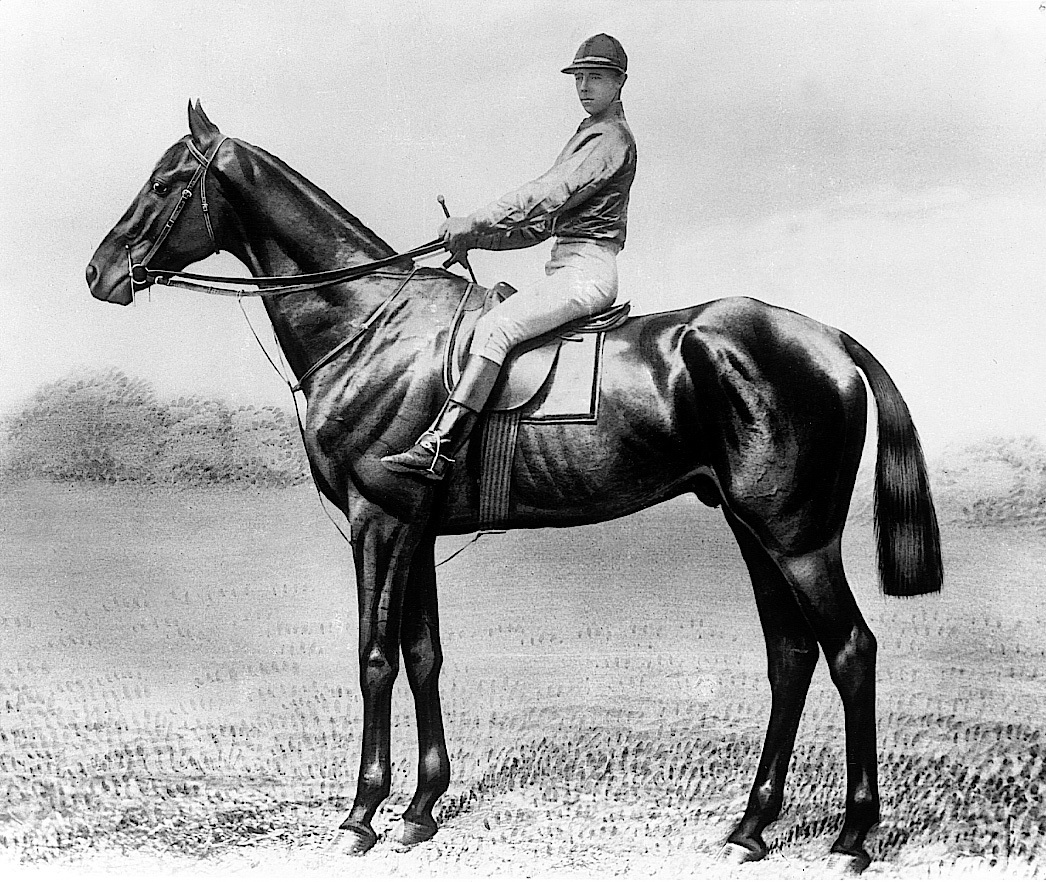
In 1865, after Gladiateur became the first French horse to win the Derby, he was heralded in France as ‘The Avenger of Waterloo’.

Gladiateur was bred by his owner Comte Frederic de Lagrange, a son of one of Napoleon’s generals who had inherited a fortune from his father.

Although trodden on as a foal, causing an enlargement in one of the joints of his off-foreleg, Gladiateur’s real problem was navicular disease, which caused intermittent lameness throughout his racing career. He almost certainly inherited this from his dam Miss Gladiator, who was a cripple and could not be trained. His sire, however, was the talented French Triple Crown winner Monarque.

Trained at Newmarket by Tom Jennings, Gladiateur’s two-year-old campaign comprised three races there in October. He made a winning debut in the Clearwell Stakes, beating the useful Joker by a length, then three days later he ran a disappointing dead-heat for third in the Prendergast Stakes. Finally, he ran unplaced in the Criterion Stakes while suffering from a cough.

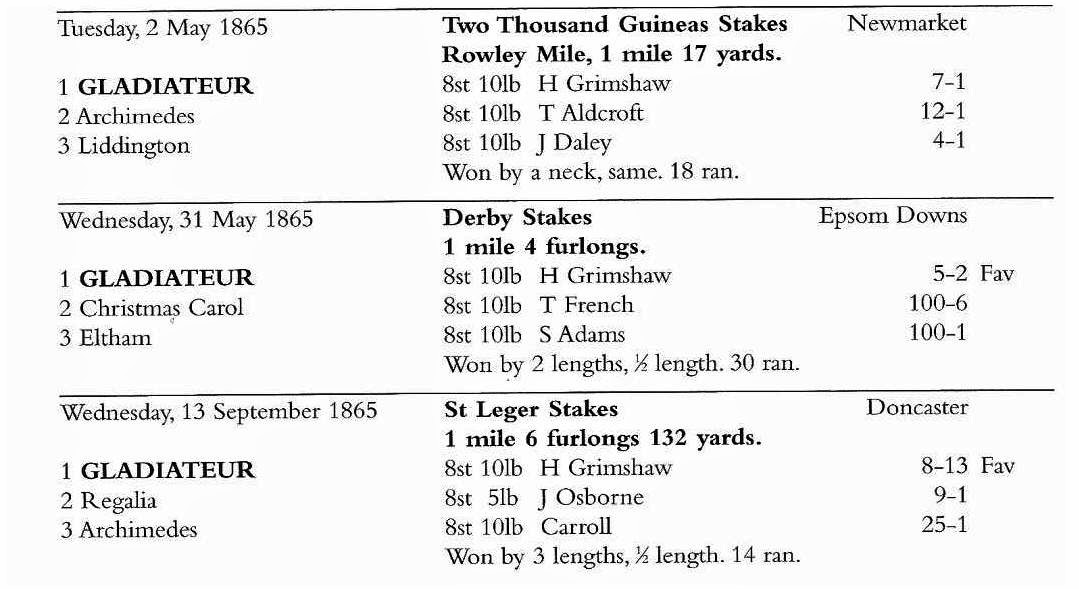
The following year he became increasingly lame and had to be blistered on both forelegs. However, the Two Thousand Guineas, run later than usual, allowed Jennings valuable time and despite the colt going to post only half-fit he managed to win in a desperate finish, beating Archimedes by a neck with Liddington a further neck away third.

Before the Derby, Gladiateur ran an amazing trial on the Limekilns over one and a half miles, giving Fille de l’Air, the previous year’s Oaks winner and successful in six races that season, 8lb and two other four-year-olds 35lb each. He beat them all with consummate ease.

After that, the Derby became a formality, and Gladiateur cut through a large field from the distance to win easily by two lengths.

Soon afterwards Gladiateur left for Paris where, amid scenes of national fervour, he won the Grand Prix de Paris over one mile, seven furlongs from Vertugadin and Tourmalet. On returning to England he won two races at Goodwood, one a walk-over, before suffering a further bout of lameness.

Although Gladiateur lined up the 8-13 favourite for the St Leger and appeared to win with ease, his great courage carried him through on three legs.

     Gladiateur’s Triple Crown

Three further victories, at Doncaster, Longchamp and Newmarket, preceded his final race of the year in the Cambridgeshire, in which he ran unplaced to Gardevisure trying to concede 52lb in a field of 36.

The following season Gladiateur’s legs were worse than ever but despite this, he went over to Paris to win the Grand Prix de l’Imperatrice over three miles one furlong, and a week later, Le Coupe over two miles. He then returned to England to win the Ascot Gold Cup by 40 lengths; for many years this was considered to be the finest performance ever seen on a racecourse.

Finally, Gladiateur revisited Paris to win the Grand Prix de l’Empereur over nearly four miles to beat his old rival Vertugadin easily by 3 lengths, the other two contenders having bolted at the start.

Henry Grimshaw (1841-1866), rode Gladiateur in all three races of his Triple Crown. Born in Lancashire, Henry was apprenticed to John Howe Osborne senior, therefter marrying one of his daughters. In 1859 he won the Cambridgeshire for the Osbourne stable on Red Eagle, carrying 5st 9lb. Short sighted from an early age he occasionally relied on fellow jockey’s telling him where he was in the race. Sadly, he was killed on 4 October, 1866, when his trap overturned in the dark when driving home to Newmarket.

Tom Jennings (1823-1900), trainer of Gladiateur, served his apprenticeship in Chantilly under the eye of his relative Thomas Carter. In 1843, as stable jockey to his elder brother, Henry Jennings, he won the Prix de Diane on Nativa. However, after a serious family disagreement, he packed his bags to train in Northern Italy. In 1851, he returned to France to train for Comte Frederic de Lagrange, and won the 1864 Oaks for him with Fille de l’Air. At Royal Ascot in 1878, he completed a unique treble by training Verneuil to win the Gold Cup, Gold Vase and Alexandra Plate. While in public life, he was instrumental in the building of Newmarket’s two hospitals and the local waterworks.

Gladiateur, clearly one of the all-time greats, retired to the Middle Park Stud at a fee of 100 guineas, but proved a disappointment and died of chronic navicular disease in January 1876.

Nevertheless, he remains the only horse to have won the Triple Crown and the Grand Prix de Paris, and is commemorated by a life-size bronze statute at Longchamp.

For more racing history see Michael’s Books for Sale. 
To see Michael’s interviews go to the foot of About Michael

The 3rd Earl of Egremont – forerunner of Goodwood

Posted on:

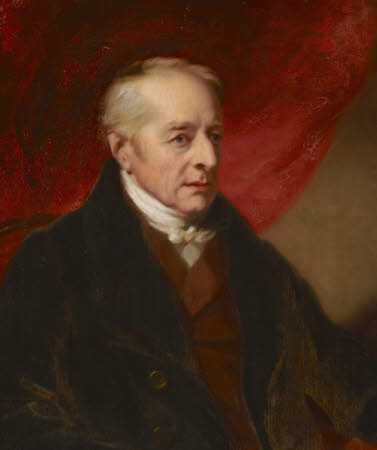
The 3rd Earl of Egremont

George O’Brien Wyndham

(1751-1837)


A highly respected and immensely wealthy man, Lord Egremont was said to give away £20,000 a year to charitable causes.

He was an enthusiastic patron of art and the painter William Turner, lived for a while at his Sussex seat of Petworth House.

Although Lord Egremont had more than 40 children, the only legitimate one died in infancy and so he was succeeded in the earldom by his nephew George Wyndham, who became 4th Earl of Egremont.

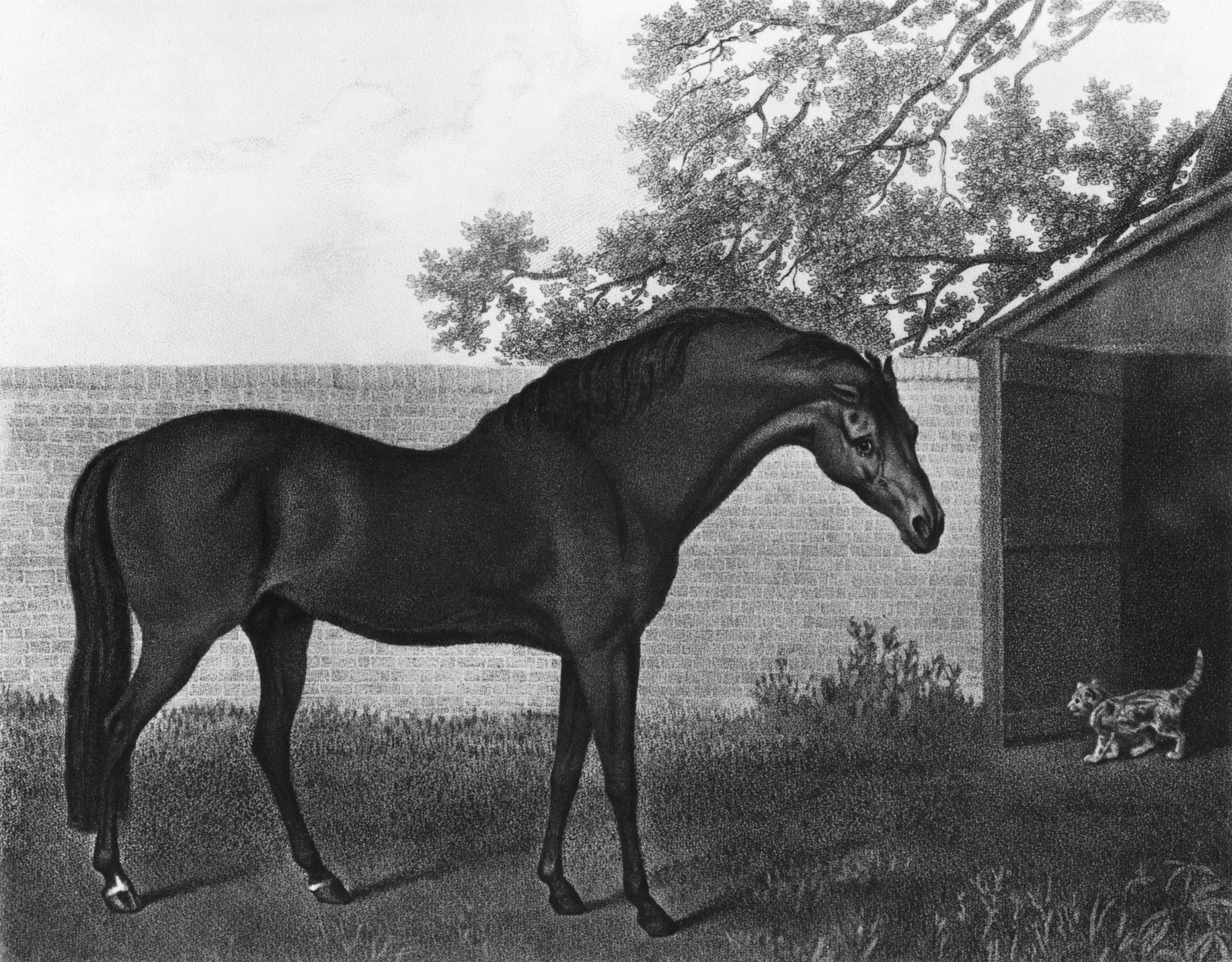
Successful on the turf, he bred six Derby winners: Assassin (1782), Hannibal (1804), Cardinal Beaufort (1805), Election (1807), Lapdog (1806) and Spaniel (1831).

He also bred six winners of the Oaks: Nightshade (1788), Tag (1789), Hippolyta (1790), Platina (1795), Ephemera (1800), and Caroline (1820).

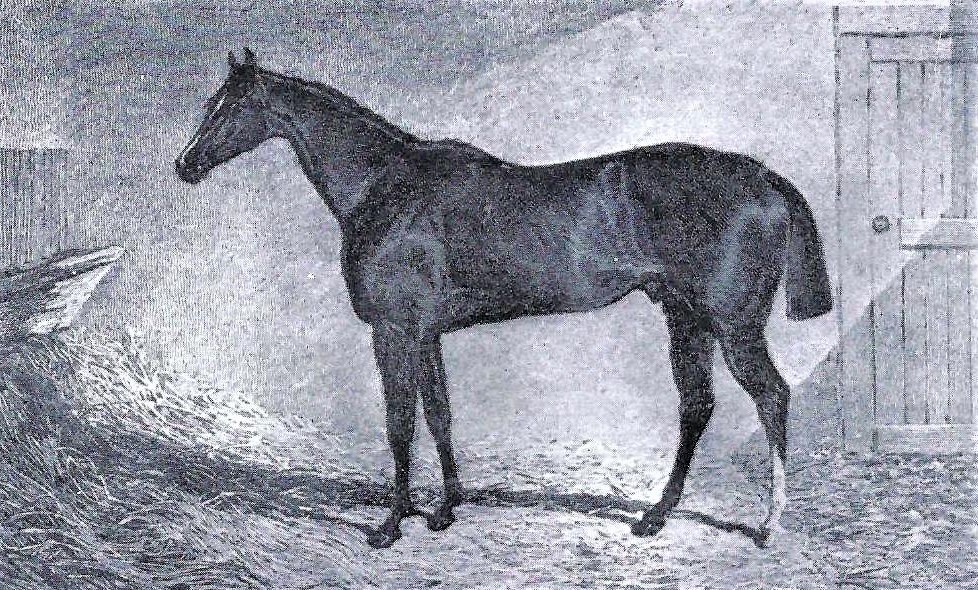
His final Classic winner was Spaniel, (see below), a bay colt by the 1810 Derby winner, Whalebone, out of a Daughter of Canopus.

REFERRED to as “the little Whalebone weed”, Spaniel was sold by Lord Egremont to Lord Lowther for £150 over the dinner table. He was a brother to Lord Egremont’s fifth Derby winner Lap-dog, but despite this promising pedigree he appeared to have few if any Classic pretensions after a two-year-old career involving four defeats in as many starts for trainer Joe Rogers.

Two days before the Derby, Spaniel won the Shirley Stakes over the Epsom Mile and it was decided that he should take his chance in the big race. He started at 50-1; the 4-6 favourite was Lord Jersey’s Riddlesworth, a well-bred colt who had won the Riddlesworth Stakes, the Two Thousand Guineas and the Newmarket Stakes.

At the distance Riddlesworth looked to have the race at his mercy. But under the vigorous driving of Wheatley, Spaniel joined Riddlesworth 50 yards from home and after a brief struggle won by three-quarters of a length.

Although Spaniel’s captivating performance was never repeated, when sold to Mr Meyrick, he picked up £50 plates at Haverfordwest, Carmarthen and Brecon. Spaniel did not race again until late-August 1832, where at Canterbury he finished badly lame and was put down.

Mysteriously, just how many of Egremont’s Classic winners were, as suggested, actually four-year-olds remains unknown. His trainer, Bird, confessed on his deathbed that he had twice won the Derby by slipping two-year-olds into the yearling paddocks. The secret well kept, Lord Egremont remained unaware of his trainer’s deception.

In his day, the Earl, although blunt and eccentric, was a popular and prominent figure in English society.

After the cessation of the Earl’s popular race meeting held in his Petworth Park, the 3rd Duke of Richmond began racing at Goodwood from 1801.


For more racing history see Michael’s Books for Sale

To see Michael’s interviews go to the foot of About Michael

Frederick Augustus, the Grand Old Duke of York (1763-1827)

Posted on:

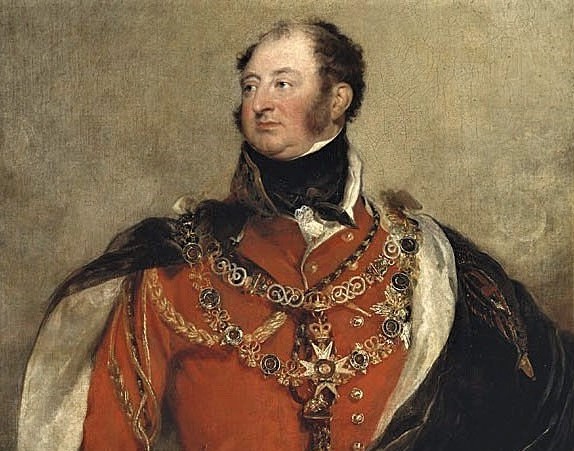
Frederick Augustus, the Grand Old Duke of York (1763-1827).

A highly controversial man of the turf and the second son of George III.

He bred and owned two Derby winners – Prince Leopold (1816) and Moses (1822), both ran in the name of his racing manager, Warwick Lake and were trained by William Butler.

Thomas Coleman in his “Recollections”, discribes an interesting scene following the 1822 Derby.

   “After the races, there was a prize-fight between a Jew named Moses and another, both regular fighting men. They fought in the bottom, near the old two-mile post, and the Duke of York was there on a splendid brown cob – such a beauty! About 15 hands high, clean shaped, and such power, with a beautiful head. The Duke (owner of Derby winner, also called Moses), was not so tall as his brother, George IV, but more corpulent – ran more to middle – appeared to enjoy the fight much, and as, round after round, those by the ring kept calling out,’ Well done, Moses! – go it again, Moses!’ he seemed to be pleased and enlivened at the sound of the word, cast up his head and gave a sort of puff with his mouth.”

However, as Commander-in-Chief of the army, his campaigns on the continent were strongly criticised and verged on disastrous. 

Unsuprisingly, he faired no better at the card table, where he lost his estate in the West Riding and his country house, Oatlands, in Weybridge, Surrey.

Ironically, the Duke is the only Bishop to have won the Derby, having been appointed to the Bishopric of Osnaburgh when only six months old.

In 1826, the Duke of York, knowing to be greatly in debt to a firm of London jewellers, leased to them his newly acquired mining rights of Cape Breton, Nova Scotia, and agreed to them setting-up the General Mining Association to operate the mines.

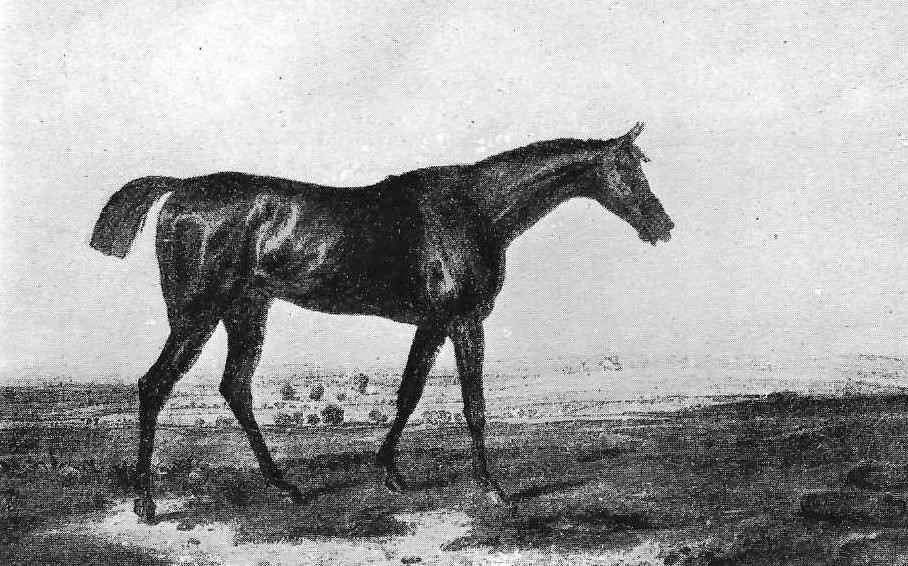
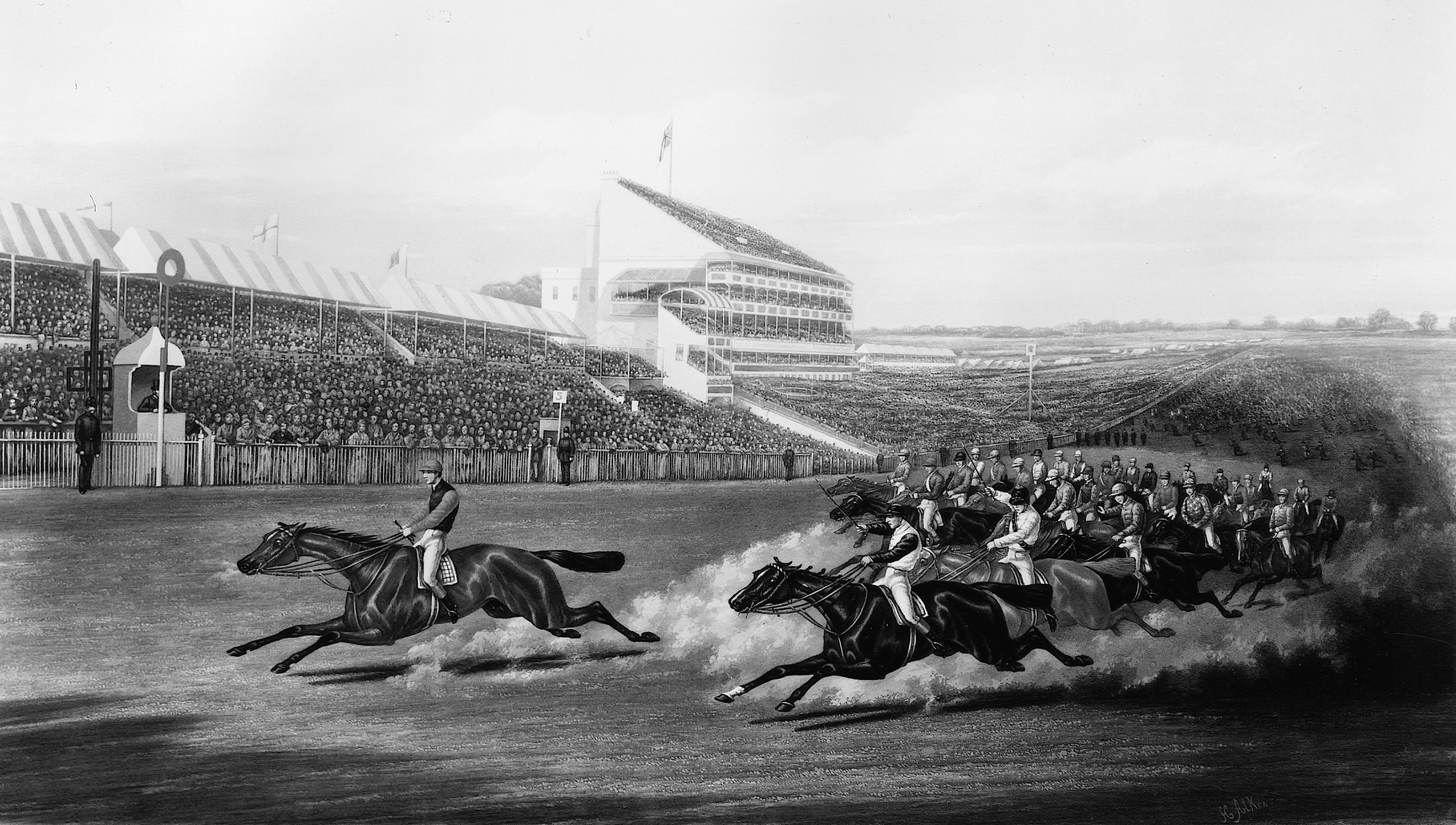
This in time would have cleared his debts and eventually he would have received some interest from the arrangement. But he died six months later and as a result, his stud and stable went under the hammer, with Moses, (below), who went on to win the Albany Stakes at Ascot and the Claret Stakes at Newmarket, sold to the Duke of Richmond for 1,100 guineas.

It is, however, from his military blunder in Flanders on the hill at Cassel, that the Duke is most remembered in the children’s rhyme – used by the author when bouncing each of his four young children, in turn, on his knee!


The grand old Duke of York,

He had 10,000 men.

He marched them up to the top of the hill

And he marched them down again.


And when they were up, they were up.

And when they were down, they were down.

And when they were only half way up,

They were neither up nor down.


For more racing history see Michael’s Books for Sale

To see Michael’s interviews go to the foot of About Michael

____________________________________________________________________

Soul Sister’s 2023 Betfred Oaks – Full Report

Posted on:

246                                   SOUL SISTER                                2023

 RUN on Friday, 2 June 2023, as the Betfred Oaks, over the Derby Course of one mile and a half and 6 yards, Epsom Downs. For three-year-old fillies, 9st 2lb. Value to winner £311,025.

1st   SOUL SISTER  Frankie Dettori   11-4*

2nd  SAVETHELASTDANCE   Ryan  Moore    5-6 Fav*        1¾ lengths

3rd  CAERNARFON  Connor Beasley   40-1*     Head

Also ran: 4th Maman Joon (Kevin Stott) 50-1*; Bright Diamond (Clifford Lee) 50-1*; Heartache Tonight (Cristian Demuro) 28-1*; Eternal Hope (William Buick) 12-1* (tailed off); Sea Of Roses (Rob Hornby) 100-1* (tailed off); Red Riding Hood (Wayne Lordan) 40-1* (tailed off, last).

 * Rule 4: Running Lion was withdrawn. Price at time of withdrawal 5-1.

Rule 4 applies to all bets – deduction 15p in the Pound.

Commentary: Savethelastdance, an Aidan O’Brien, Galileo filly, headed the market at 5-6, having won the Cheshire Oaks by 22 lengths. Soul Sister, a daughter of Frankel, although well beaten in the Fred Darling, redeemed herself in the Musidora with a four lengths victory. As Dettori’s intended last ride in the race, she was well supported at 11-4. Caernarfon, fourth in the 1,000 Guineas, was on offer at 40-1. After the 11 runners were installed, Running Lion, third favourite, drawn 2 and ridden by Oisin Murphy, became upset in the stalls, backed out and after unseating Murphy, ran loose and was withdrawn.

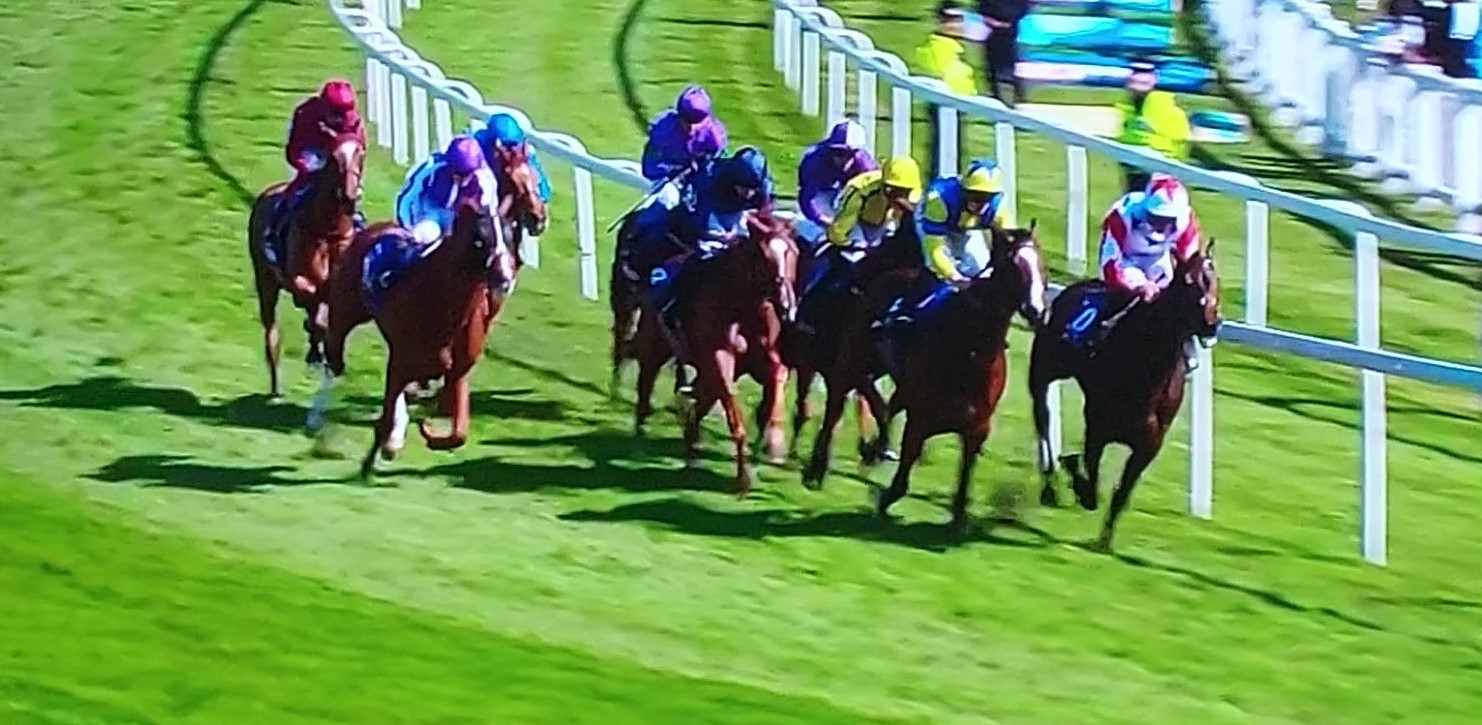
To protect the ground inside the repositioned running rail for the following days Derby, an estimated 14 yards were added. Off and running, after two furlongs Sea Of Roses led the pack, followed by Bright Diamond, Heartache Tonight and Savethelastdance. Climbing up to the Hill, Sea Of Roses continued to lead from Heartache Tonight, with Ride Riding Hood and Savethelastdance close up. Soul Sister, having held a prominent position early, was now taken back by Dettori and settled in last place.

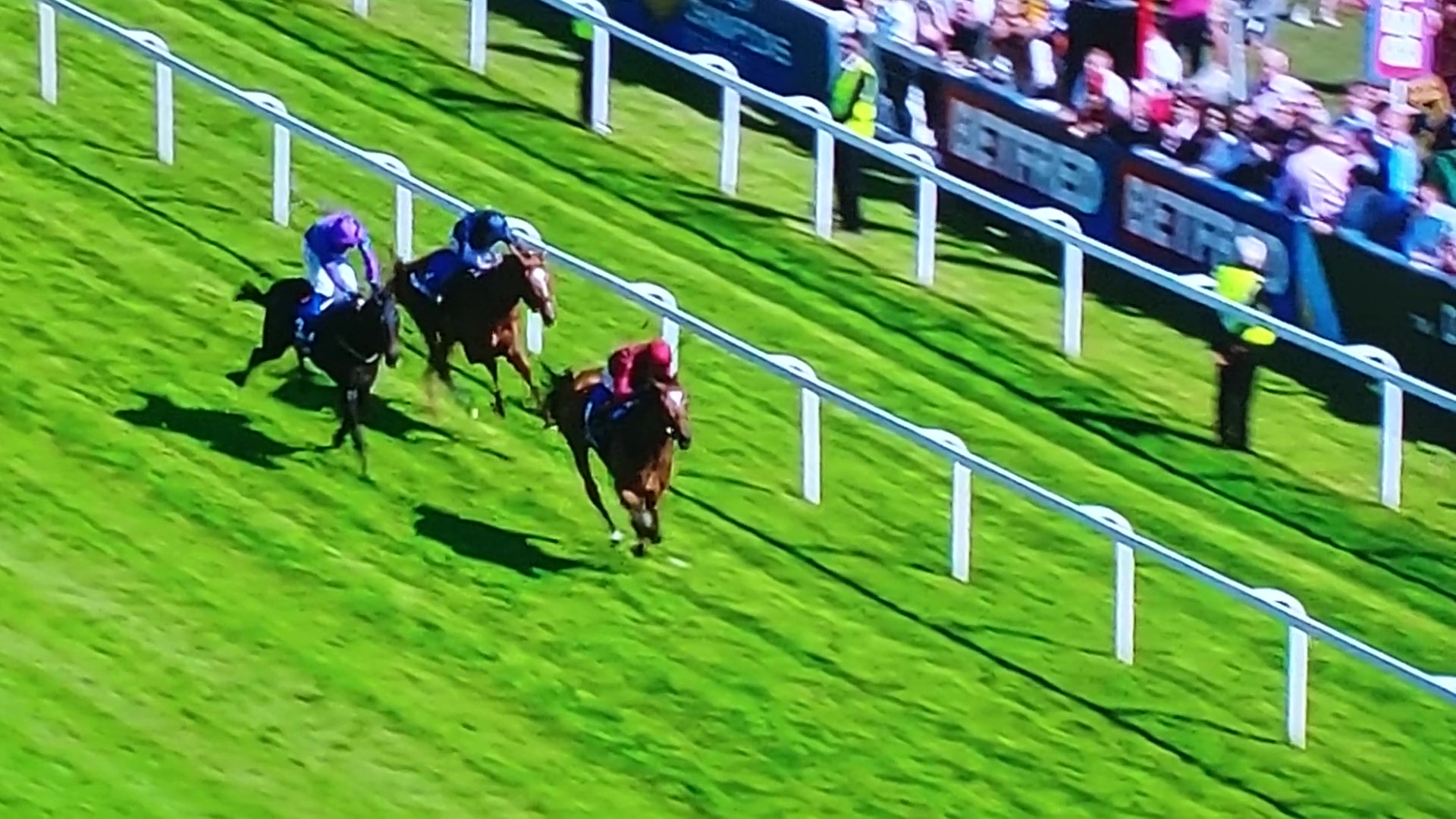
In the descent to Tattenham Corner, there was no change in the order until into the straight, where Soul Sister made rapid headway. Approaching the two furlong pole, Caernarfon, Savethelastdance and Soul Sister drew clear of the field to fight out the finish.

Soul Sister then asserted from the furlong pole, to win by 1¾ lengths, pursued by Savethelastdance, with Caernarfon, a head away third. Maman Joon finished fourth, heading a strung out field from a further 8½ lengths behind.

 9 ran. Time: 2 min 36.41 sec.

BRED and OWNED by Lady Bamford. TRAINED by John & Thady Gosden at Newmarket, Suffolk.

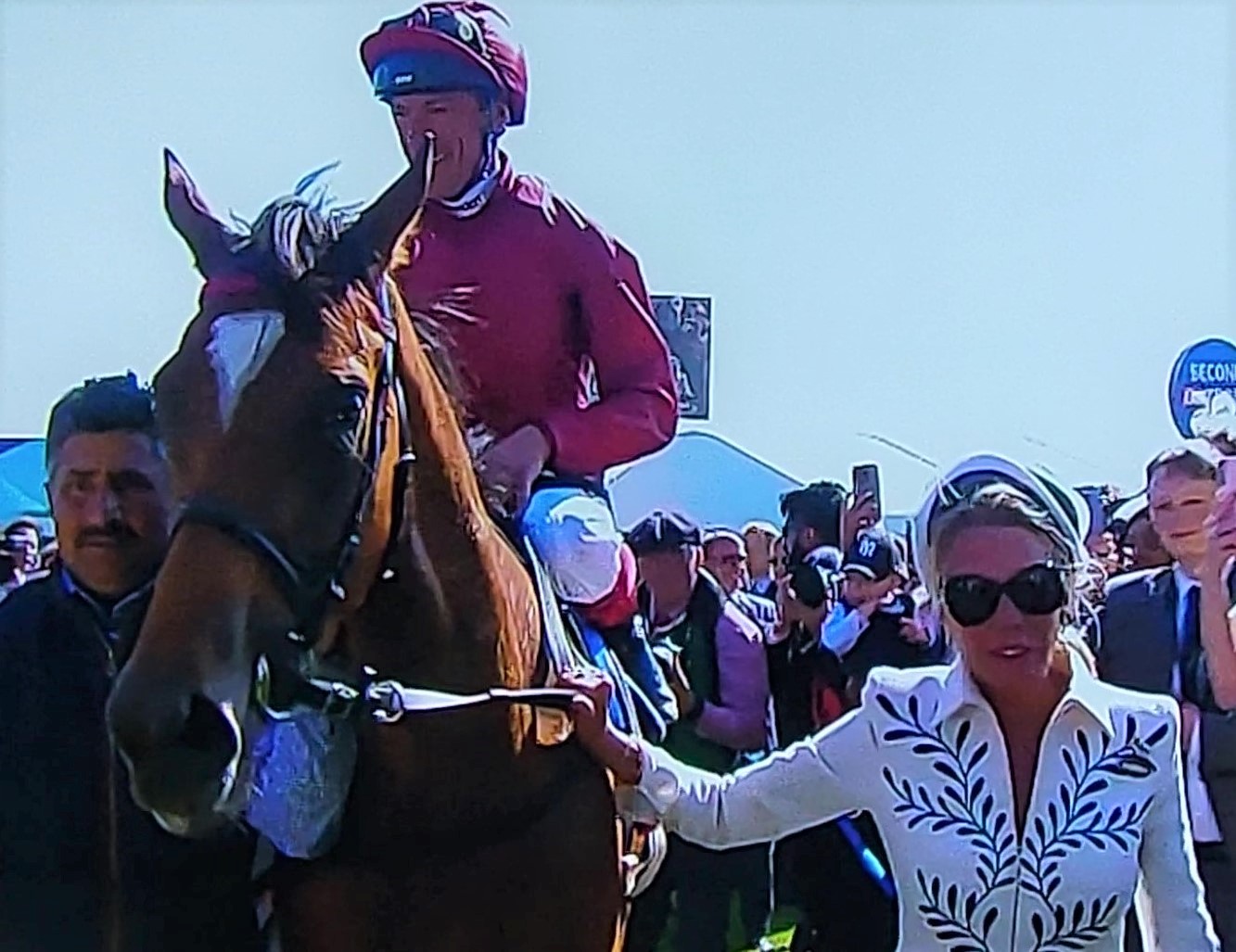
 There was much excitement in the winner’s enclosure after Frankie’s flying dismount. His long-time friend Lady Bamford, owner/breeder of the winner was hugged, kissed and then lifted up by an exuberant Dettori. Lady Bamford had previously owned and bred Sariska, the Oaks winner of 2009.

Soul Sister was Frankel’s 28th Group/Grade 1 success and his second Oaks winner, following Anapurna in 2019.

The winner, SOUL SISTER (b.f. 2008), had won 3 races from 4 starts: EBF Maiden Fillies Stakes, Doncaster, Tattersalls Musidora Stakes, York, Betfred Oaks, Epsom.

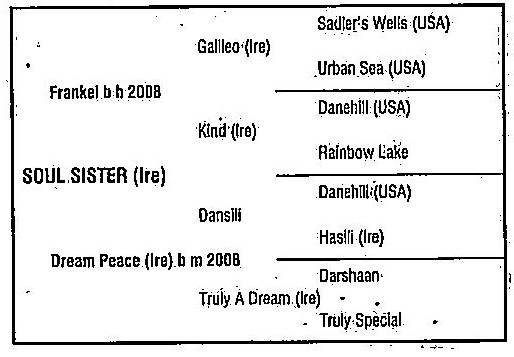
The sire, FRANKEL (b.c. 2008) ex KIND by DANEHILL, (unbeaten), won 14 races incl. Two Thousand Guineas Stakes, St James’s Palace Stakes, Sussex Stakes, (twice), Queen Anne Stakes, International Stakes, Champion Stakes. Sire of 6 British Classic winners since retiring to Judmonte’s Banstead Manor Stud in 2013: ANAPURNA , 2019 Oaks; LOGICIAN, 2019 St Leger, ADAYAR, 2021 Derby, HURRICANE LANE, 2021 St Leger, CHALDEAN 2023 , 2000 Guineas, and  SOUL SISTER, 2023 Oaks.

The dam, DREAM PEACE (b.f. 2008) by DANSILI, won 4 races from 18 starts: Prix De La Louviere , Deauville, Prix Nubienne and Prix Volterra, Saint-Cloud, Prix De La Nonette Shadwell, Deauville. Second in Diana Stakes (Gp 1), Saratoga,(twice). She has bred 5 winners of 11 races incl. Powerful Wings (b.g 2018) by Kingman, won Porsche Handicap, Ascot and Advancing Sports & Culture Handicap, Sha Tin.


Auguste Rodin’s 2023 Betfred Derby

Posted on:

245                              AUGUSTE RODIN                          2023             

Run on Saturday, 3 June, 2023 as the Betfred Derby over the Derby Course of one mile and a half and 6 yards, Epsom Downs. For three-year-olds; entire colts 9st 2lb, fillies 8st 13lb. 299 entries. Value to winner £885,781.84

1st     AUGUSTE RODIN          Ryan Moore                     9-2

2nd    KING OF STEEL             Kevin Stott                     66-1      ½ length

3rd    WHITE BIRCH                Colin Keane                12-1      4¾ lengths

 Also ran: 4th Sprewell (Shane Foley) 14-1; The Foxes (Oisin Murphy) 7-1; Waipiro (Tom Marquand) 25-1: Artistic Star (Rob Hornby) 22-1; Adelaide River (Seamie Heffernan) 33-1; Dubai Mile (Daniel Muscutt) 25-1; Arrest (Frankie Dettori) 4-1Fav; San Antonio (Wayne Lordan) 18-1; Passenger (Richard Kingscote) 8-1; Dear My Friend (Andrea Atzeni) 100-1; Military Order (William Buick) 9-2 (tailed off, last).

For those attending the Betfred Derby this could well have been a difficult day. Firstly the race had been moved to 1.30 (as the second race), to accommodate T V coverage of the FA Cup Final at 3.00pm; there was also a rail strike with all the three stations that serve Epsom closed. Then the protest group, Animal Rising, threatened to send a thousand protesters to continually delay until eventually stopping the race being run. This caused a massive increase in security and police presence. Fortunately, Animal Rising’s protest turned out to be a damp squib, amounting to a peaceful protest on a nearby roundabout and, the one  man who got on the course when the Derby had started was quickly dealt with. Not surprisingly, all this affected the attendance, estimated at half of the previous year. Disappointingly, in a break from tradition, the race was not attended by either the King or Queen.

Now to the contenders: Arrest, an impressive winner of the Chester Vase, set to be Frankie Dettori’s final Derby ride went off favourite at 4-1. Military Order, winner of the Lingfield Derby Trial and a full brother to Derby winner Adayar, was on offer at 9-2, as was Auguste Rodin, winner of the Group 1Futurity at Doncaster, a badly beaten favourite in the 2,000 Guineas, now back to his best according to trainer Aidan O’Brien. Feature of the betting was these three horses continually interchanged as favourite throughout the day. The first three in York’s Dante Stakes all found each way support, the winner, The Foxes at 7-1, the second White Birch at 12-1 and the unlucky third, Passenger, supplemented for £85.000, at 8-1.

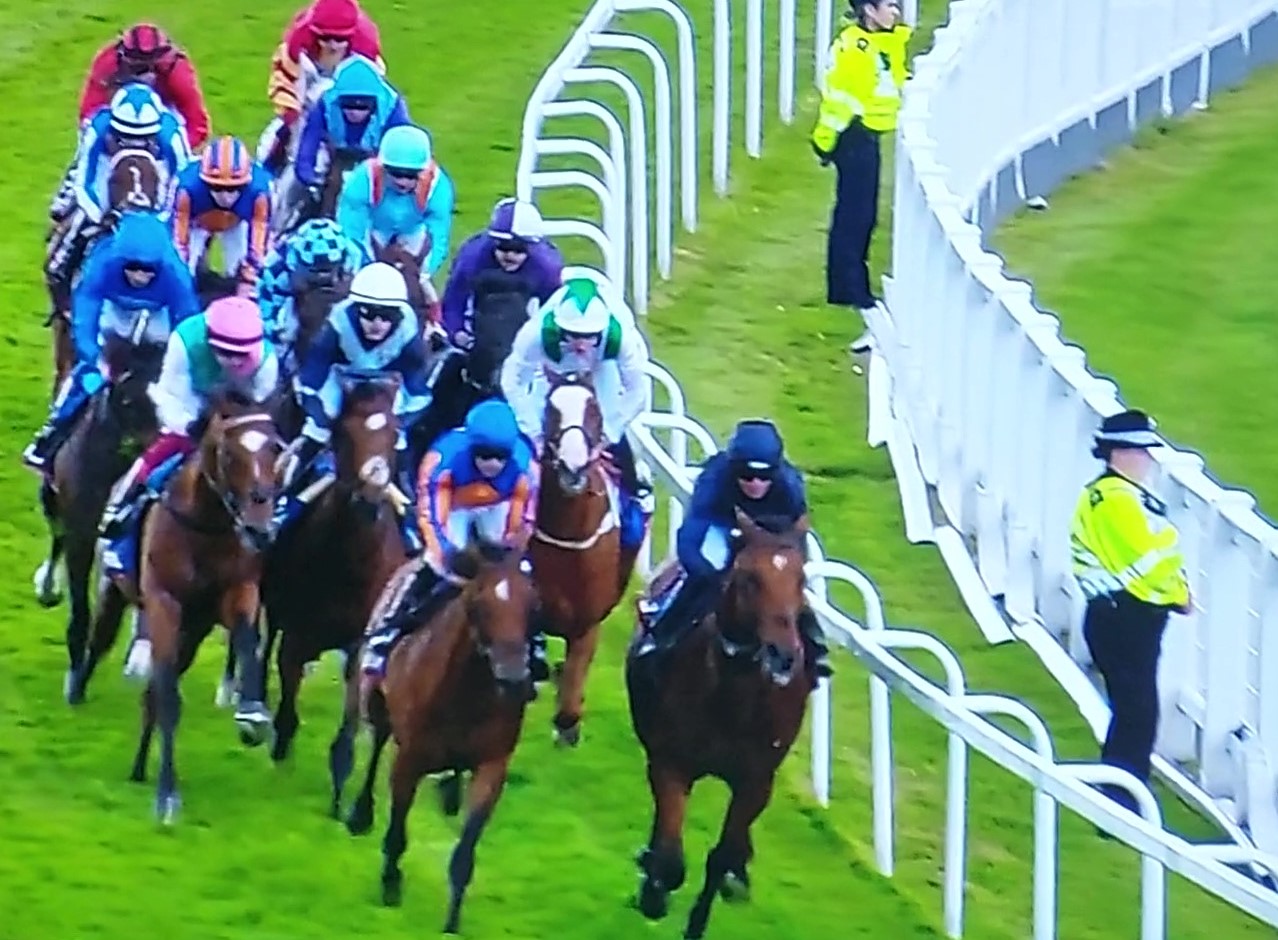
Fourteen runners went to post and the commentators “The’re Off”, was met with a cheer to rival Cheltenham. Leaving the stalls, The Foxes (drawn 3) stumbled, so causing White Birch and Dear My Friend, on his inside to lose ground. On settling down, Arrest, Adelaide River, Dubai Mile and Passenger took them along. After three furlongs, San Antonio joined Adelaide River to lead from Passenger and Arrest.

From the top of the hill down to Tattenham Corner the O’Brien pair established a two-length lead from Arrest, Passenger and Dubai Mile. Then, from three furlongs out, King Of Steel found a gap to chase the leaders. Soon after, Kevin Stott quickly sent King Of Steel into the lead, while Ryan Moore on Auguste Rodin, set off from the outside to follow, joining battle at the furlong pole.

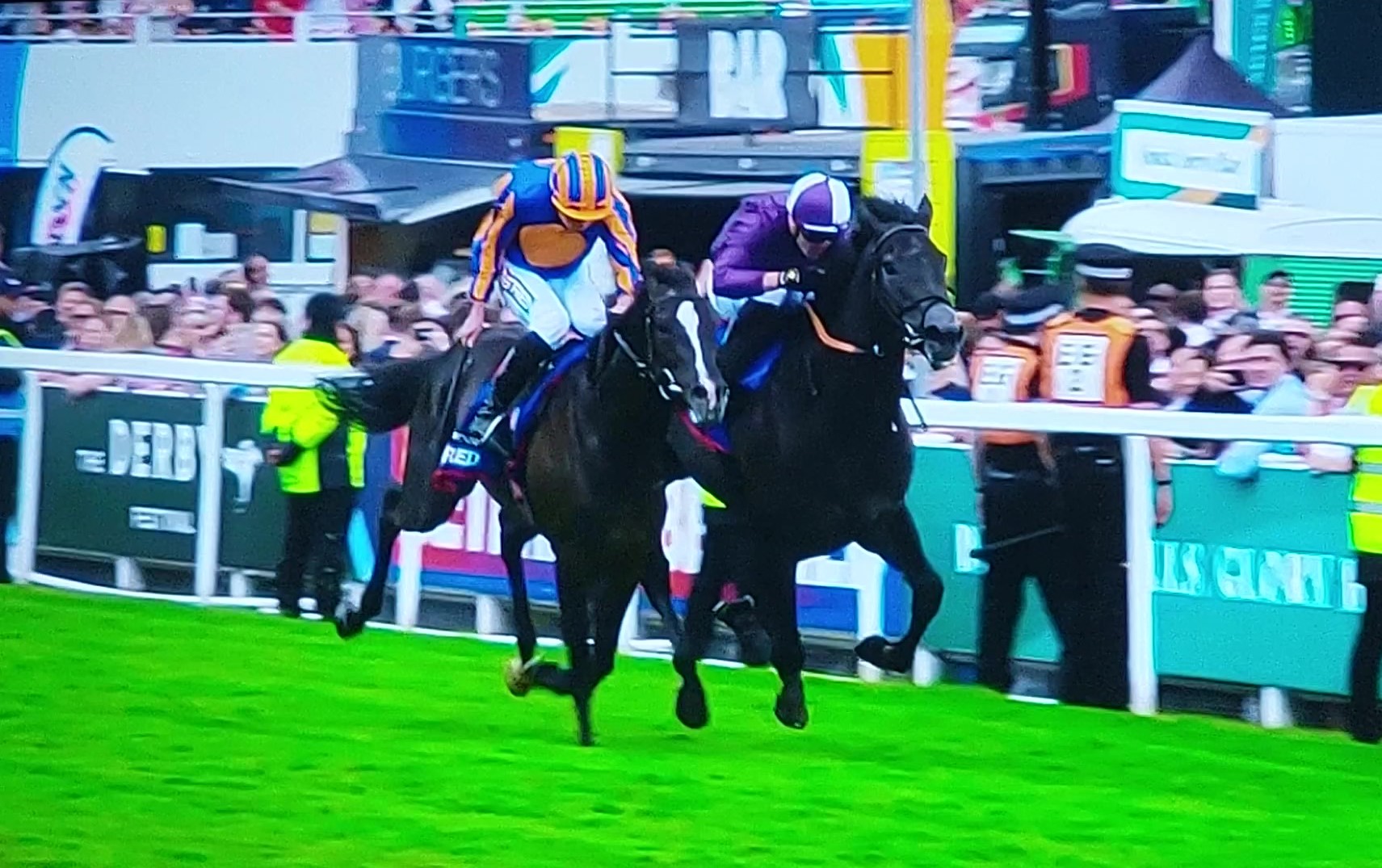
After an exciting duel, Auguste Rodin forged ahead within the final hundred yards to win by half a length, the pair having pulled four and three-quarter lengths ahead of the staying on White Birch. Sprewell was fourth and The Foxes fifth.

This was Aidan O’Brien’s record ninth Derby winner and Mrs John (Sue) Magnier and Michael Tabor’s 10th in partnership. It was also Ryan Moore’s third Derby winner after Ruler Of The World (2013) and Workforce (2010).

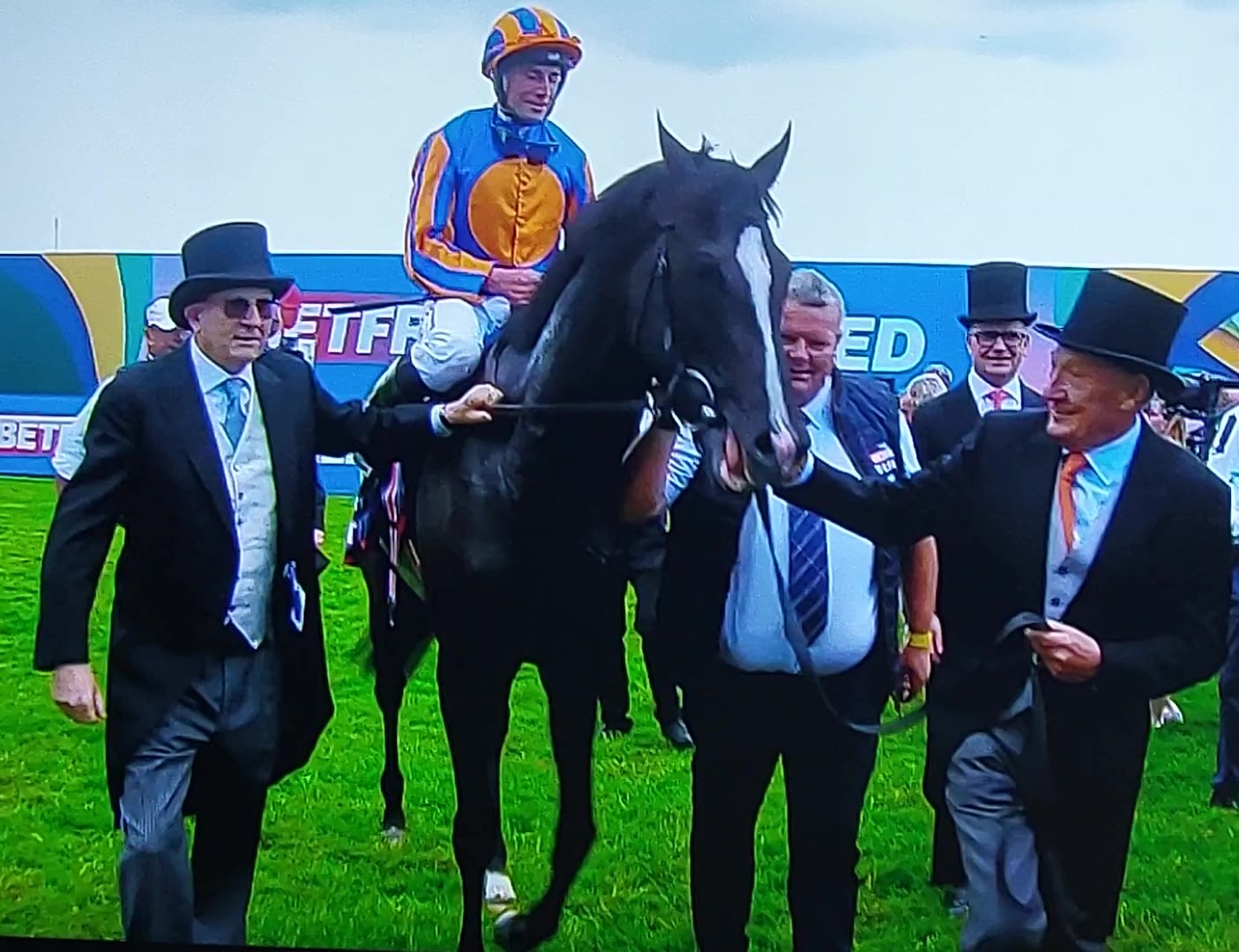
The winner was led in by owners Michael Tabor (right) and Derrick Smith (left).

14 ran. Time 2min 33.88 sec

The winner was bred by Coolmore Stud, Ireland, owned by M Tabor & D Smith & Mrs J Magnier & Westerberg, and trained by A P O’Brien at Cashel, Co. Tipperary.

___________________________________________________________________________________

The winner, AUGUSTE RODIN, had won 4 races from 6 starts: Irish Stallion Farms EBF Maiden Stakes, Naas, KPMG Champions Juvenile Stakes, Leopardstown, Vertem Futurity Trophy Stakes, Doncaster, Betfred Derby, Epsom.

The sire, DEEP IMPACT (b.c. 2002), won 12 races (from 14 starts) incl. Hochi Hal Yayoi Sho Stakes & Satsuki Sho, Nakayama, Tokyo Yushun (Japanese Derby), Kikuka Sho (Japanese St Leger), Tenno Sho Spring & Takarazuka Kinen, Kyoto, Japan Cup, Tokyo, Arima Kinen, Nakayama. Sire of  SAXON WARRIOR (b.c. 2015), winner of the Qipco 2,000 Guineas, Newmarket and SNOWFALL (b.f. 2018), winner of the Cazoo Oaks, Epsom.

The dam, RHODODENDRON (b.f. 2014) by GALILEO ex HALFWAY TO HEAVEN, won 5 races from 19 starts, incl. Dubai Fillies Mile, Newmarket,  Prix de l’Opera Longines, Chantilly, Al Shaqab Lockinge Stakes, Newbury. Second to ENABLE in the 2017 Investec Oaks, Epsom.   Auguste Rodin was her first foal.

_________________________________________________________________________________________________

For more racing history see Michael’s Books for Sale. 
To see Michael’s interviews go to the foot of About Michael


The diminishing Sire Lines of the Byerley Turk and the Godolphin Arabian

Posted on:

The diminishing Sire Lines of the Byerley Turk and the Godolphin Arabian

Over the past 30 years I have heard many horselovers express their concern over the diminishing Sire Lines of the Byerley Turk and the Godolphin Arabian.

To put their concern in context: the last Champion Sire to descend in male lineage from the Byerley Turk (br.c. 1684), was when Tetratema headed the list in 1929; while the last Classic winner was Julio Mariner, when winning the 1978 St Leger.

The Byerley Turk (br.c. 1684)

Julio Mariner was 23 generations from the Byerley Turk, so his influence, if any would be minute.

Similarly, the last Champion Sire to descend from the Godolphin Arabian (b.c. 1724), was when Chamossaire headed the list in 1964; while the last Classic winner was when Mon Fils  won the 1973, 2,000 Guineas; Mon Fils being 16 generations from the Godolphin Arabian.

Incidentally, 50 years after the death of the Godolphin Arabian, everyone of the first 76 British Classic winners had a least one strain of him in their pedigree.

The Godolphin Arabian (b.c. 1724)

From this you can see the now near extinction of both Founding Fathers male lines. But, it is just in the male lines and although Herod showed great prepotency with the Highflyer and Woodpecker lines, like St Simon’s line (with 10 Classic winners) from the Darley Arabian, they eventually died out.

So what’s to be done?

No doubt some of the best horses of today have strains of both Founding Fathers if you go back far enough, but their influence at some stage was completely overtaken.

Through all this, it is ironic, that Eclipse was never a Champion Sire, yet near 97% of all Thoroughbreds racing today trace back  to him.

I think it fair to say that Sire Lines only continue due to the prepotency of the stallion – Cyllene (1909) to Mill Reef (1978) and Cyllene to Pitcairn (1980), both eight consecutive generations. And more recently the four generations of Northern Dancer (1970) to Frankel (2021).

Ultimately, the aim in breeding is to produce the best. At present we have the on going battle between Dubawi and the Galileo/Frankel offspring in healthy competition, plus a resurgence in breeding for longer distances.

The improvement in the Thoroughbred can be gauged by checking the record times on British racecourses in the annual Horses in Training, here it becomes obvious of the progression of record times.

I can understand people lamenting the diminishing number of sires going directly back in male line to both the Byerley Turk and the Godolphin Arabian, however,

I feel those tenuous lines have probably now played their part in the wonderful creation of the Thoroughbred.


For more racing history see Michael’s Books for Sale

Epsom’s Derby winning jockeys – Charlie Elliott, Harry Wragg and Charlie Smirke

Posted on:

            Epsom’s Derby winning jockeys – Charlie Elliott, Harry Wragg and Charlie Smirke


Charlie Elliott

(1904-1979)

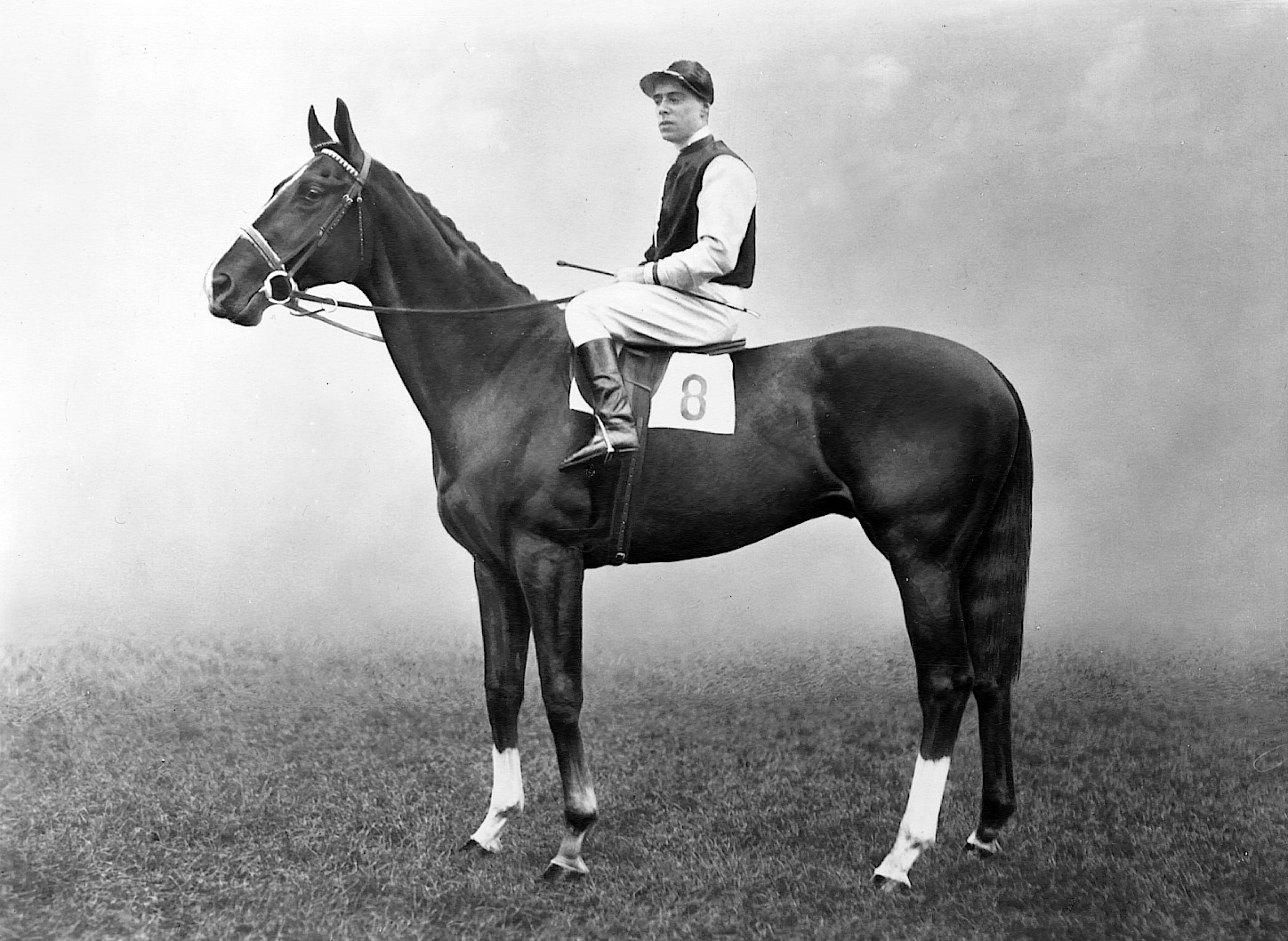
After sharing the Jockeys’ Championship with Steve Donoghue in 1923, when still apprenticed to Jack Jarvis, he won the title outright the following year with 106 winners. Riding for Marcel Boussac in France for most of his career, he won the Prix du Jockey-Club four times. He also bagged 14 Classic races in England, including two Oaks winners – Brulette (1931) and Why Hurry (1943) and three Derbys, riding Call Boy, pictured above (1927), Bois Roussel (1938) and Nimbus (1949).

At Ascot in 1951, he rode Supreme Court to win the inaugural running of the King George VI and Queen Elizabeth Stakes (known that year as the Festival of Britain Stakes).

Elliott gave up race-riding in 1953 to train for Boussac in France, but in 1958, with Boussac’s empire in decline, he returned to Newmarket to train from Machell House until retiring in 1963.

_____________________________________________________________________________________________________________________________________


Harry Wragg

(1902-1985)

Known as ‘the head waiter’ because of his late run riding tactics, he was born in Sheffield and apprenticed to Bob Colling at Bedford Lodge, Newmarket.

In a riding career spanning 27 years he rode the winners of 13 Classic races, including four winners of the Oaks – Rockfel (1938), Commotion (1941), Sun Stream (1945) and Steady Aim (1946). He also rode three Derby winners Felstead (1928), Blenheim (1930) and Watling Street (1942). In 1946, on his final day as a jockey at Manchester, he landed a 200-1 treble with Tiffin Bell, Aprolon and Las Vegas (November Handicap). He was Champion Jockey in 1941, the year Gordon Richards broke his leg, so dividing the latter’s run of 22 Championships. Training from Abington Place, Newmarket, Wragg was an innovator of timing gallops and racing horses abroad. He sent out five Classic winners, including Psidium to win the 1961 Derby at odds of 66-1. In 1983, his son Geoffrey, who had previously assisted him, trained Teenoso to win the Derby.

____________________________________________________________________________________________________________________________________


Charlie Smirke

(1906-1993)


One of the all-time great jockeys. Self assured to the point of cockiness, he was invariably at odds with his employers. Born in Lambeth, the son of a fishmonger, Smirke was apprenticed to Stanley Wootton at Epsom and, after showing great promise, was retained by the Aga Khan.

In 1928, he was warned off when appearing not to start the odds-on favourite in a 2-y-o Plate at Gatwick. However, he got his licence back in 1933, when the ‘culprit’, Welcome Gift, having been shipped to India, had acquired a reputation for refusing to start.

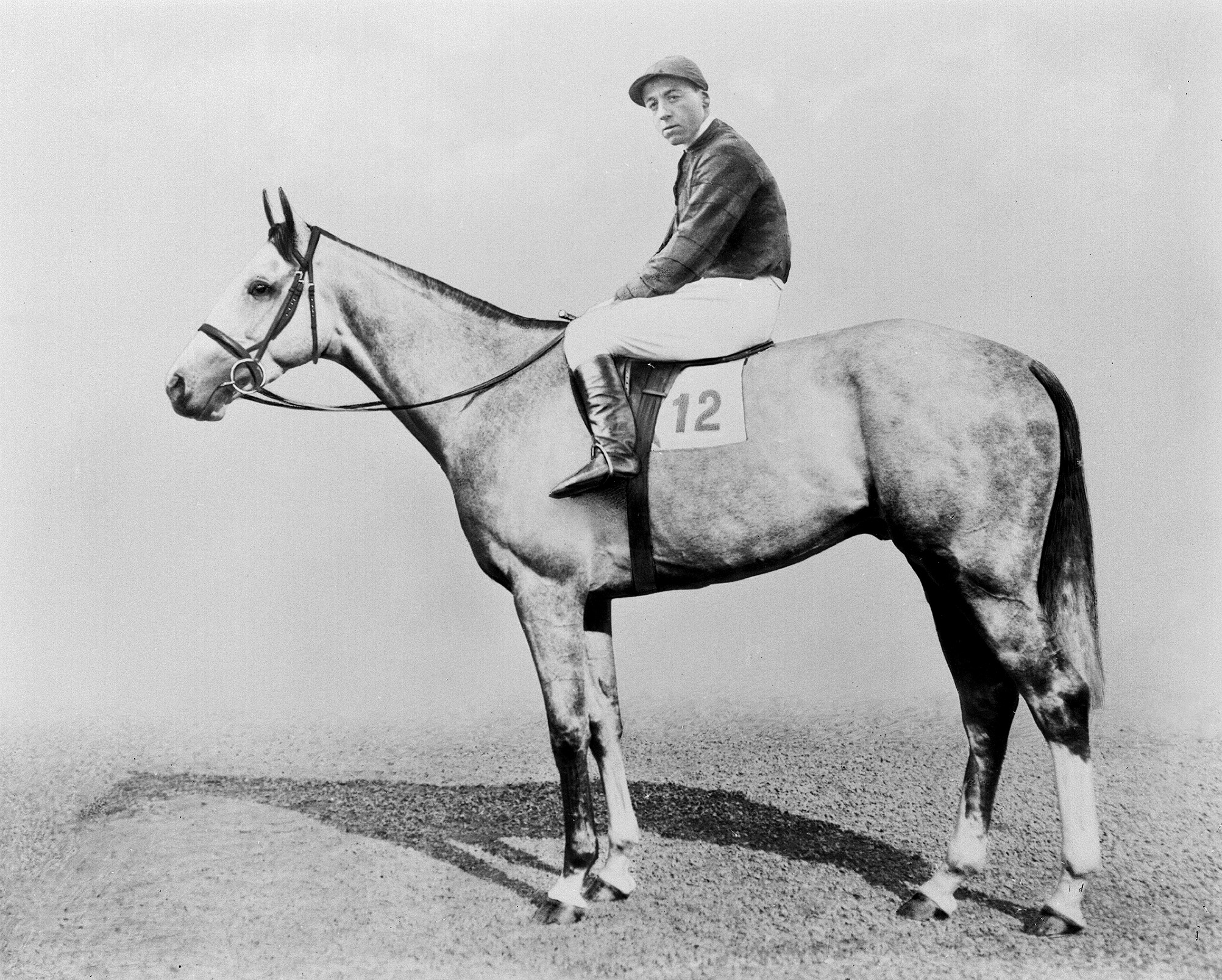
Classic victories followed on Windsor Lad (1934 Derby), Bahram (1935 St Leger) and Mahmoud, pictured above (1936 Derby), before he was called to Army service from 1941-1945. First serving as a bombardier in an anti-aircraft regiment, he transferred to become a driver and later took part in the invasion of Sicily.

After the war, his home destroyed by bombs, Smirke resumed riding in Ireland, first over hurdles and then, courtesy of a phenomenal sprinter – The Bug – he re-established himself as a top-flight jockey, adding to his Classic haul the Guineas winners My Babu (1948) and Palestine (1950), and the Derby winners Tulyar (1952) and Hard Ridden (1958).

Tudor Minstrel’s Year

Posted on:


Tudor Minstrel’s Year

A short Story from Ripping Gambling Yarns

Tales of a Misspent Youth


One summer holiday of which I have a vivid recollection was in 1947, known in racing circles as ‘Tudor Minstrel’s year’.


Travelling from Woking to East Wittering by train and taxi, Mum, Dad and I, together with my Grandmother (Nan) and her sister Kate, settled into a smallish bungalow, just off the main road a few minutes walk from the sea, shops and the Royal Oak.

Holidays then ran from mid-day Saturday to Saturday, and the last Saturday of our fortnight was Derby Day.  This was the first peacetime Derby run on a Saturday and the date, June 7, was therefore not known to my parents at the time of booking, but they were soon made aware of this oversight by my constant protests.  For not only would I miss seeing the race, but our return train schedule meant I would also, in these pre-transistor days, be unable to hear the radio commentary.


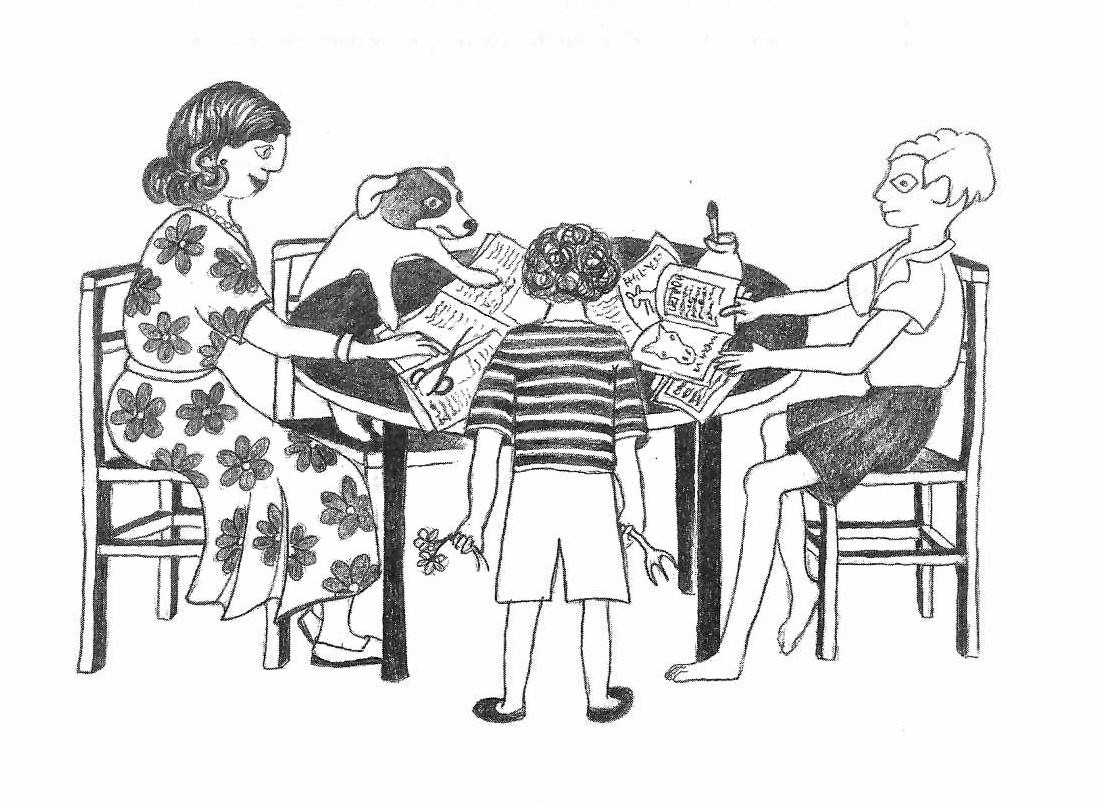
Nevertheless, every morning I would get up early to walk our terrier Judy to the Newsagents for the papers.  Back at the bungalow I would cut out all the news and photographs of the Derby horses, in particular from the Daily Graphic which had a photograph and form guide to a different Derby contender every day.  These I pasted into a scrapbook with loving care.


At this time it seemed almost everyone had a shilling each-way on their fancy in the Derby.  But since betting was then illegal, unless on the course or with a credit account, our family and everyone we knew placed their bets through an assortment of bookies runners, milkmen, hairdressers and publicans.



Gordon Richards, then the perennial champion jockey, had ridden the winners of every Classic race except the Derby. Having continually chosen the ‘wrong horse’ when his retaining stable had more than one runner, he was thought by the superstitious to have a Derby jinx.

This year however, was deemed to be ‘Gordon’s year’, for his Derby mount was the brilliant Tudor Minstrel.  Top of the Free Handicap the year before, Tudor Minstrel had recently won the Two Thousand Guineas by eight lengths in a canter from Saravan and Sayajirao.


On reaching the age of 11 earlier that year, I had got a job as a newspaper boy, and remembered the headlines ‘Horse of the Century,’ with further superlatives written around photographs of Tudor Minstrel, with arrows pointing to various parts of his anatomy.


Now certain to start at odds-on for the Derby, stories abounded about punters who had waded in to win fortunes before the Guineas. And such was the charisma that surrounded the horse and the Derby of that year, that 30 years later, after having my appendix removed, the man in the next hospital bed told me that he had taken 7-1 to a week’s wages about the horse, more than a year before the event.


All this hype however, had made very little impression on Aunty Kate, who insisted that Saravan would turn the tables on Gordon.  Mum liked to back a grey, so chose Migoli, Dad followed the Australian jockey Edgar Britt and hoped Sayajirao would win.  Nan fancied the Irish horse Grand Weather, on the grounds it had been the hottest week of the year, with people frying eggs on the pavement!


It was also decided that the dog should not be left out of the excitement and Merry Quip was chosen to be her runner. As we would not be back in time to get our bets on with our local hairdresser, a shilling sweep was arranged. But due to the considered reasoning that had gone into our selections, everyone wanted to keep the horse they had chosen, rather than risk the hazards of an orthodox sweep. And in view of my protest at missing the race, I was allowed to have Tudor Minstrel, but I had to put in the dog’s shilling to level up the odds.


The holiday continued in the usual tradition with trips to the beach where I played French cricket, made sandcastles and splashed about in a car-tyre’s inner tube for, despite the patient efforts of my father, I never learned to swim.


Returning to the bungalow in the evening, Mum and Nan would cook up some beans on toast, followed by tea and cakes. Dad and I would wash up and later a green baize cloth would be thrown over the table for a game of cards or dominoes.  Cards were a particular feature of our family evenings, with games such as Whist or Solo and, if there were more than four players, Switch, Newmarket, Race the Ace, Pontoon and Banker. These games were always played for small amounts of money to keep the interest alive.


On this and some other holidays, Auntie Mary, Uncle Henry and Cousin Peter would arrive for the day but stay over-night, sleeping on settees and in arm-chairs, to return the following day.  But always there would be cards in the evening.


One morning, Auntie Mary, seeing me pasting cuttings into my scrapbook, asked me who I thought would win the Derby and, on hearing of our sweep, wanted shilling tickets for herself, Henry and Peter.  However, on learning that all the fancied horses had already been taken, she had to be persuaded into taking two outsiders for the price of one.  She chose the two streets, Tite Street and Castle Street, ahead of Henry who picked two French horses, Cadir and Parisian. Henry had always wanted to go to Paris and, as he was on holiday, thought it a lucky omen.


When Peter, (aged seven), came in from the garden, he was asked to pick two horses from the remaining five.

“I’ll have Firemaster, ’cos I pass the Firestation on the way to school.  And has Merry Quip gone?” he chirped.

“Has it?” enquired Mary.

“Yes,” I said, “We picked that one for the dog.”

“Can you change it?” Mary asked anxiously.

“Not really,” I said, “We have written it down now and we don’t want to disappoint her.”

Peter, a stubborn little blighter, wouldn’t budge, for apart from liking the name he had been told at school that Tommy Weston, the jockey, had great faith in the horse.  To avoid tears, a compromise was agreed –  Peter was to pay sixpence and share Merry Quip with the dog.  Further discussions went on when it was known that I had already paid the dog’s stake, but no refunds were made.


As the holiday came to an end, so Derby Day loomed nearer.  The cases were packed, Judy given her last walk and the sea was said goodbye to for another year.  On the train journey home, no one spoke of the Derby.  But from 2.30 onwards, I began checking the time at ten-minute intervals, imagining first the saddling up, the paddock scene, and then the parade, followed by the canter to the start.  As the train pulled into Guildford Station I knew the race was over.  I now dreaded overhearing the winner’s name from a passenger’s casual conversation.

On arriving at Woking Station, we took a short taxi ride home.  Without any explanation from me or comment from my parents, I asked to be dropped off at Charlie Young’s Hairdresser’s Shop at the corner of our road.


Pushing into the smoke filled back-room where all the bets were taken, I blurted out to Charlie’s wife “Who won the Derby?”

“A French long-shot, Pearl Diver, 40-1,” came the reply.

“Second and third,” I squeaked.

“Migoli and Saya-watsit,” she responded.

“What happened to Gordon?”

“Led at Tattenham but didn’t stay; finished fourth”.

“Charlie won a packet on the race – says there’s a jinx on Richards in the Derby!”


Footnote:

For those who like a tidy finish, the sweep, not won, (Pearl Diver was the only horse under 200-1 that we hadn’t picked), was carried forward to the following year, when  Nan picked and backed the Aga Khan’s  My Love at 100-8.  As for my torture of missing the Derby, this only recurred twice in the next 53 years.


For more racing history see Michael’s Books for Sale

Sir Gordon Richards, Fred Darling and John Arthur Dewar

Posted on:

Sir Gordon Richards, Fred Darling and John Arthur Dewar

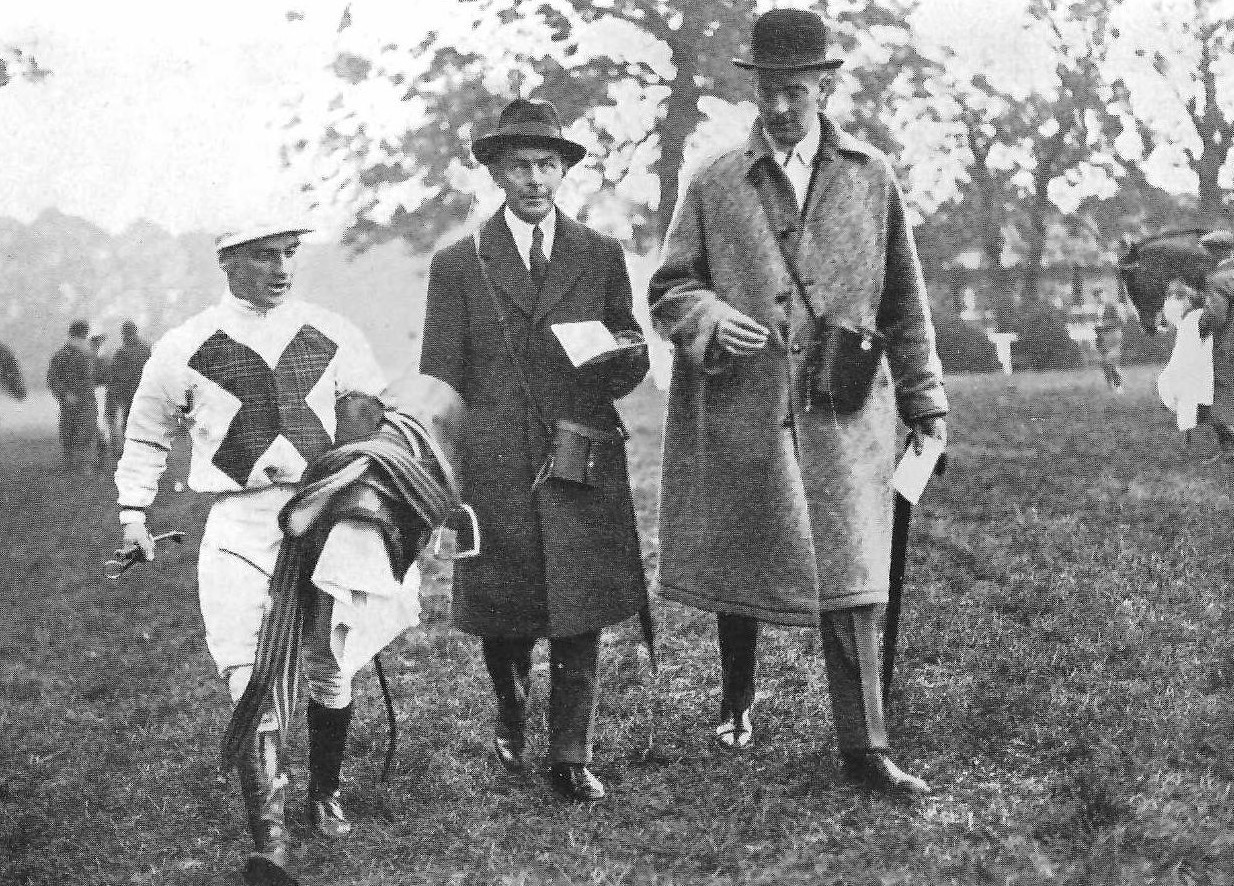
Above: Gordon, Fred Darling and Lord Dewar

Sir Gordon Richards (1904-1986)

Gordon was born at Donnington Wood, near Oakengates in Shropshire, as one of a family of 12 children, where his father was a coal miner. Gordon served his apprenticeship with Martin Hartigan at Foxhill and rode his first winner on Jimmy White’s Gay Lord at Leicester on 16 October, 1920. He was Champion Jockey for the first time in 1925 and, in 1933, made the front pages of every Daily newspaper when beating Fred Archer’s record of 146 winners in a season.

A modest, dedicated man of great integrity, Gordon Richards was the undisputed hero of those who followed racing for the first half of the 20th century, and his Derby victory on Pinza the most popular of that period. Lord Rosebery said of him, “The greatness of Gordon Richards lay not in his having won so many races but in his having lost so few that he ought to have won.”

In 1954, when leaving the paddock at Sandown, the filly Abergeldie reared up and fell over backwards on top of Richards, breaking his pelvis and dislocating four ribs. The following year, fully recovered, he trained from Beckhampton, later moving first to Ogbourne-Maizey and then to Whitsbury in Hampshire, with Scobie Breasley as stable jockey.

Gordon Richards was Champion Jockey 26 times and from 21,834 mounts rode 4,870 winners. His 14 Classic winners included, Rose of England (1930 Oaks), Sun Chariot (1942 Fillies’ Triple Crown), the brilliant Tudor Minstrel (1947 Two Thousand Guineas) and Pinza (1953 Derby).


Fred Darling               (1884-1953)

The son of the Beckhampton trainer, Samuel Darling, who trained Galtee More to win the Triple Crown in 1897. Fred, not having made the grade as a jockey, took to training a few horses for the actress Lilie Langtry at Kentford, near Newmarket, and won the 1908 Cesarewitch for her with the 4-y-o Yentoi. In 1909, he went to Germany to train for the Weinberg brothers, until, on the retirement of his father in 1913, he returned to take over the Beckhampton stable in Wiltshire. From there, with an instinctive understanding of his horses, he was Champion Trainer six times, sending out 19 Classic winners, including two war-time winners of the Oaks and seven Derby winners: Captain Cuttle (1922), Manna (1925), Coronach (1926), Cameronian (1931), Bois Roussel (1938), Pont l’Eveque (1940) and Owen Tudor (1941).

Notably, his three best horses were the unbeaten Hurry On (1916 St Leger), Sun Chariot (1942 fillies’ Triple Crown) and Tudor Minstrel, heralded in the Press as “the horse of the century”, after his eight-length victory in the 1947 Two Thousand Guineas.

His training method was to conserve the greater part of the horses energy for the racecourse. As a result, his horses always looked robust and carried a condition known as the ‘Beckhampton bloom.’ A martinet with his staff, both in the yard and on the gallops, he was described as a dapper little man with a tight thin-lipped mouth. Sadly, he made no friends and would regularly thwart his owner’s wishes and requests to see their horses in training – a situation they grew to accept.

He did, however, have a great admiration for Gordon Richards, his stable jockey for 16 years. Gordon said in his autobiography, “I don’t think Mr Darling ever understood friendship at all,” and admitted he could be “absolutely ruthless,” nevertheless, he said, “I unhesitatingly describe him as a genius. There has been no trainer like him, and there never will be another.”

In 1953, Darling, having bred Pinza, and now in failing health, was happy for him to go to his former head lad, Norman Birtie. Too weak to go to the Derby, he listened to the race on the radio, finally letting go, he died three days later.

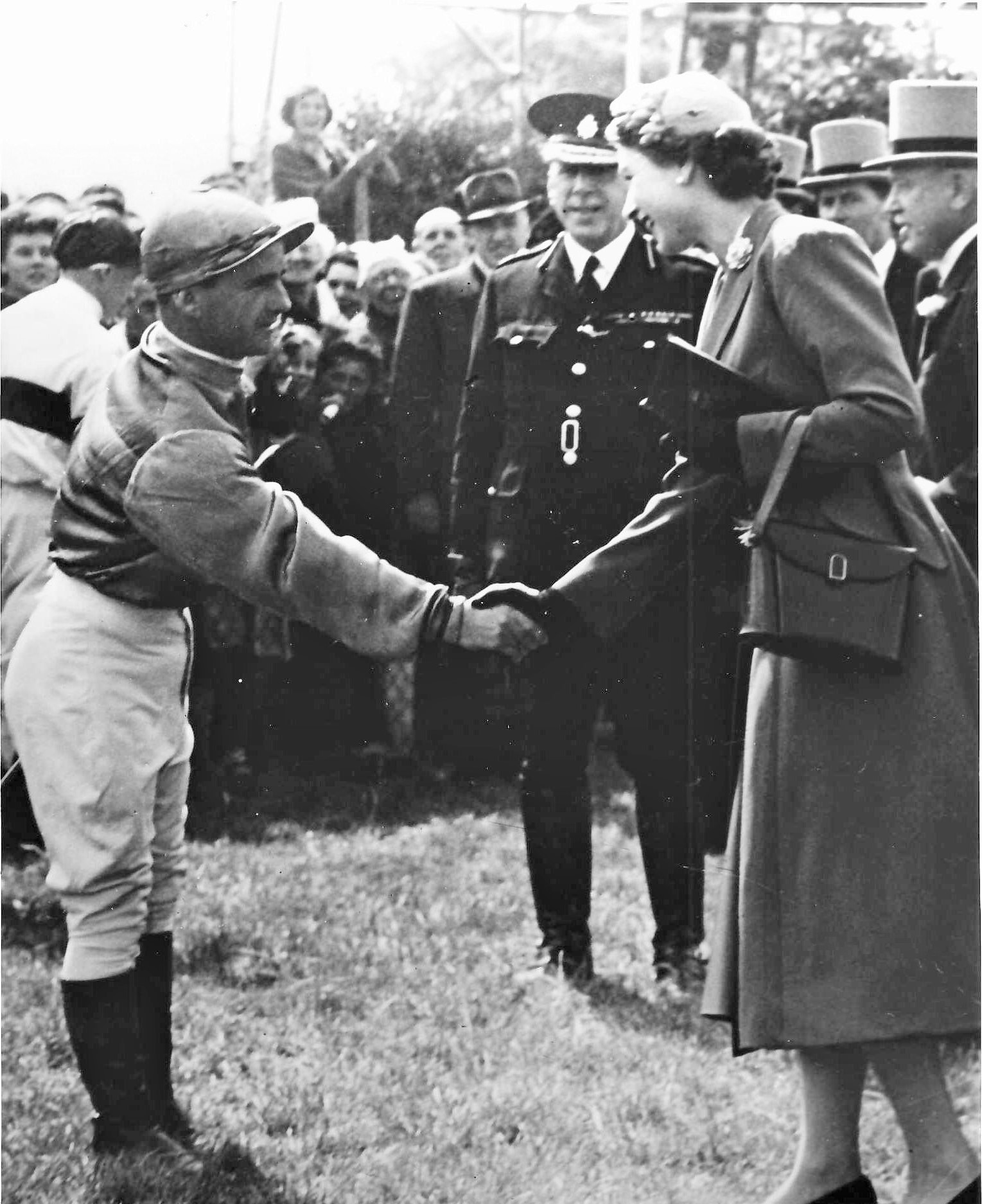
Sir Gordon congratulated by the Queen after winning the Derby on PINZA in 1953


John Arthur Dewar (1891-1954)

On the death of his uncle, the 1st Baron Dewar in 1930, John Arthur Dewar inherited a large part of his great fortune made from the Dewar whisky distillery. John also inherited the Baron’s string of racehorses and his famous colours: ‘white, tartan cross back and front’. Following victories with Cameronian in the 1931 Two Thousand Guineas and Derby, he became known as ‘Lucky’ Dewar. Classic success continued with Commotion (1941 Oaks), Tudor Minstrel (1947 Two Thousand Guineas by eight lengths and top of the Timeform ratings until Sea-Bird in 1965), then finally with Festoon (1954 One Thousand Guineas).

Having served with the Argyll and Sutherland Highlanders during the First World War, he later turned his attention to racing and breeding. Elected to the Jockey Club in 1941, he carried on from his uncle with Fred Darling as trainer until the latter’s retirement in 1947, whereupon he purchased the Beckhampton stables and brought in Noel Murless (later Sir Noel) as his trainer. After Murless moved to Newmarket in 1952, Dewar sent his string to Noel Cannon at Druids Lodge on Salisbury Plain. From there, Cannon trained Festoon to win her Guineas shortly before Dewar’s death. The dispersal sale of his bloodstock totalled a record 398,595 guineas, exceeding the previous 1925 record for Sir Edward Hulton’s bloodstock by more than 100,000 guineas.

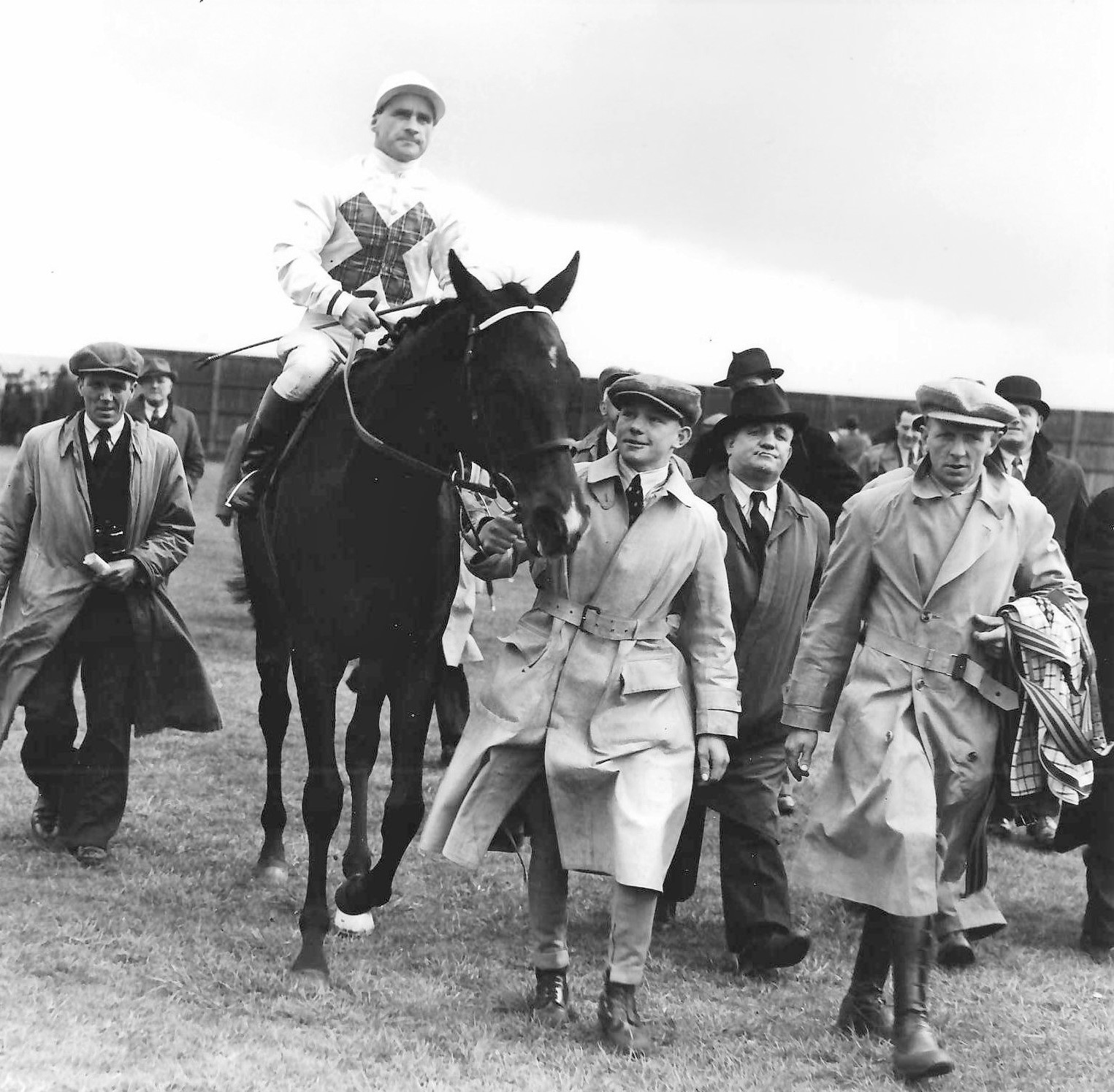
John Arthur Dewar’s Tudor Minstrel (Sir Gordon up) return in triumph, after winning the Two Thousand Guineas


For more Racing History see Michael’s Books for Sale.