Archive for August, 2022

Hambletonian – The Painting and The Horse

Posted on:

HAMBLETONIAN

The Painting and the Horse
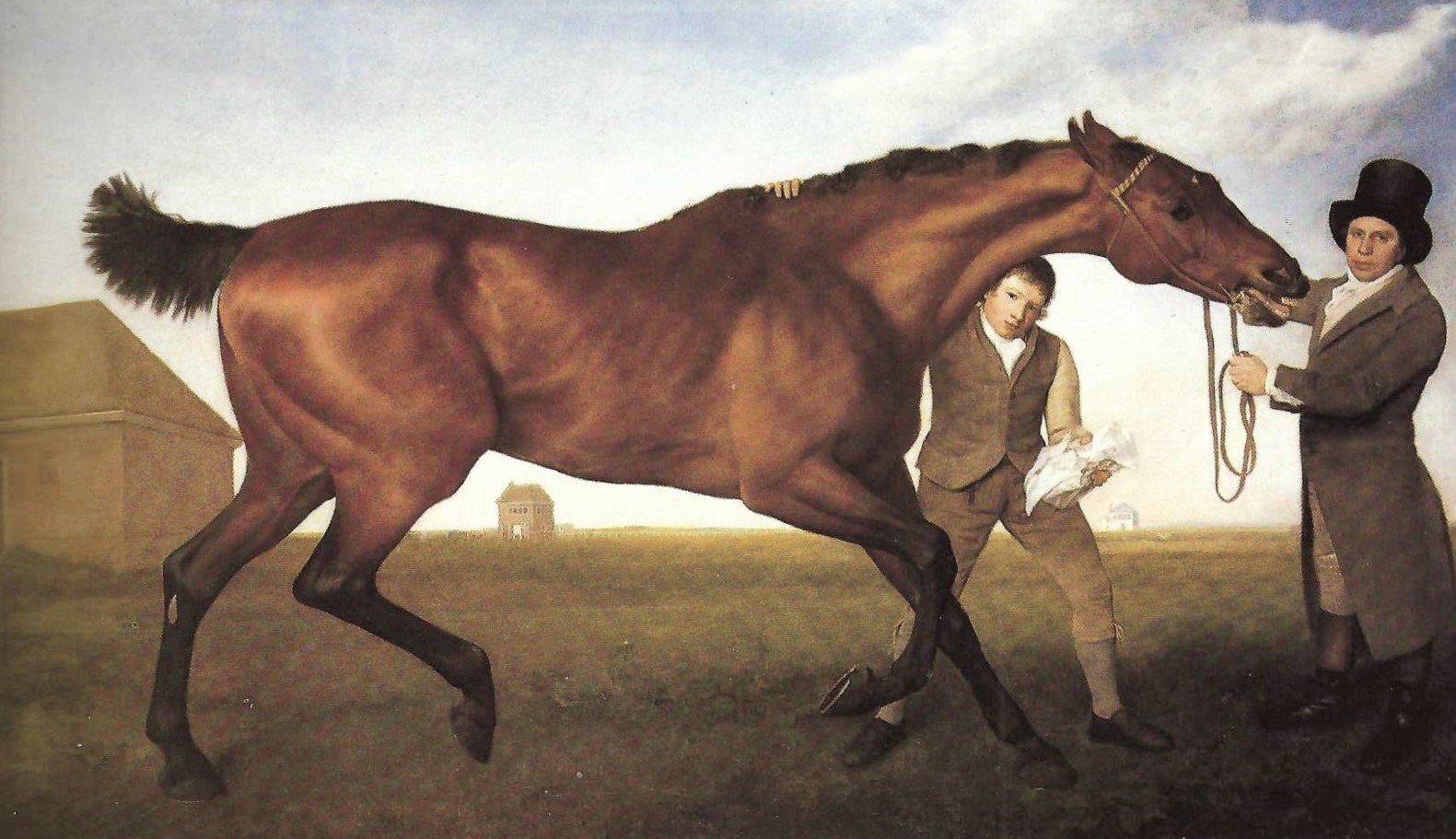
Whilst the George Stubbs painting of Hambletonian is widely recognised, the success story of this bay colt, born in 1792 is not.

 Hambletonian was bred, owned and trained by John Hutchinson, the owner of a large estate in Shipley, near York. Early in his career, Hutchinson’s independent judgement paid off when he bought King Fergus, a son of Eclipse described as “A horse of great size and remarkably full of bone”, who after his successful racing career, had surprisingly shown very little at stud. However, when Hutchinson put King Fergus to the unnamed daughters of Herod and Highflyer, he got in two St Leger winners – Beningbrough in 1794 and Hambletonian in 1795.

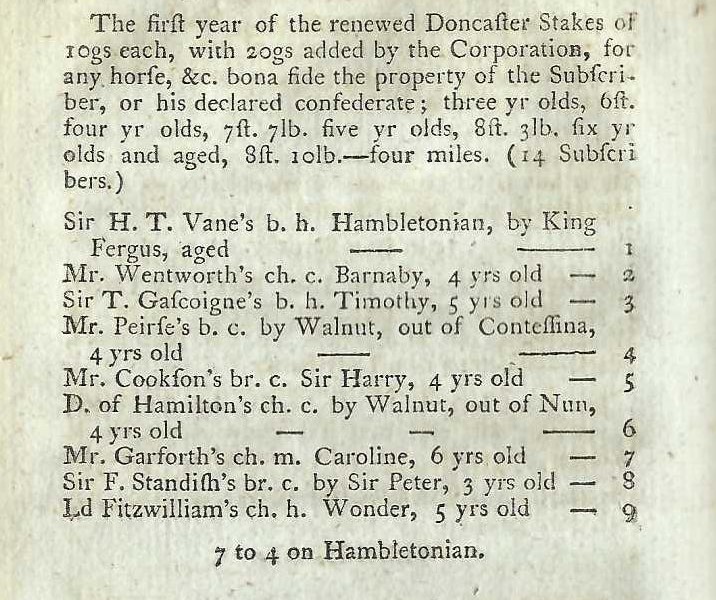
After Hambletonian had won his first two races, Hutchinson decided to sell his three best horses with their entries to the young Yorkshire baronet Sir Charles Turner, for the great sum of 3,000 guineas. The bold young Turner soon made inroads into his outlay when Hambletonian won both the St Leger and Gold Cup on consecutive days at Doncaster.

Rested until August the following year, Hambletonian reappeared at York taking on the previous year’s Derby winner Spread Eagle. However, Hambletonian had thoughts of his own and soon after the start jumped over ropes and fled the course. Two days later, he re-opposed and beat Spread Eagle and the following day took the Ladies Plate, beating St George – both races over four miles.

Soon after, Hambletonian changed hands in romantic circumstances.

Sir Charles Turner had fallen in love with the daughter of a wealthy banker who would not give his consent to the marriage unless Sir Charles gave up the Turf and sold his horses. This he did, selling Benningbrough back to John Hutchinson and Hambletonian to Sir Harry Vane-Tempest.

Sir Harry, had while only receiving a small estate from his Reverend father, received a vast estate from his uncle John Tempest (whose only son had died in a riding accident), by hyphenating his name to Vane-Tempest.
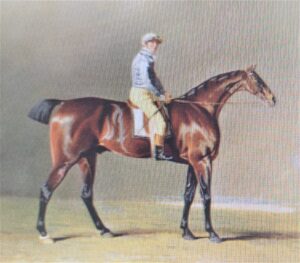
With Hambletonian now heralded as the Champion of the North, Sir Harry threw down a challenge of a 3,000 guinea Match with a 800 guineas side bet, to Joseph Cookson’s colt Diamond (by Highflyer out of a Matchem mare), see aside, at that time the best horse at Newmarket. The race to be run at the Craven Meeting the following year, over the Beacon Course of 4 miles 1 furlong, 138 yards, Hambletonian to carry 8st. 3lbs and Diamond 8st. 0lb.

With so much public money resting on the match and Hambletonian absent from the racecourse for 18 months, Sir Harry turned again to John Hutchinson to assess his fitness. Hutchinson’s opinion that he could not win in his present state caused his trainer to resign leaving Hutchinson in charge of his preparation and the booking of Derby winning jockey, Frank Buckle to ride him. Meanwhile, Joseph Cookson arranged for Dennis Fitzpatrick to ride Diamond.

By now the match had caught the interest of the Nation and the date to be run March 25, Easter Monday, encouraging many thousands to travel down from the North. Sporting Magazine reported it “drew together the greatest concourse of people that ever was seen at Newmarket”, from where every bed was booked for 15 miles and beyond.

On the morning of the race betting on the match was estimated at around 25,000 guineas worth more than £2½ million today and although many private wagers were made at Evens, large professional bets were taken at 4-5 Hambletonian.

From the Off, Frank Buckle allowed Diamond to lead for a mile and a quarter, then slowly moved up to take about a half-length lead. Five furlongs from the finish Hambletonian’s lead had grown to two lengths, but Diamond showed his stamina to close, and the two ran neck and neck to the finish. Hambletonian, however, looking the most exhausted managed to make one last effort and got up in the very last stride to win by a head,



To show the toughness of Diamond, he came out again the next day and won a class of the Oatlands Stakes. Sadly, not so, Hambletonian, who having suffered much whipping and spurring, took six months rest before returning to win the Doncaster Stakes.
Soon after Hambletonian’s  gruelling victory over Diamond, Vane-Tempest commissioned Stubbs to paint a picture of Hambletonian winning the race, hoping to profit from the sale of many engravings, with his colours in the forefront. However, when the Stubbs painting finally emerged, it was described as, “the image of a creature enduring the aftermath of a terrible, almost sacrificial triumph of which he was the hero”.

In consequence, Vane-Tempest refused to pay the 300 guineas demanded. Then after a high profile spirited debate in the Sheriffs court on 9 April 1801, Stubbs was given the full verdict.

On 28 August 1800, Hambletonian, aged eight, won the four-mile Great Subscription race at York, concluding a 19-race career with 18 victories. From there he retired to stud, firstly at Seacroft Hall near Leeds, at 10 guineas, then to the Hornsey stables in Middlethorpe and with further movements, finally to Catterick.

His notable produce included: Camillus gr.c. 1803, won Doncaster Cup and successful sire.

Goosander b.f. 1805, won 6 races. Dam of Shoveler b.f.1816 by Scud, won Oaks Stakes and Sailor ch. c. 1817 by Scud, won his only two races incl. Derby Stakes.

Camerton b.c. 1808, won Goodwood Cup. Sent to France in 1818.

Anticipation ch.c. 1812, won 16 races incl. Ascot Gold Cup (twice).


Finally, after siring nearly 150 winners, Hambletonian ended his days at Sir Harry Vane-Tempest’s former home Wynyard Park, in County Durham, where after his death on 28 March 1818, aged 26, he was buried under a huge oak tree.  


Acknowledgement: The result of the Newmarket match and the Doncaster Stakes extracts are from Edward and Charles Weatherby’s Racing Calendar of 1799.


To see Michael’s interviews go to the foot of About Michael

For more racing history see Michael’s Books for Sale
George Stubbs – Painter 1724-1806

Posted on:

         George Stubbs

          1724 – 1806

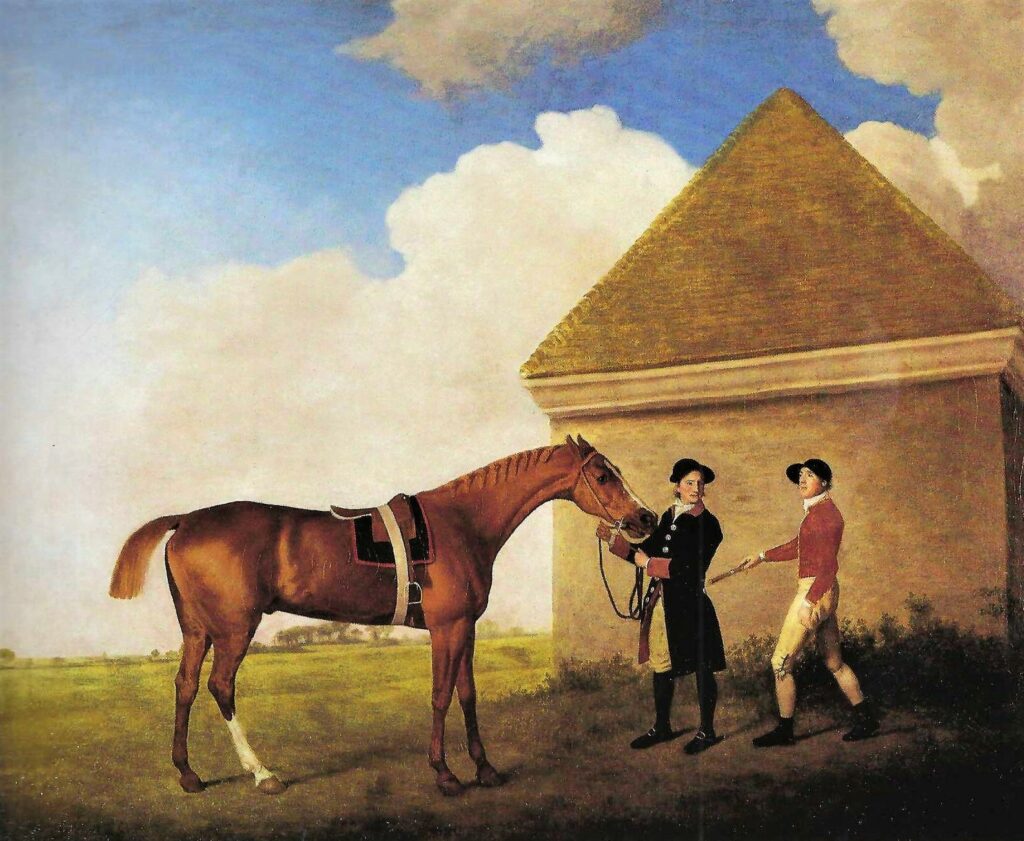
Eclipse by Stubbs, outside the Rubbing House on Newmarket Heath, c1770.

George Stubbs was born in Liverpool on the 25 August 1724, the son of John Stubbs, a leather currier and his wife Mary. After working for his father until 15 or 16, during which time he developed a love of drawing, he expressed a wish to become a painter and with his father’s eventual consent he became a pupil of the Lancashire painter, Hamlet Winstanley.  Soon after, having shown signs of ability, he was for a few weeks, allowed to study and copy Lord Derby’s Paintings at Knowsley Hall, near Liverpool. Thereafter, he taught himself at home, supported by his mother for four years.

From 1745 to 1753 he worked as a portrait painter and following his passion for anatomy, studied at the York County Hospital under Surgeon, Charles Atkinson. Within this period, he illustrated with 18 plates, John Burton’s Essay towards a Complete New System of Midwifery, published in 1751 and recognised as his earliest known work.

In 1754 he made the trip to Rome, contemplating and convincing himself that nature was superior to either Greek or Roman art. Then on returning to Liverpool he turned to portraiture of animals sometimes based on dissecting.

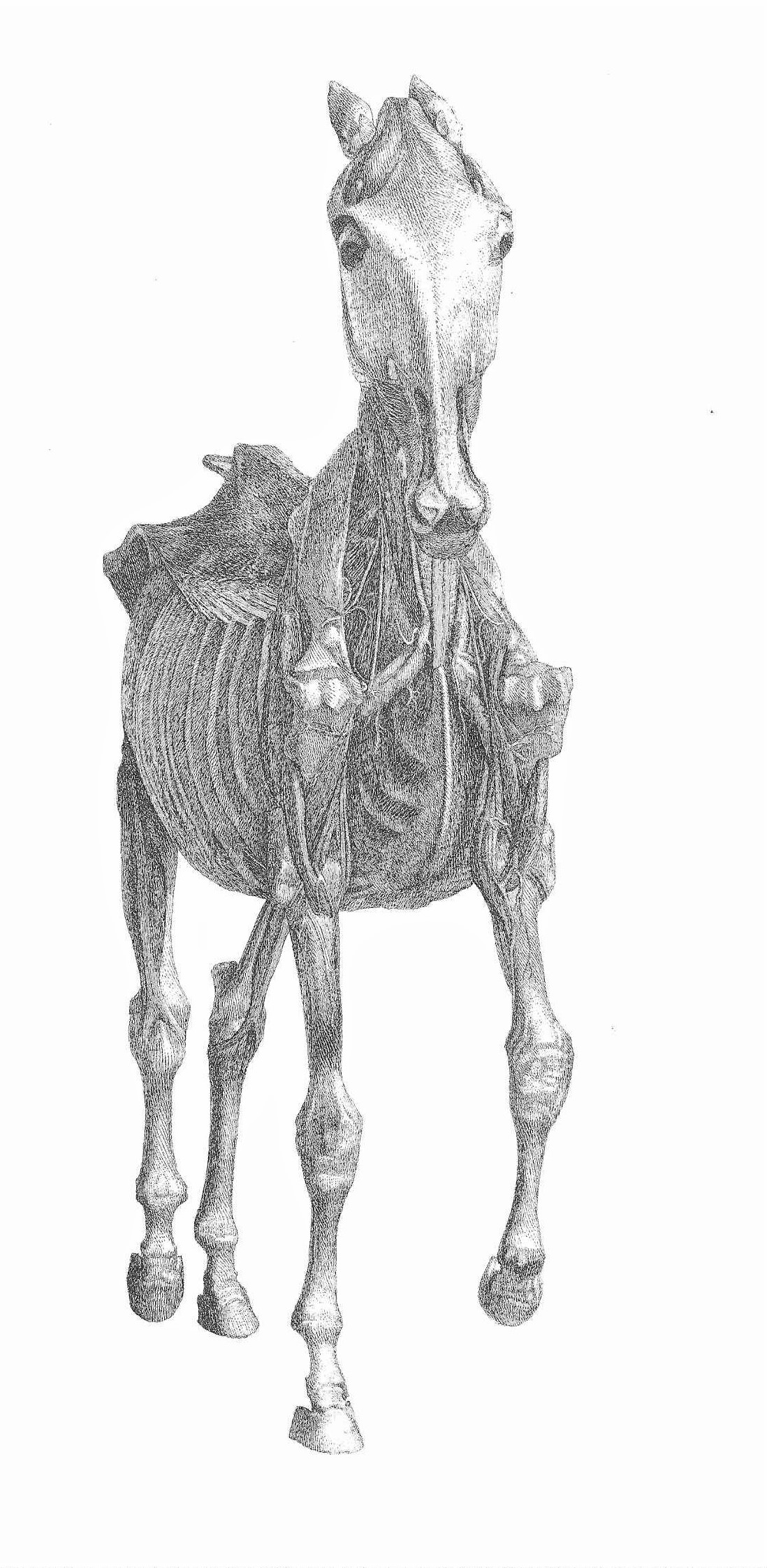
In 1756, convinced dissecting horses was the way to accurate portraiture, he rented a farmhouse in Hawkstow, Lincolnshire, where for 16 months, assisted by his common-law wife Mary Spencer, he set about dissecting horses; this a gruesome process which has to be described to appreciate the magnitude of the task. First he would sever the jugular vein, so quickly bleeding the horse to death, then to keep the shape of the veins and arteries he would inject them with a wax-like substance.

Stubbs then, fulfilling the plan of his drawings, fixed iron hooks into the farmhouse ceiling and assembled pulley’s that could draw and suspend a horse in a natural position, leaving its hooves resting upon a plank. He then proceeded to dissect the horse for about six weeks until the work was no longer useful.

Taking his drawings to London in 1758, he was unable to find a professional engraver willing to do the work. And it is probable that at this point he left Mary and their four children in Liverpool, while he established himself in London.

His paintings of horses and wild animals quickly enhanced his reputation with sales to the Dukes of Richmond and Grafton and the Earls Grosvenor and Spencer.

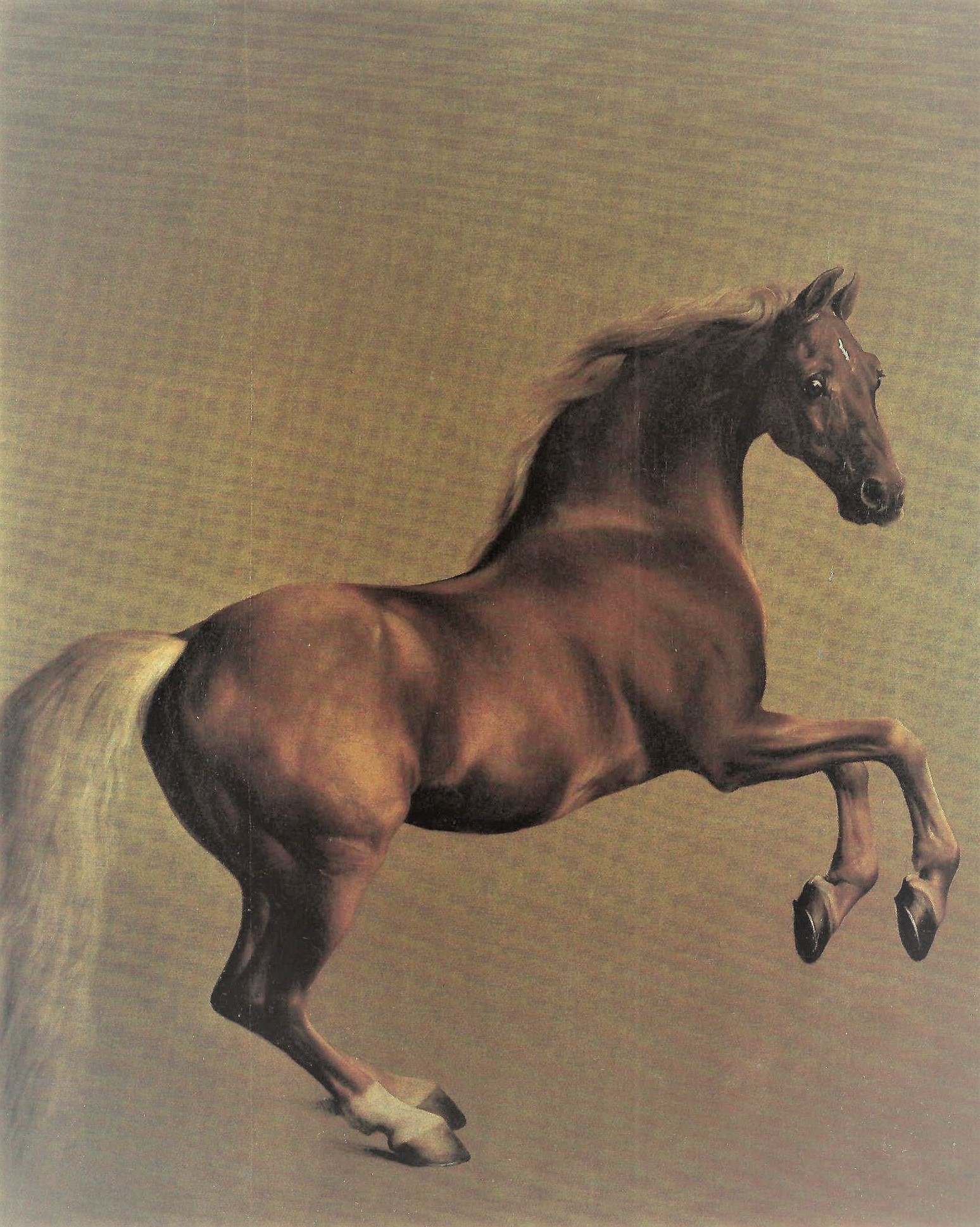
In 1762, Charles Watson-Wentworth, the 2nd Marquess of Rockingham (later Prime Minister in 1765 and 1782), commissioned the large painting of Whistlejacket, now in the National Gallery,

This I have complemented below with pedigree and racing record.

Whistlejacket ch.c. 1749 by Mogul (a son of the Godolphin Arabian), ex 1736 daughter of Bolton’s Sweepstakes.

Bred & owned by Sir William Middleton, later owned by the 2nd Marquess of Rockingham.

Won 13 races (from 17 starts) incl. a £2,000 Match over 4 miles at York, beating Mr Turner’s Brutus.

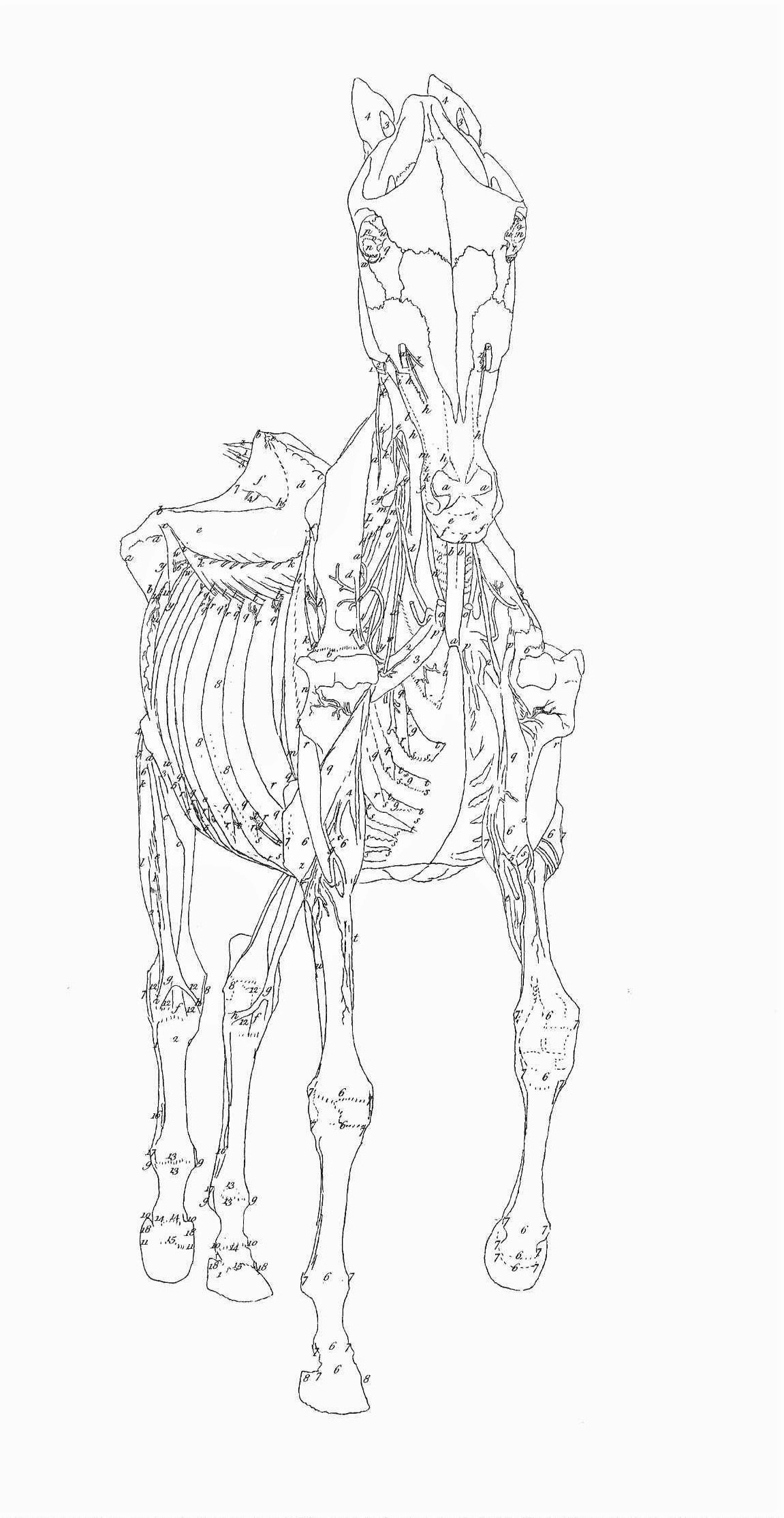
Soon after the acclaim of his Whistlejacket painting, Stubbs moved into 24 Somerset Street (later Selfridge’s), and began a series of ten variations of his Brood Mares and Foals, a subject popular with breeders of racehorses. His commissions now multiplying, forced his work on the 18 Anatomy engravings back to either early morning or late at night. Nevertheless, he would develop a masterly talent as an engraver by the time The Anatomy of the Horse was published in 1766.

In 1770, Stubbs painted Captain O’Kelly’s famous horse Eclipse, who having recently retired to stud after an unbeaten career of 18 races he set with groom and jockey, before the Rubbing House on Newmarket Heath.

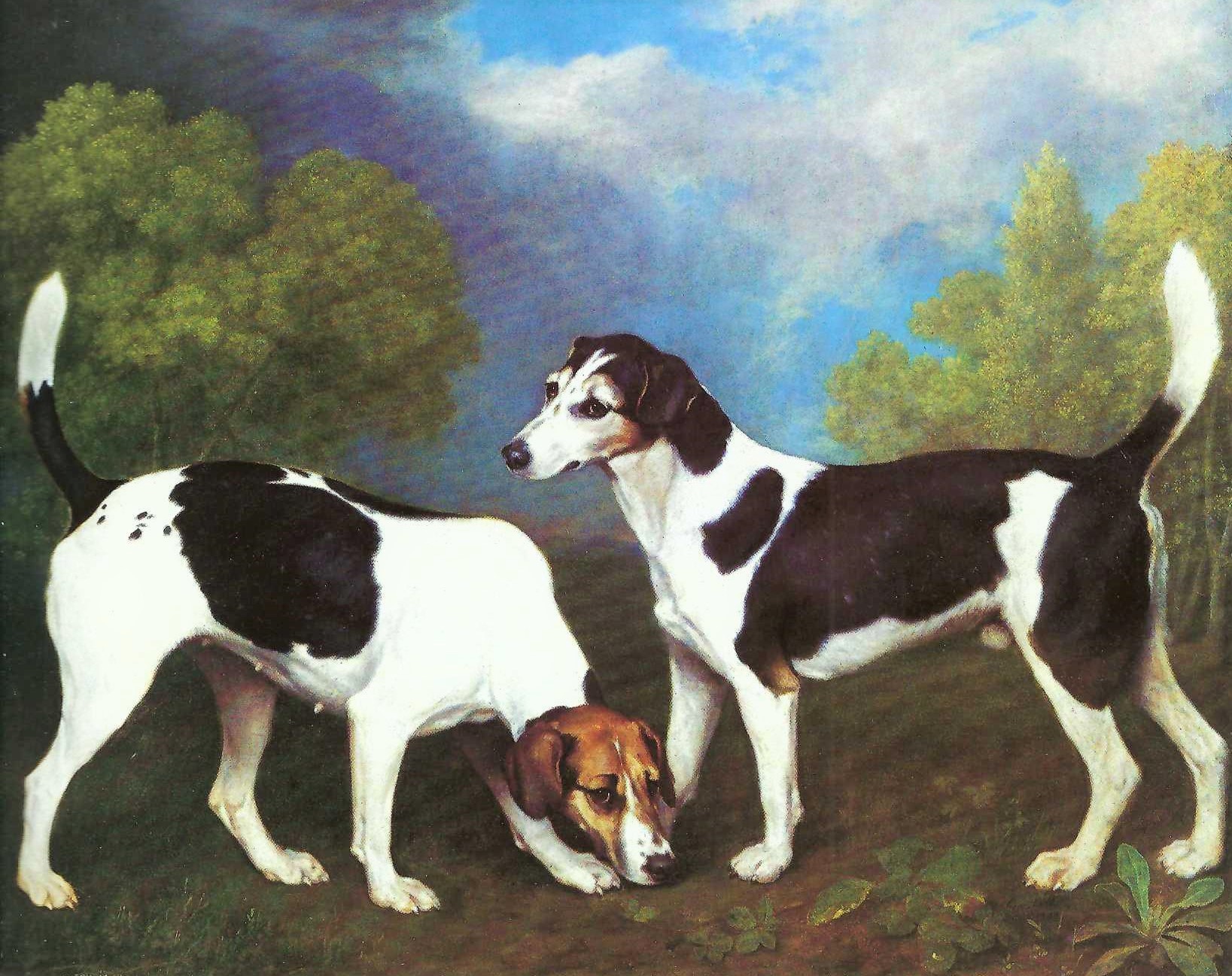
At this time Stubbs took up painting portraits of dogs, which led to many commissions. In fact, when making his début at the Royal Academy in 1775, two of his four exhibits were of dogs. Stubbs sense of design would maximise the build of the dog to occupy the major part of the painting. The finest examples of these being the two portraits of Foxhounds, painted in 1792: Ringwood, a Brocklesby Foxhound (Earl of Yarborough) and see below, A Couple of Foxhounds (Tate Gallery).In 1795

Stubbs commenced his work, A comparative anatomical exposition of the structure of the human body with that of a tiger and a common fowl. The common fowl was easily bought and a nearby menagerie was able to supply the body of a tiger. Here one must credit Stubbs with the researching the problem of a dead body before he planned the work, which was likely made possible by a contact at St Thomas’s Hospital, where it was legal to receive the bodies of executed criminals for dissection.

Stubbs’ progress with drawings and engravings once again had to be fitted between his other commissions and sadly this time the work was not completed before his death.

What he did find time for in 1800 was his magnificent large painting of Hambletonian, but more of that when I will tell of the painting, the court case and, the match with Diamond in my next posting.

On the day of his death, 10 July 1806, at his home in Somerset Street, he made a new will, leaving everything to Mary Spencer (his common-law wife of more than 50 years), and appointed Mary Spencer and Isabella Saltonstall as joint executors. However, while suffering ‘violent spasms’, he was unable to sign it. Fortunately, after attestations by witnesses, it was accepted for probate.

To conclude, I would like to leave a final observation from Judy Egerton, the late Australian-born British art historian and curator.

Stubbs is perhaps a deceptive artist: some of his subjects seem so ‘ordinary’ that their extraordinary ability to move the spectator takes a second glance to manifest itself. In this his reticence is characteristically English, akin to that style which Jane Austen describes as ‘burying under a calmness that seems all but indifference, the real attachment’.

*******************************************************************************************************************************************************************************************

On a personal level, I first discovered The Anatomy of the Horse just after the war, when aged nine. Family reunions at Auntie Mary’s in Church Street, Woking, were a frequent occurrence and while the adults discussed food rationing, politics and horseracing, I was kept quiet with Stubbs’ very large book of illustrations on horse anatomy.  Recently, I found the same 1938 edition for sale at a good price and so after reliving my childhood memories I set about writing this essay.