Michael Church Racing Books
Michael Church has a worldwide reputation as an authority on the history of Thoroughbred breeding. Apart from his lineage chart compilations of the Derby, 2,000 Guineas and Champion Sires, he has also written a dozen books, including the highly acclaimed, The Classic Pedigree, Dams of Classic Winners, and The Derby Stakes.
Archive for 2026
2026 Betfred Oaks – THUNDERING ON
249 THUNDERING ON 2026
RUN on Friday, 5 June 2026, as the Betfred Oaks, over the Derby Course of one mile and a half and 6 yards, Epsom Downs. For three-year-old fillies, 9st 2lb. Going Good to Soft. Value to winner £354,437.
1st THUNDERING ON Dylan Browne McMonagle 5-1
2nd LEGACY LINK Colin Keane 3-1 3¾ lengths
3rd SUGAR ISLAND Ronan Whelan 25-1 6 lengths
Also ran: 4th A La Prochaine (Ronan Whelan) 22-1; Cameo (Wayne Lordan) 7-1; Amelia Earhart (Ryan Moore) 7-4 Fav; On Message (Hector Crouch) 25-1 (tailed off); K Sarra (Rossa Ryan (tailed off); Venetian Lace (William Buick) 14-1 (tailed off, last).
Commentary: The Aidan O’Brien trained Cheshire Oaks winner, Amelia Earhart, was a well backed favourite at 7-4, albeit hooded and blinkered. Legacy Link, having won the Musidora at York, was a popular alternative at 3-1. Young Joseph O’Brien’s Thundering On, having improved to win the Salsabil Stakes at Navan, went off third favourite at 5-1.
On settling down, Sugar Island, under Ronan Whelan, set the pace from stable companion Cameo, with Amelia Earhart (hidden), close up.
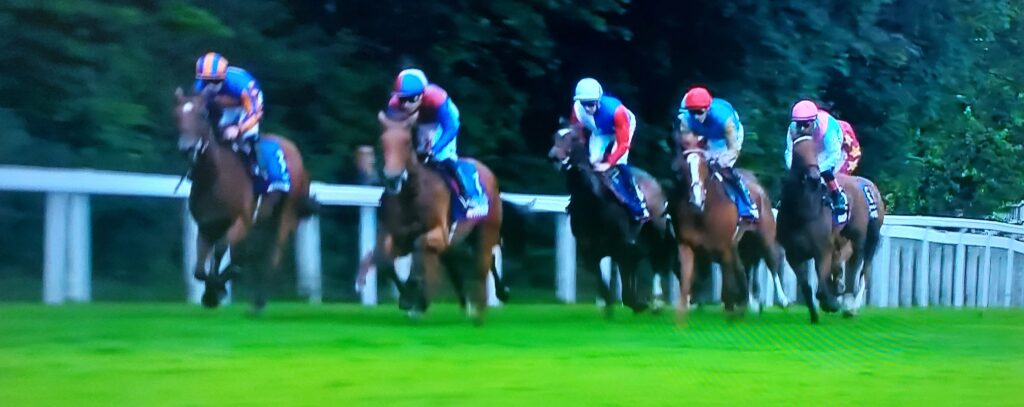
The order was maintained until 2 furlongs out, where racing centre-to-stand’s side, Legacy Link joined Sugar Island.
Meanwhile, Thundering On, under Dylan Browne McMonagle, having come from the back of the field, now joined them, looming up the inside with a double handful.
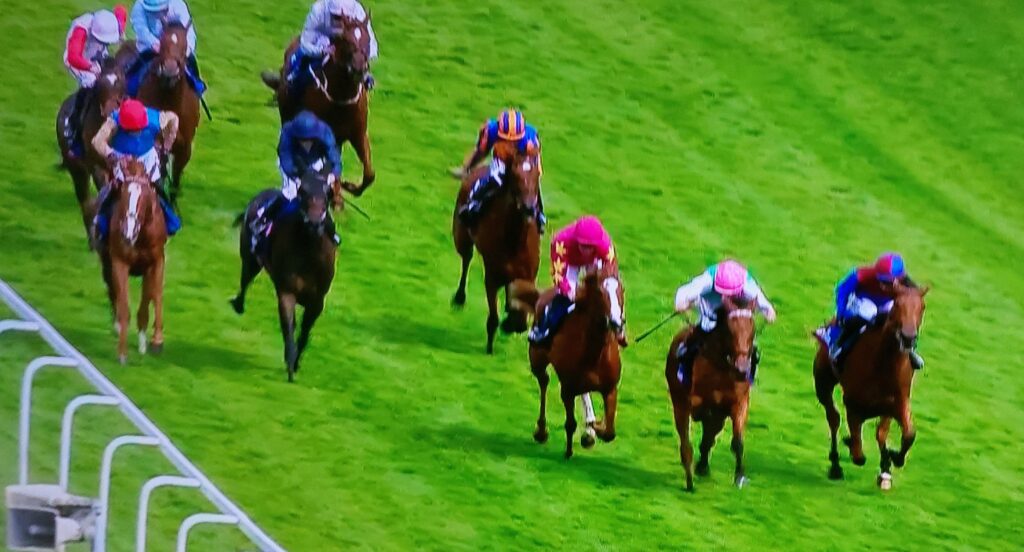
From the 1 furlong marker, Thundering On drew right away to win impressively by 3¾ lengths and 6 lengths.
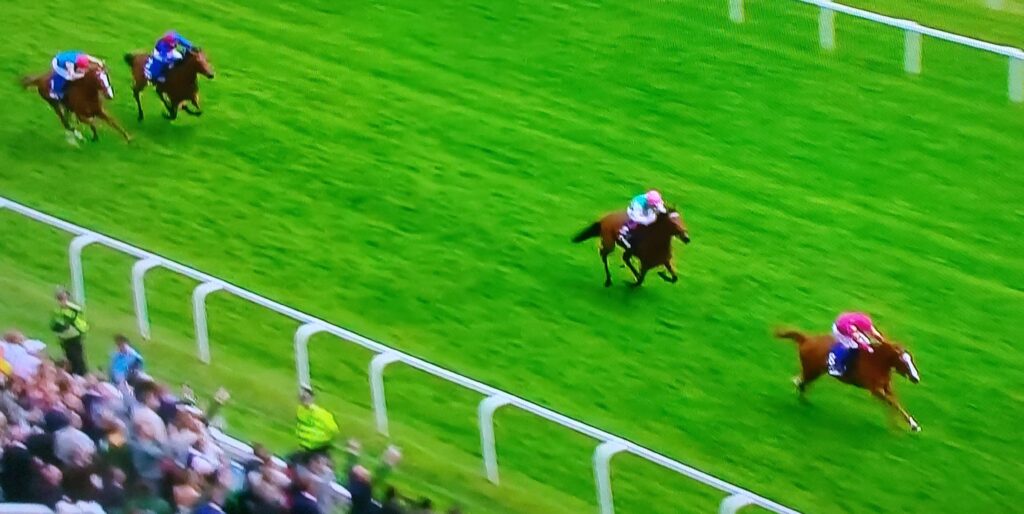
9 ran Time 2min 39.64 sec
THUNDERING ON was BRED and OWNED by Shapoor Mistry. TRAINED by Joseph Patrick O’Brien at Owning Hill, Co. Kilkenny.
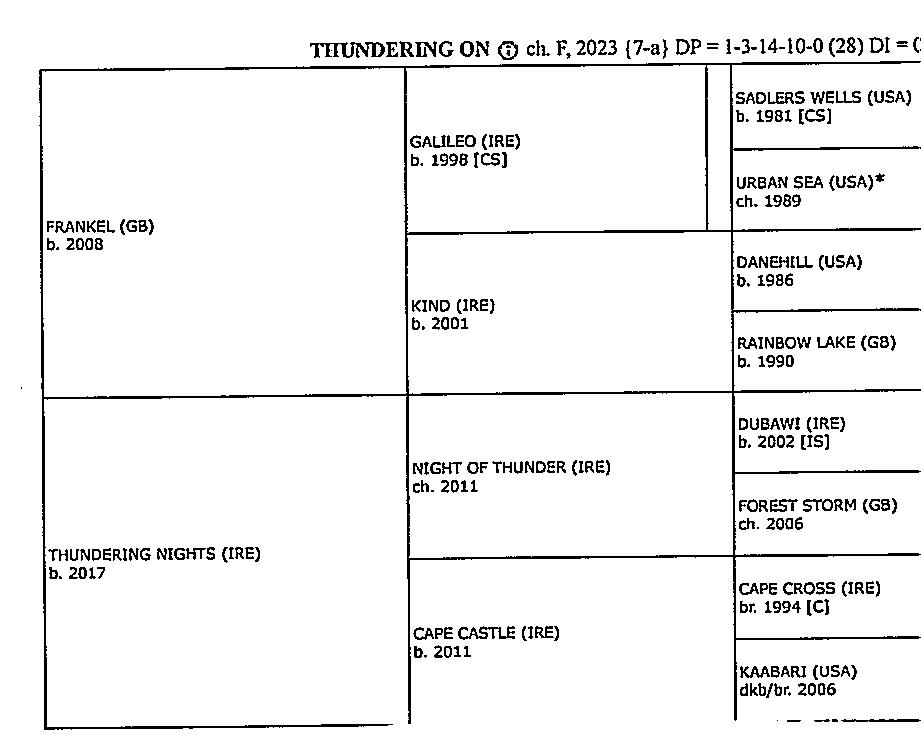
The winner, THUNDERING ON (ch.f. 2023), has won 2 races from 5 starts incl, Irish Stallion Farms EBF Salsabil Stakes at Navan and the Betfred Oaks, Epsom.
The sire, FRANKEL (b.c. 2008) ex KIND by DANEHILL, (unbeaten), won 14 races incl. Two Thousand Guineas Stakes, St James’s Palace Stakes, Sussex Stakes, (twice), Queen Anne Stakes, International Stakes, Champion Stakes. Sire of 8 British Classic winners, incl. 4 Oaks winners since retiring to Judmonte’s Banstead Manor Stud in 2013: ANAPURNA , 2019; SOUL SISTER, 2023; MINNIE HAUK 2025 and THUNDERING ON 2026.
The dam, THUNDERING NIGHTS (b.f. 2017) by NIGHT OF THUNDER, won 4 races from 14 starts incl. Pretty Polly Stakes, The Curragh. THUNDERING ON was her only foal.
__________________________________________________________________________________________________________________________
2026 Betfred Derby – CHRISTMAS DAY
248 CHRISTMAS DAY 2026
Run on Saturday, 7 June, 2026 as the Betfred Derby over the Derby Course of one mile and a half and 6 yards, Epsom Downs. For three-year-olds; entire colts 9st 2lb, fillies 8st 13lb. 90 entries. Going SOFT. Value to winner £1,000,000.
1st CHRISTMAS DAY Ronan Whelan 7-1*
2nd MALTESE CROSS Tom Marquand 12-1* 2¾ lengths
3rd JAMES J BRADDOCK Dylan Browne McMonagle 9-1* 2½ lengths
Also ran: 4th Bay Of Brilliance (Hector Crouch) 9-1*; Alderman (Pat Dobbs) 100-1*; Rebel Rocker (Rob Hornby) 66-1*; Pierre Bonnard (Christophe Soumillon) 7-2*; Ancient Egypt (David Egan) 28-1*; Item (Colin Keane) 11-2* (tailed off); A Taste Of Glory (Jamie Spencer) 100-1* (tailed off) ; Balzak (Silvestre de Sousa) 66-1 (tailed off) ; Action (Wayne Lordan) 16-1* (tailed off); Poker (Rowan Scott) 80-1* (tailed off last 43½ lengths behind the winner).
Non Runner: Benvenuto Cellini (awkward start, towards rear, headway over 2f out, soon short of room, weakened over 1f out, declared a non-runner by the stewards, leg caught in the stalls). Rule 4* applies to all bets, was 3-1 fav, deduction 25p in the pound.
Commentary: On a day of continuous rain in which the going changed before the Derby to SOFT, two overhead cameras were placed in the stalls, one above the 3-1 favourite, Benvenuto Cellini in stall 12 (which was to play a significant part in the result), the other above Item, in stall 3.
Aidan O’Brien ran four from which Ryan Moore chose Benvenuto Cellini, the winner of the Chester Vase on good ground, but previously disappointing when only third on heavy ground in the Doncaster Futurity. Well backed into 7-2 second favourite, Pierre Bonnard, had won the Group 1 Criterium de Saint-Cloud on very soft ground, while Item, winner of the Dante Stakes ahead of O’Brien’s Action and Christmas Day, weakened to 11-2.
As the rain persisted, Action, Ancient Egypt and Christmas Day broke well from the stalls, while Benvenuto Cellini and Taste Of Glory were slowly away.
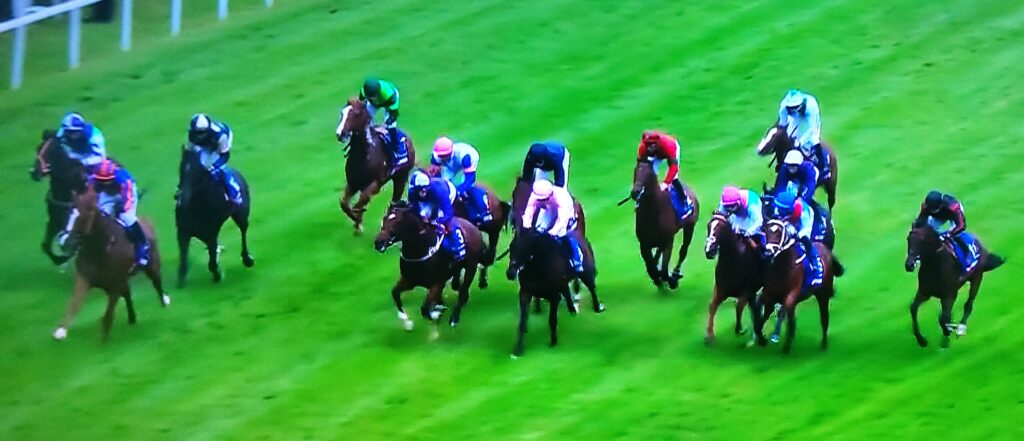
Down to Tattenham Corner, Wayne Lordan kept Action leading to three furlongs out.
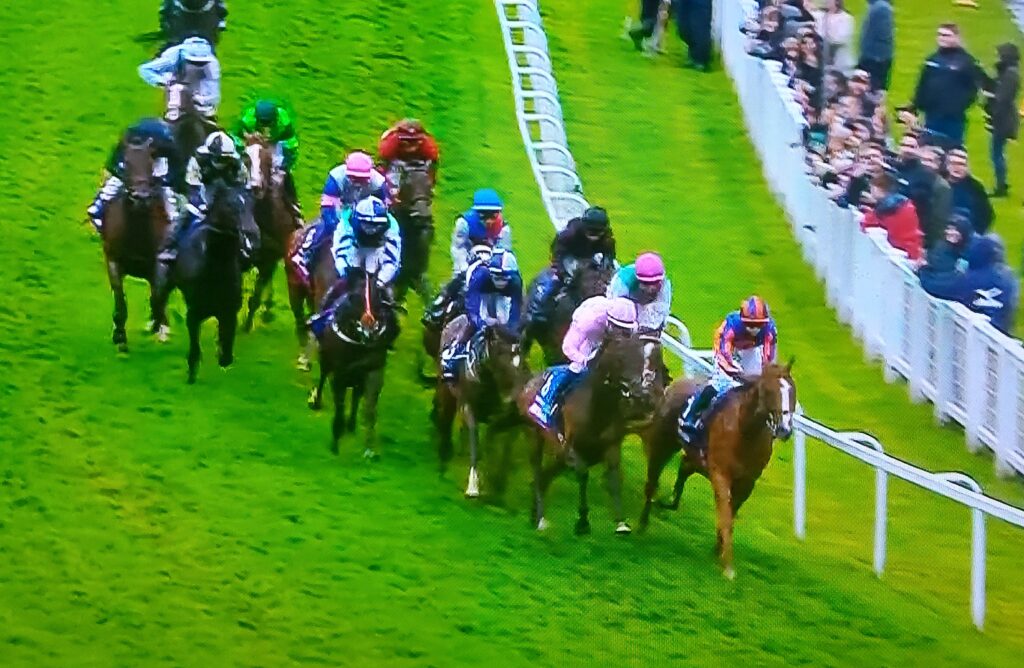
Pushed along by Ronan Whelan, and drifting right, Christmas Day stayed on well, revelling in the soggy ground.
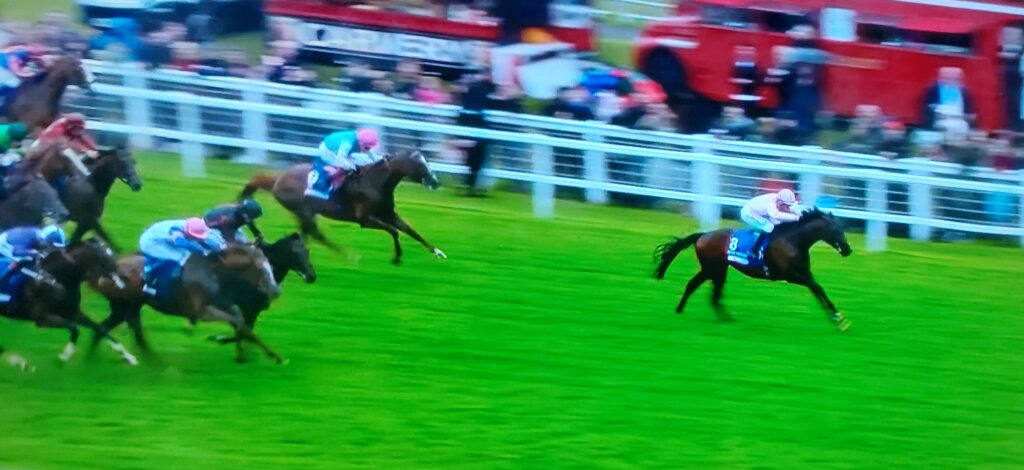
Now in command, Christmas Day went on to win by 2¾ lengths from the running on Maltese Cross.
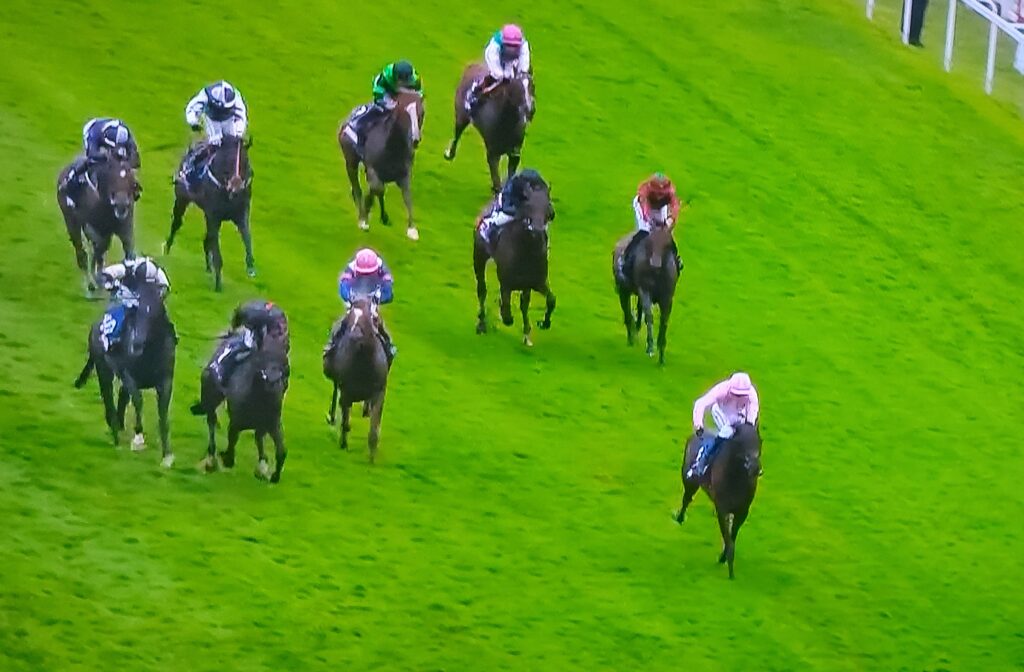
James J Braddock went on to finish third a further 2½ lengths away, with Bay Of Brilliance fourth.
The alarm for a stewards’ enquiry quickly followed from which Benvenuto Cellini was declared a non-runner.
13 ran Time 2min 43.75 sec; the slowest since Teenoso’s 2 min 49.07 secs in 1983.
This was Aidan O’Brien’s record 12th Derby winner (with nine different jockeys) and Mrs John (Sue) Magnier and Michael Tabor’s 11th in partnership.
The winner was BRED by Framont Ltd, OWNED by Mrs John (Sue) Magnier, Michael Tabor, Derrick Smith, Westerberg and Peter Brant and TRAINED by A.P. O’Brien at Cashel, Co. Tipperary.
______________________________________________________________________________________________
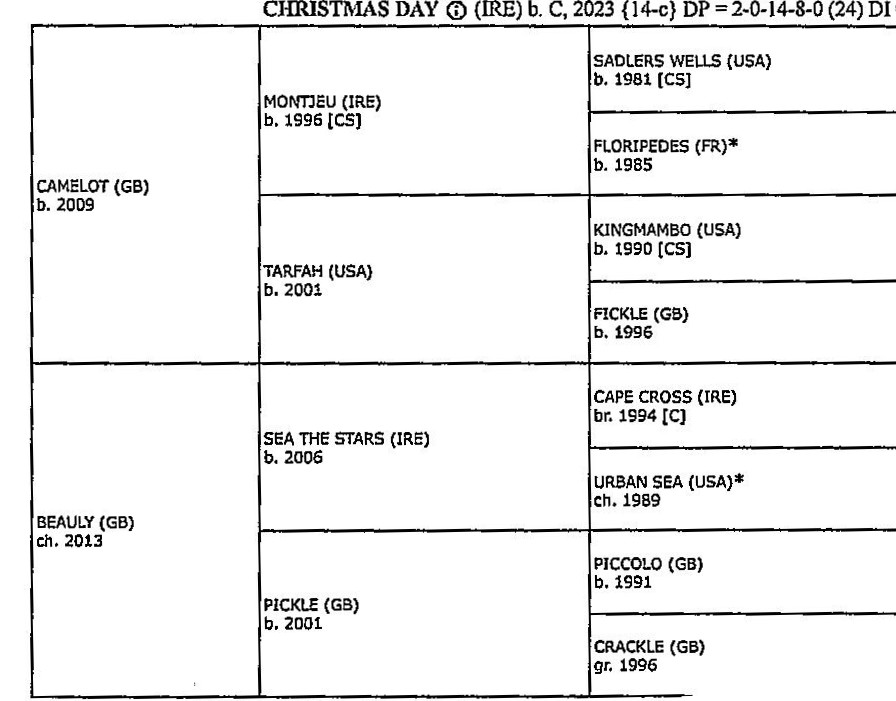
The winner, CHRISTMAS DAY, has won 4 races from 7 starts incl. Eyrefield Stakes and Ballysax Stakes, Leopardstown, Betfred Derby Stakes. Third behind Item and Action in Al Basti Equiworld Dubai Dante Stakes, York
The sire, CAMELOT (b.c. 2009), won 6 races from 10 starts incl. Racing Post Trophy, Qicpo 2,000 Guineas Stakes, Investec Derby Stakes, Dubai Duty Free Irish Derby. Second in Ladbrokes St Leger Stakes
The dam, BEAULY (ch.f. 2013) by SEA THE STARS ex PICKLE, won 3 races from 16 starts incl. Indiana General Assembly Distaff Stakes, Indiana. She also bred MISSED THE CUT b.c.2019 by QUALITY ROAD won 7 races from 20 starts incl. Churchill Stakes, Lingfield (AW), Tokyo City Cup, San Luis Rey Stakes and San Marco Stakes, Santa Anita.
__________________________________________________________________________________
TROY – Acclaimed winner of the 200th Derby
THE 200th running of the Derby Stakes was celebrated throughout the media, and the crowd at Epsom was enormous.
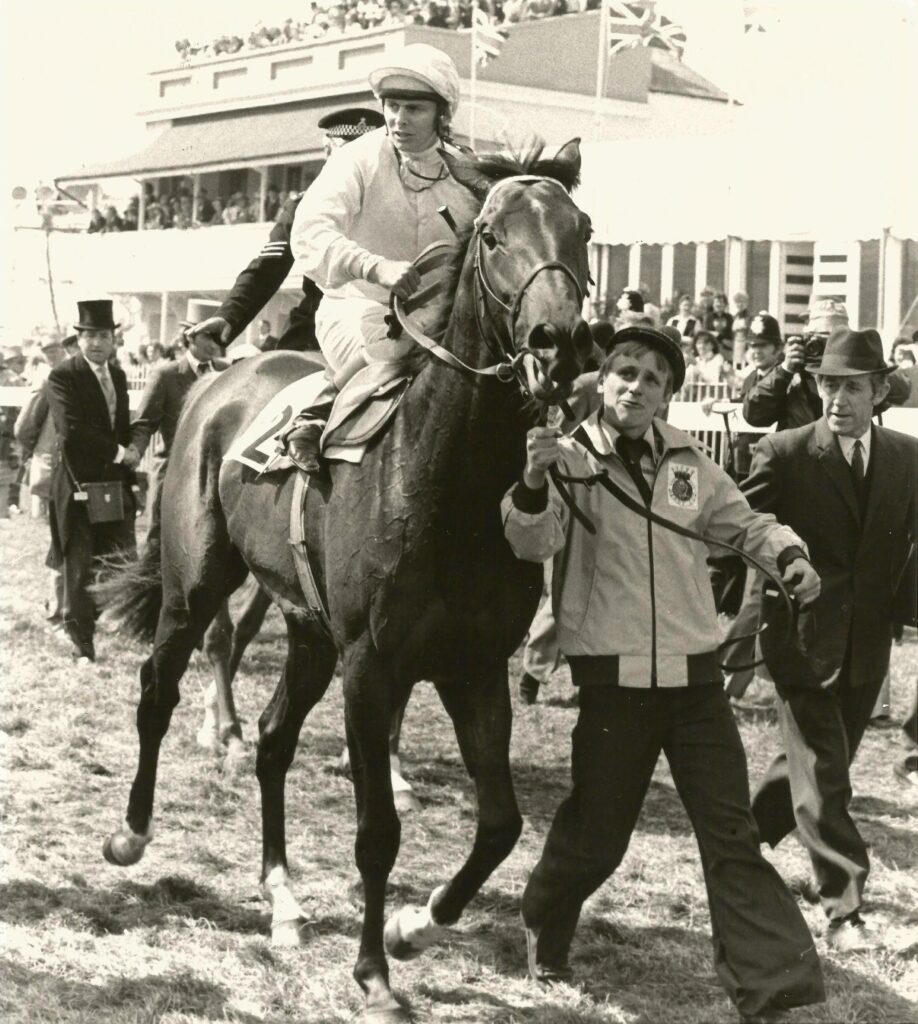
Appropriately the winner, Troy, illuminated the occasion with a stunning victory after being in a seemingly hopeless position.
A handsome, powerful, good-moving bay, Troy was by Petingo out of La Milo, by Hornbeam. Unfortunately the year Troy was born both his sire and dam died.
Owned by Sir Michael Sobell and his son-in-law Sir Arnold Weinstock, Troy was bred at their Ballymacoll Stud in Co. Meath and sent into training with Dick Hern at West Ilsley in Berkshire.
In four starts as a juvenile Troy won the Plantation Maiden Stakes at Newmarket and the Lanson Champagne Stakes at Goodwood, before finishing second to Ela-Mana-Mou in the Royal Lodge Stakes on his finale.
Reappearing in Sandown’s Classic Trial Stakes,Troy was hard ridden to beat Two of Diamonds by a neck, but he followed up by winning the Predominate Stakes at Goodwood by seven lengths.
Ridden by Willie Carson, Troy started 6-1 second favourite for the Derby, behind Ela-Mana-Mou at 9-2, the recent winner of the nine-furlong Heath Stakes by four lengths. Other fancies were Tap On Wood, winner of the Two Thousand Guineas, and the Queen’s Lingfield Derby Trial winner Milford, who was also trained by Hern.
The field of 23 went to post on good ground on a warm, sunny day. Lyphard’s Wish set a strong pace from the start, with Accomplice and Laska Floko in close attendance. Turning into the straight Lyphard’s Wish continued to lead from Milford, Accomplice, Noelino and Man of Vision.
At this stage Troy was not in the first dozen, but moving from the rails to the outside, he began his run. Two furlongs out he was still only ninth, but like the release of a coiled spring, he accelerated at such a rate that by the furlong marker he led by a length and a half, and the race was effectively over.
The winning distance was seven lengths, with Dickens Hill second and Northern Baby third, a further three lengths away.
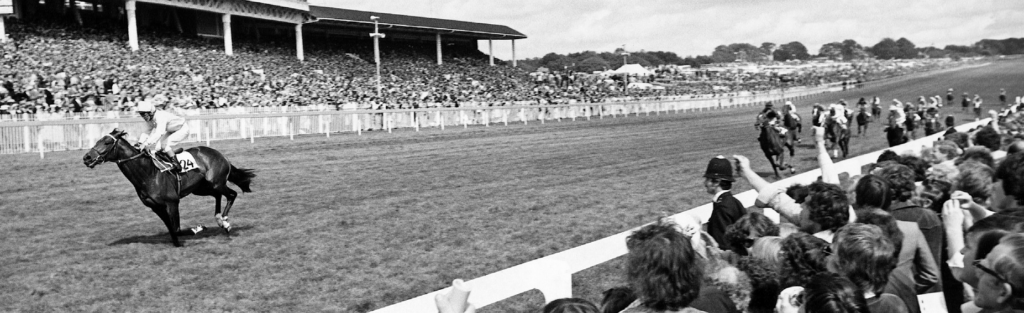
Troy went on to beat Dickens Hill by four lengths in the Irish Sweeps Derby and followed up by winning the King George VI and Queen Elizabeth Diamond Stakes and the Benson & Hedges Gold Cup.
However, by the time the Prix de l’Arc de Triomphe arrived, Troy was past his best and could finish only third of 22 behind Three Troikas and Le Marmot.
Retired to Highclere Stud at Newbury,Troy was valued at £7.2 million. Sadly, after a moderate start he died of acute peritonitis from a ruptured caecum on 12 May, 1983. Two years later his daughter Helen Street won the Irish Oaks.
When asked for the best Derby winner on the day, Troy’s performance certainly elevates him to one of the best post-war winners.
The subsequent form of his rivals confirms his outstanding merit: Dickens Hill won the Eclipse Stakes, Northern Baby the Champion Stakes, Ela-Mana-Mou the Eclipse Stakes and the King George VI and Queen Elizabeth Diamond Stakes, Niniski the Irish St Leger and Prix Royal-Oak, and Son of Love the St Leger.
Conquering Heroes
For more Racing History see Michael’s Books for Sale.
Epsom’s Prince’s Stand, their spring handicaps and Virago
The History of Epsom’s Prince’s Stand, their spring handicaps and Virago
The Prince’s Stand dates in its present form from 1879, when the original Regency stand, built c1784, was altered and enlarged. Used by the Prince of Wales, later King George IV, it housed the royal party celebrations when the Prince won the Derby with Sir Thomas in 1788. Up until 1829, it was the only permanent building on the Downs, although by 1831, when the Princess Victoria visited Epsom, it was struggling to keep the royal entourage comfortably ensconced.

In 1940, soon after the outbreak of war, racing at Epsom was abandoned for the duration and given over to the military; the Prince’s Stand was then commandeered as the Officers Mess.
In 1979, as part of the celebrations for Derby 200, the Prince’s Stand was extensively refurbished and, it’s continued use links together more than 22 decades of history.
The Great Metropolitan and City and Suburban Handicaps, now run at the one-day, Spring Meeting, were the very first two races to be sponsored.
While the Epsom management struggled to put up enough prizemoney, Samuel Beeton, a publican in Milk Street, opened a subscription for the first handicap and then, persuaded his fellow publicans in Fleet Street to follow suit.
At that time, many London pubs served both as betting shops and ale-houses.
“The Great Met,” as it became known, was first run in 1846, and won by Chamois (3y-5st-7lb), 29 ran.
The distance was 2m 2f, until 1985, when it was changed to 1m 4f.
The City and Suburban, run over 1m 2f, followed in 1851, and was first won by Elthiron (5y-8st-5lb), 16 ran.
Subscriptions for the race were raised from pubs in the City of London, stretching out to the suburbs – hence its name.
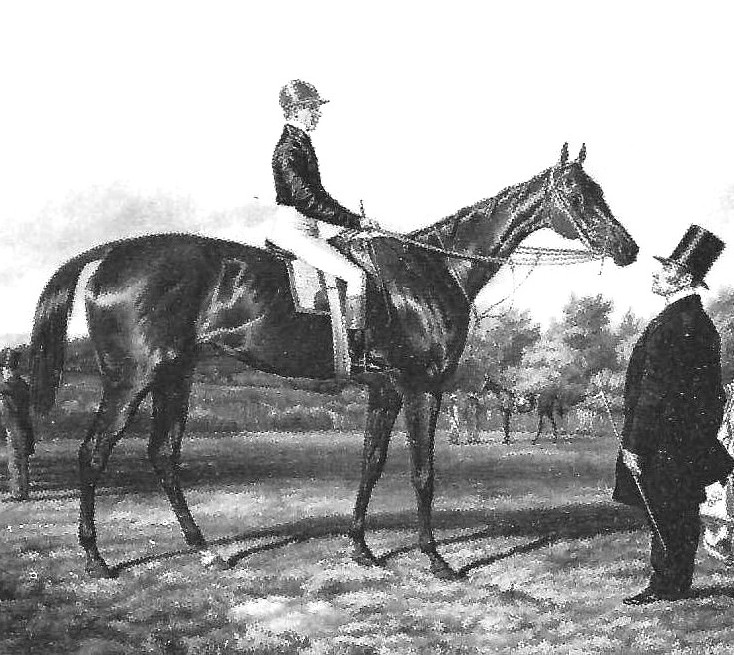
Virago, with J Wells up
and trainer John Day
In 1854, Virago (ch.f.1851 by Pyrrhus The First), completed the outstanding achievement of winning both “The Great Met” and the City and Suburban on the same afternoon, a month before she won the 1000 Guineas.
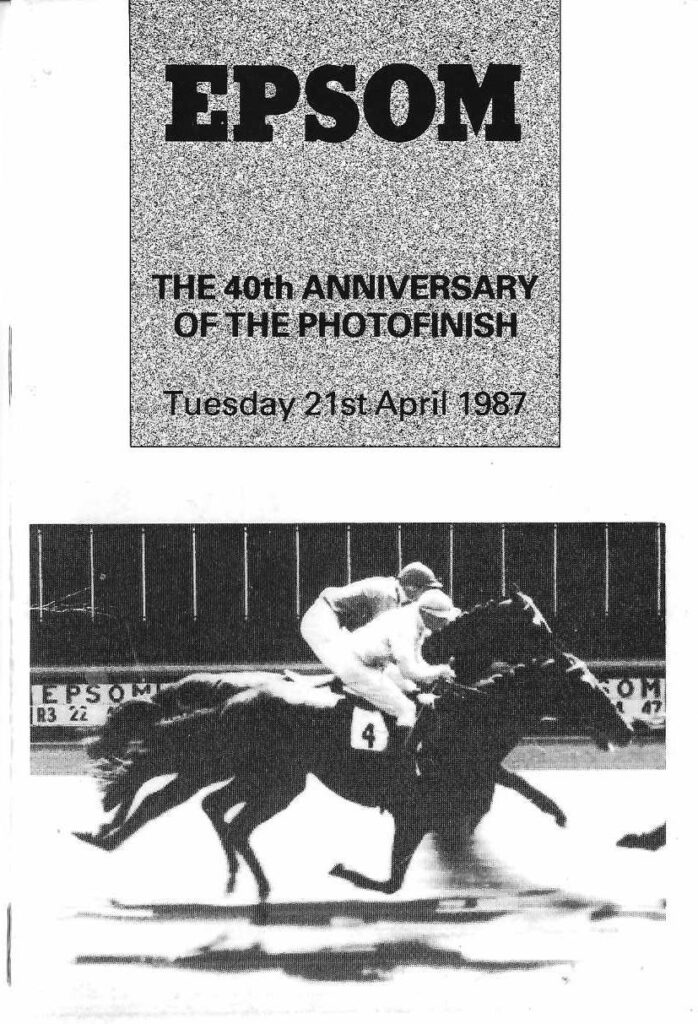
Incidentally, the first occasion the photo-finish camera was used in Great Britain, was at Epsom, on 22 April 1947, to determine the placings for The Great Metropolitan Handicap. Star Song (Doug Smith), winning by a length, with Parhelion (Eph Smith), second, beating Salubrious (Bill Rickaby), by a head.
Sceptre – Racing’s Sweetheart
Sceptre – Racing’s Sweetheart
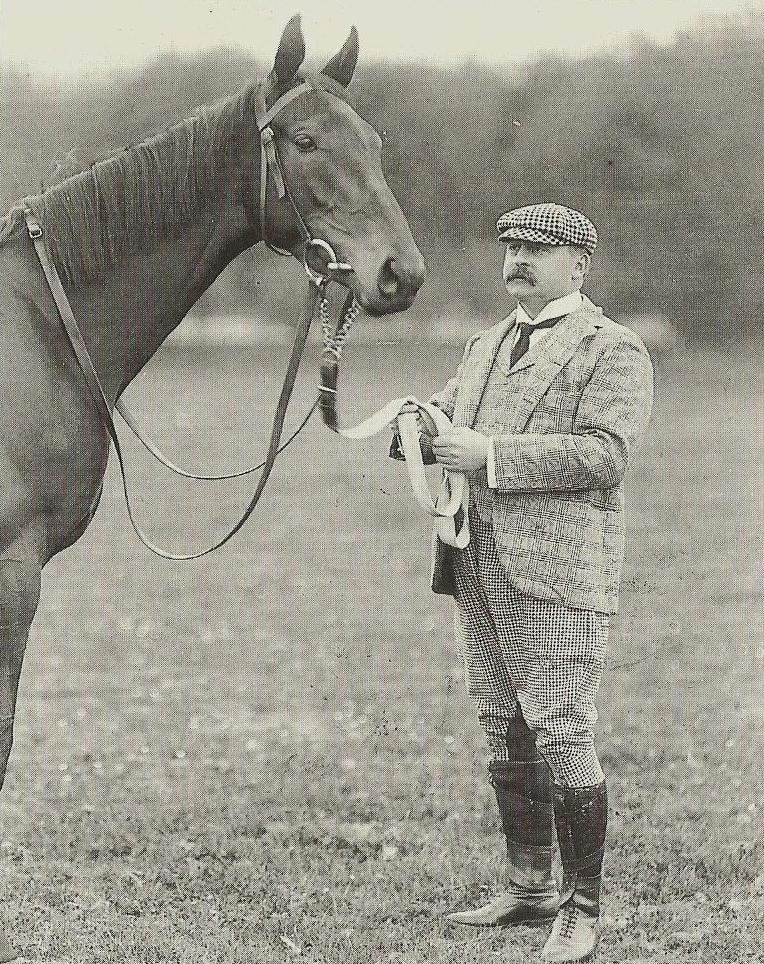
Sceptre with her owner/trainer Bob Sievier
Sceptre is the only outright winner of four British Classics, so becoming Racing’s Sweetheart.
Bred by the 1st Duke of Westminster at Eaton in 1899, Sceptre was a bay filly by the Derby and St Leger winner Persimmon, out of Ornament, a sister to the great Triple Crown winner, Ormonde.
Later that year, on the death of the Duke, his bloodstock were sold by public auction, with Sceptre going to Robert Sievier, an infamous gambler, for 10,000 guineas, then a record for a yearling at auction.
Sceptre was initially trained by Charles Morton at Wantage, winning the Woodcote Stakes at Epsom and the July Stakes at Newmarket as a juvenile. However, when Morton became a private trainer to Jack Joel, Sievier decided to train the filly himself, at his recently acquired stables at Shrewton, in Wiltshire.
The following year, in an unorthodox preparation for the Classics, Sceptre was entered in the Lincolnshire Handicap purely for gambling purposes, and allotted only 6 st 7 lb was backed by Sievier to win £30,000. Dramatically, she was beaten a head, carrying 1 lb overweight.
Sievier, remarkably, then trained her to win both the Two Thousand and One Thousand Guineas.
In the lead up to the Derby, Sceptre bruised a foot, so disrupting her preparation. Then on the day after long spells of torrential rain, thought to improve her chance, she went off the even money favourite. Following Sievier’s instructions, her jockey, Bert Randall, took her the reverse way to the start, walking the last mile and so creating tension amongst the awaiting 17 runners and, the starter.
Randall’s nervousness seemed to peak at the off causing her to get away badly. Rushed through the field she was in contention two furlongs out, but could give no more and finished fourth behind Ard Patrick.
Two days later as the 1-2 favourite, she beat 14 rivals to win the Oaks.
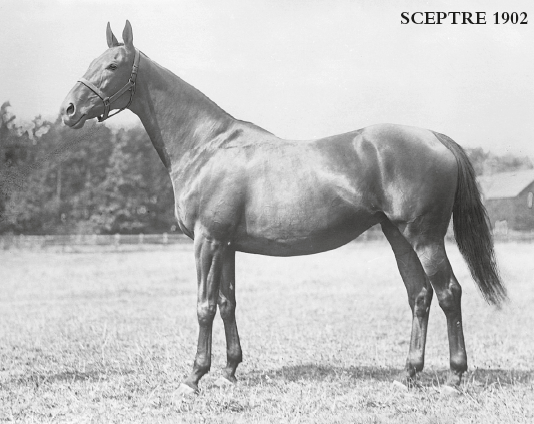
Racing’s Sweetheart
Sceptre’s busy schedule continued with a further four races before the St Leger, where she appeared as “all skin and bone,” on arrival at Doncaster. Nevertheless, her class saw her through, when winning by three lengths from Rising Glass.
The following year, after another failed gamble on Sceptre to win the Lincoln, Sievier, short of money, sold Sceptre to William Bass of the 10th Hussars for £25,000.
Sent to Alec Taylor’s yard at Manton, she recovered her strength to win Ascot’s Hardwicke Stakes, then in the Eclipse Stakes, billed as “The Race of the Century”, she was beaten a neck by her old advisory Ard Patrick, with the previous year’s Triple Crown winner, Rock Sand, a distant third.
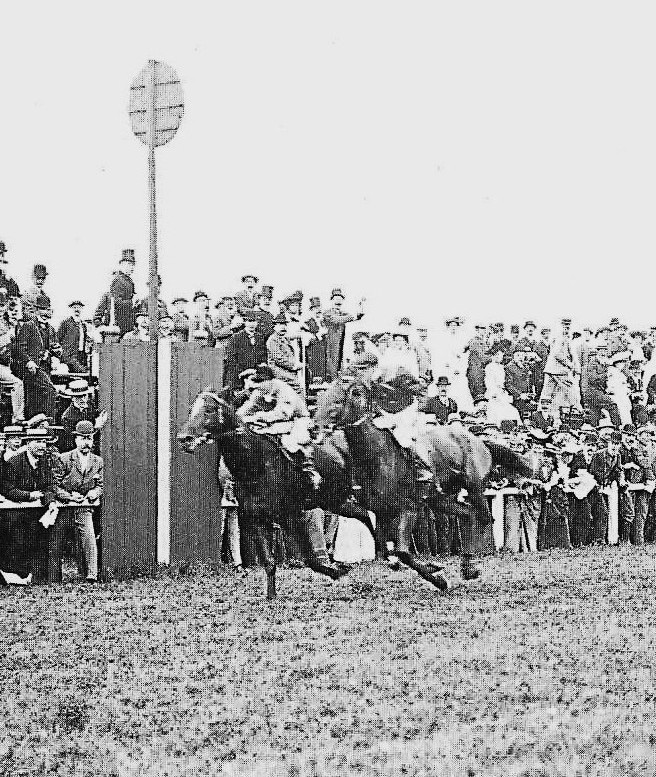
Ard Patrick (Near side) wins by a neck
Sceptre continued her busy programme winning another four races including the Jockey Club Stakes, beating Rock Sand by four lengths and finally, winning the Champion Stakes by 10 lengths.
As a five-year old Sceptre ran three times without success; second in the Coronation Cup, third to Rock Sand in the Hardwick Stakes, then third of four in the Ascot Gold Cup.
At stud, she produced seven fillies, including four winners and one colt. Her first foal, Maid of the Mist, bred two Classic winners – Sunny Jane (1917 Oaks) and Craig an Eran (1921 Two Thousand Guineas), both by Sunstar (1911 Derby).
Sceptre continued to change hands until finally in 1923, Lord Glanely, after promising she would remain in his care for the rest of her life, sold her to a Brazilian breeder. However, following a great public outcry he was forced to cancel the sale, allowing Sceptre to stay in England until her death in February, 1926.
Bob Sievier died after a checkered life on the Turf in relative poverty on October 8th 1939.
For more Racing History see Michael’s Books for Sale.
Oh So Sharp – Fillies Triple Crown winner 1985
OH SO SHARP, is the most recent winner of the Fillies Triple Crown, comprising the 1985 One Thousand Guineas, the Oaks and the St Leger.
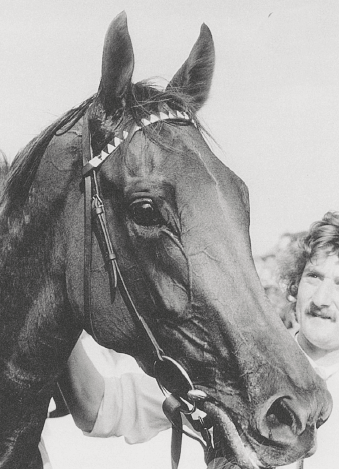
Born on 1st January, 1982, Oh So Sharp was from the first crop of Kris, a top miler and winner of 14 of his 16 races, including the St James’s Palace Stakes, the Sussex Stakes and the Queen Elizabeth II Stakes. Her dam, Oh So Fair was by Graustark.
An attractive chestnut filly, with powerful shoulders and a long raking stride, she was bred by Dalham Stud Farms Ltd, owned by Sheikh Mohammed and trained by Henry (later Sir) Cecil at Newmarket.
Oh So Sharp won her three races as a juvenile over six, seven and eight furlongs, culminating in the Hoover Fillies’ Mile, with Lester Piggott aboard, beating Helen Street and Morning Devotion.
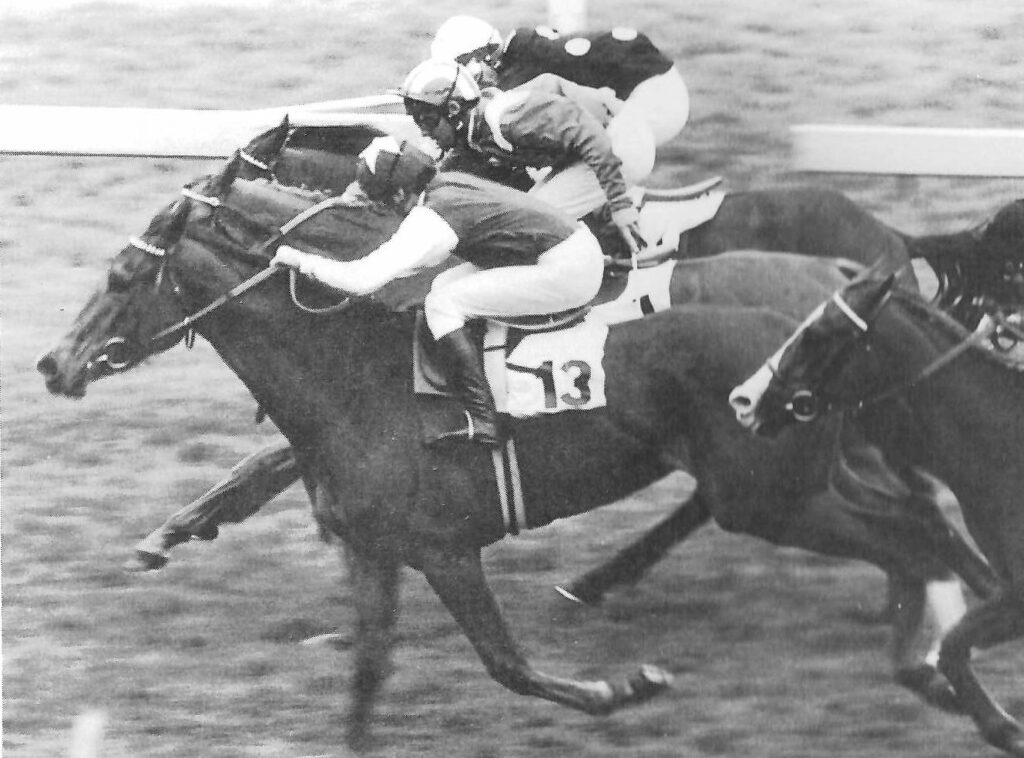
The following year, after taking the Nell Gwyn and now ridden by Steve Cauthen (13), she got up in the last stride to win the One Thousand Guineas in a battle of short-heads, with Albahathri (2nd middle) and Bella Colora (3rd rails).
However, her progress on the home gallops led Cecil to consider running her in the Derby (she had been entered in all five Classics), until finally deciding to run in the Oaks, which she won by six lengths, clearing away from two furlongs out.
She then continued with two seconds – firstly in the ‘King George,’ when beaten a neck by Petoski, and then in the Benson & Hedges Gold Cup, as the 2-5 favourite, when succumbing to Lester Piggott on Commanche Run, by three-quarters of a length.
In her final run, the St Leger, she put things right, running on to beat Phardante and Lanfranco, to complete the Fillies’ Triple Crown, the first to do so since Meld in 1955.
At stud, she bred seven winners, including, Shaima (b.f. 1988), whose first foal, Shantou won the 1996 St Leger.
Oh So Sharp was put down in late October 2001, aged 19, due to complications from laminitis.
For more Racing History see Michael’s Books for Sale.
Fifinella – winner of both the Derby and Oaks in 1916
FIFINELLA, was one of the best fillies in the 20th century and with her Derby victory in 1916, is the most recent filly to do so. She also joins her three predecessors,
Eleanor (1801), Blink Bonny (1857) and Signorinetta (1908), as winners of both the Derby and Oaks.
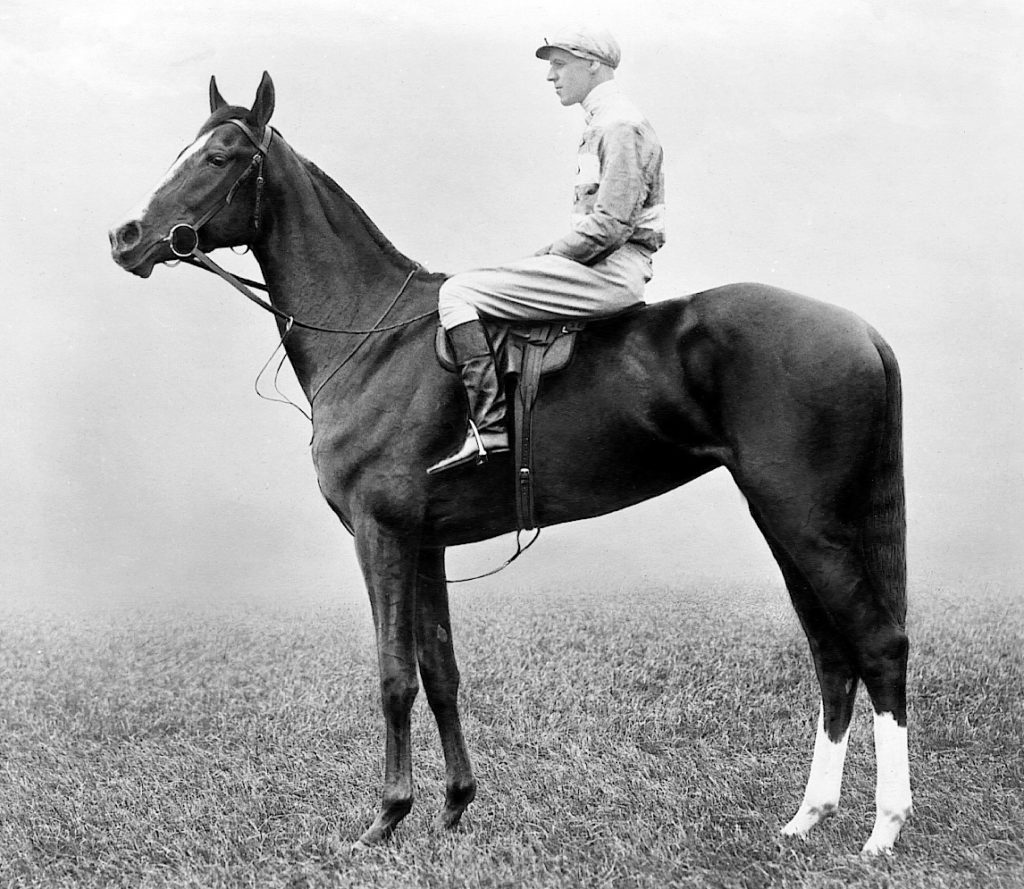
Fifinella was bred and owned by Sir Edward Hulton, 1st Baronet (1869-1925), who in his early years assisted his father in publishing the Sporting Chronicle. Later he founded the Manchester Evening Chronicle, launched the Daily Sketch and acquired the Evening Standard.
His sporting interests were twofold. In coursing he won the Waterloo Cup in 1908 with Hallow Eve and again in 1916 (the year of Fifinella’s Derby) with Harmonicon, while on the racing front, in late-autumn 1906 he purchased the Curragh National Produce Stakes winner Silver Fowl, who, after an accident, was put to stud and in 1913 produced Fifinella (by Polymelus).
Sir Edward’s other Classic winners were Roseway (1919 One Thousand Guineas) and Straitlace (1924 Oaks).
Fifinella ran her three races as a juvenile at Newmarket, winning the Fulbourne Stakes, finishing second to Jack Joel’s Telephone Girl in the Bibury Club Stakes and then running away with the Cheveley Park Stakes by eight lengths; Champion Jockey, Steve Donoghue being aboard each time.
The following year, Fifinella, who by now, had a reputation for being, “catty, peevish and unreliable,” reappeared in the One Thousand Guineas ridden by Joe Childs. Playing up at the start, she received a no-nonsense reminder from Childs, but got her own back by sulking throughout the race and losing to Canyon by three-quarters of a length.
Due to the First World War, the Derby and Oaks were run at Newmarket. And as the colts entered in the Derby appeared to be below standard, she was allowed to take her chance.
Although agitated and waspish in the paddock, she started 11-2 joint-second favourite with Nassovian (third in the Guineas), while Kwang-Su, (second in the Guineas), went off the 3-1 favourite.
After a lengthy delay at the start, Fifinella was slowly away, then badly bumped, and appeared to take no interest until, taking hold of the bit close home, she sped through a narrow gap and with Child’s assistance won by a neck from Kwang-Su, with Nassovian, a head away, third.
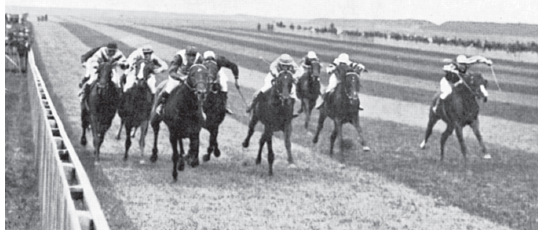
Joe Childs takes up the story, “In the Derby she was inclined to be fretful and nervous, but two days later when the Oaks was run, she was almost a different animal. No nervousness, no fretfulness and she appeared as though she was looking forward to the event.” And so, starting at odds of 8-13, Fifinella won in a canter by five lengths from Salamandra.
Her final race came in September 1917, and proved a dismal display, as she finished last of three behind Phalaris in the Bury St Edmunds Plate at Newmarket.
Dick Dawson, her trainer, was said to be glad to see her go – “a bite or a kick being her usual greeting.”
At stud Fifinella bred 12 foals, eight of which were winners, including Press Gang (ch.c. 1927), winner of the Middle Park Stakes and Princess of Wales’s Stakes.
Fifinella died in 1931
For more Racing History see Michael’s Books for Sale.